Heavy fabrics like denim, canvas, and upholstery-weight materials don’t just feel different in your hands; they behave differently under the needle. Their density creates more resistance as you sew, seam allowances stack into bulk quickly, and every layer adds pressure that can affect stitch quality and control. Understanding how these materials move and respond is the key to getting clean, professional results without frustration.
Whether you’re building structured garments, durable bags, or home décor pieces, working with heavy fabrics is all about control, preparation, and the right machine setup from start to finish.
This blog will cover why heavy fabrics behave differently, how to prepare and set up your machine for thicker materials, ways to manage seam bulk and resistance while sewing, and how to finish heavy-duty projects cleanly for long-lasting results.
Why Heavy Fabrics Feel Different
Heavy materials don’t simply weigh more. They respond differently under the presser foot, through feed dogs, and across seams. Fabrics like denim and canvas are dense, less flexible, and often layered during construction. That means your machine works harder to move the fabric evenly while maintaining balanced stitches.
Seam bulk is one of the biggest challenges. When multiple layers stack at hems, pockets, or intersections, the thickness increases quickly and can affect how smoothly the fabric feeds. Without proper preparation, this can lead to uneven stitches, skipped stitches, or difficulty moving over thick areas.
Resistance is also higher in heavy fabrics, especially during long seams or layered construction. Managing that resistance through proper setup and technique is key to consistent results.
Choosing the Right Needle and Thread for Heavy Fabrics
When working with denim, canvas, and upholstery-weight fabrics, your needle and thread selection play a major role in stitch quality and durability.
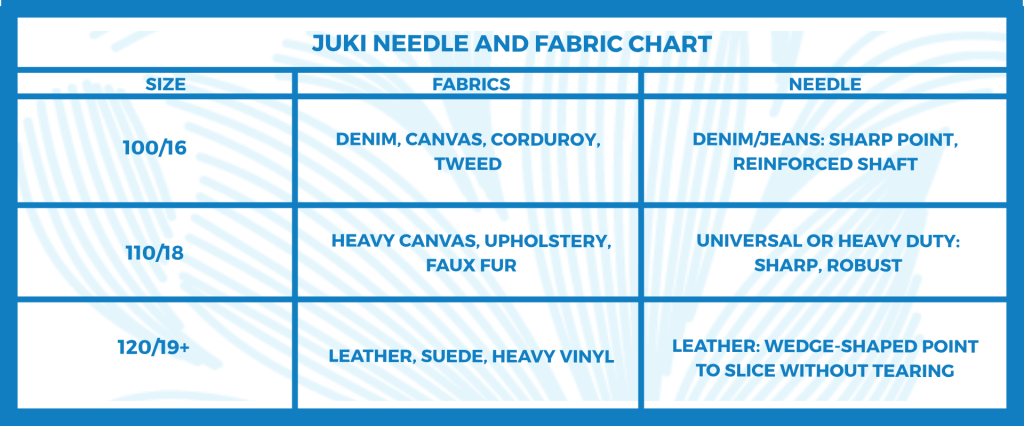
Needle Sizes for Heavy Fabrics
- 100/16 – A great starting point for denim, twill, duck cloth, and lighter canvas projects
- 110/18 – Better for heavyweight denim, thicker canvas, upholstery fabrics, and bulky layered seams
- 120/19+ – Usually used for extra-thick upholstery projects, industrial-weight canvas, or really dense seam intersections, depending on your machine setup
Needle Types
- Denim/Jeans needles – Built for dense woven fabrics
- Sharp/Microtex needles – Clean stitching on tightly woven materials
- Topstitch needles – Best for visible seams with heavier thread
Thread Recommendations
- Bonded polyester thread – Strong, durable, and versatile for heavy sewing
- Heavy-duty polyester (Tex 40–70) – Common for denim and structured projects
- Topstitch thread – Used for bold, decorative seam lines
Matching thread strength to fabric weight ensures smoother stitching, fewer breaks, and better long-term durability.
Setting Up the TL-15 for Heavy Fabrics
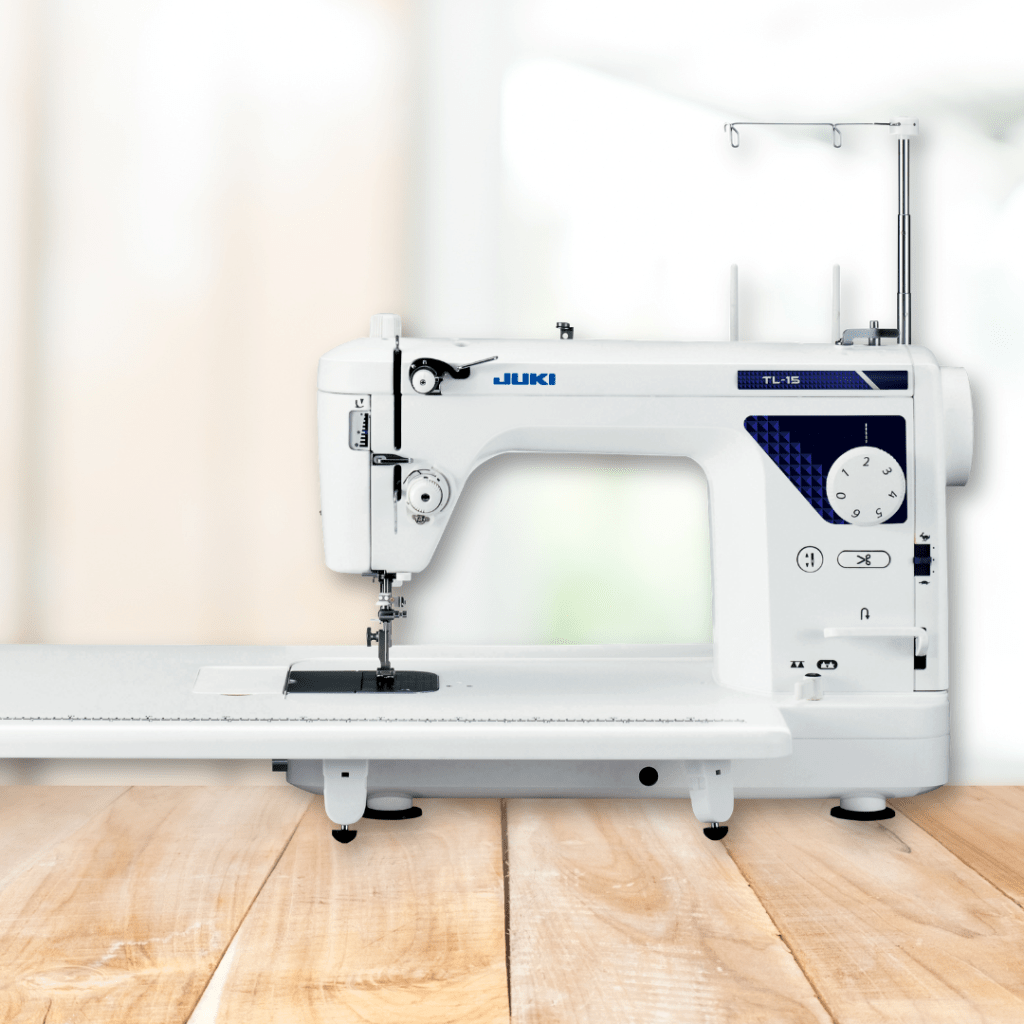
The JUKI TL-15 is designed for controlled, high-quality straight stitching on these types of materials. Proper setup helps you get the most out of its precision when working with heavy fabrics.
- Start with the correct needle-and-thread combination before sewing. A fresh heavy-duty needle can be essential for clean penetration through thick layers.
- Test tension on fabric scraps before starting your project to ensure balanced stitches on both sides. Adjust gradually if needed, depending on fabric thickness and thread weight.
- When sewing, let the machine feed the fabric naturally and slow down when approaching bulky seams. Supporting the fabric without forcing it helps maintain consistent stitch quality across layered sections.
Finishing Heavy Fabrics with the MO-655
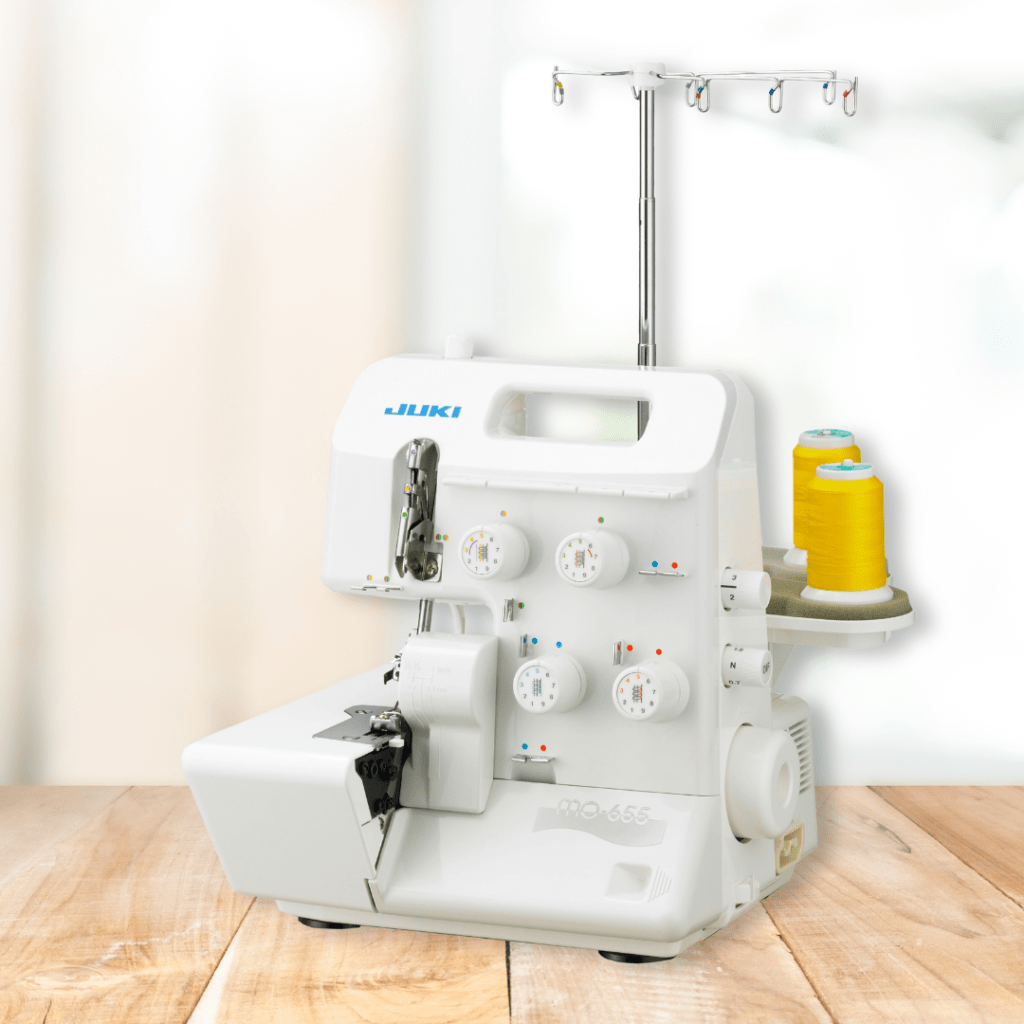
A strong serger like the JUKI MO-655 can be essential for turning heavy fabric projects into clean, durable finished pieces. After construction, finishing seam edges properly helps reduce bulk, prevent fraying, and improve long-term wear — especially in fabrics like denim and canvas that can naturally unravel over time.
Heavy fabrics often create thick seam allowances that can become bulky inside garments, bags, and structured items. Serging helps refine those edges, enclosing raw fibers while reducing excess material that can add unnecessary weight inside the project.
One of the key advantages of the MO-655 is its ability to handle a wide range of fabric weights, making it useful when a project combines different materials. Whether you’re working with a canvas outer layer and cotton lining, or mixing denim with lighter interior fabrics, the serger helps keep finishes consistent across all sections.
In high-stress areas like bag handles, corners, waistbands, or reinforced seams, serging adds durability by locking fibers in place and preventing fraying after repeated use. This strengthens the structure of the project without adding stiffness or unnecessary bulk.
The differential feed also helps maintain smooth, even stitching when transitioning between thick and thin sections, ensuring a clean finish even on uneven seam allowances.
The result is a more refined interior that feels intentional and professional, where every seam is clean, controlled, and built to last.
Ready to Sew Heavy Fabric Projects?
From strong, controlled construction on the JUKI TL-15 to clean, durable finishing with the JUKI MO-655, heavy fabric sewing becomes much more manageable with the right setup and workflow.
Whether you’re working with denim, canvas, upholstery fabrics, or layered structured projects, having the right machine setup can make the entire sewing process feel smoother and more controlled. Explore the machines, accessories, and tools that fit your sewing style by visiting JUKIHome.com to find your local JUKI dealer and discover the right sewing partner for your next heavy fabric project.
 sewinwithjuki.com