Let’s Talk JUKI Sergers

Welcome to the world of serging! Whether you are an experienced sewist or just starting your journey, a serger, also known as an overlock machine, is an invaluable tool that can elevate your sewing projects to a professional level. In this blog, we’ll explore the basics of sergers, their functions, and the creative possibilities they offer, focusing on JUKI sergers, renowned for their quality and reliability!
What is a Serger?

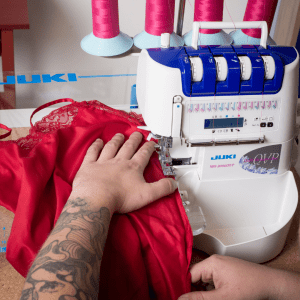
A serger is a specialized sewing machine designed to enhance the finishing of sewing projects by performing multiple functions in a single step. Unlike traditional sewing machines, which usually stitch using one or two threads, a serger ranges from two to five to create overlock stitches.

The primary function of a serger is to trim seam allowances and enclose the raw edges of the fabric inside a thread casing. Overlocking is achieved through loopers and needles that work together to form secure, stretchy seams that prevent fabric from fraying. Sergers simultaneously trim, stitch, and overlock your projects to save you time and effort. This makes sergers indispensable for achieving professional-quality finishes on a variety of fabrics!

The overlocking capability of a serger is a unique advantage, especially when working with knit or stretch fabrics! Using multiple threads and loopers allows the serger to produce strong, flexible seams that stretch without breaking, which is essential for garments and projects that require elasticity. Additionally, the clean, finished look of overlocked seams adds a level of polish to any sewing project, whether it’s clothing, home décor, or accessories. By effectively preventing fraying and unraveling, sergers ensure the longevity and durability of finished items, making them a valuable addition to any sewist’s toolkit!

Features Found on a JUKI Serger

One of the standout features of JUKI sergers is our innovative air thread technology, which revolutionizes the threading process and enhances the overall sewing experience. This technology uses a jet of air to effortlessly thread the loopers, eliminating the frustration often associated with manually threading the machine. It is perfect for those who have trouble threading their needle. With the push of a lever, threads are instantly guided through the machine, significantly reducing setup time and allowing sewists to focus more on their creative projects!
Air thread technology simplifies the threading process and ensures consistent and reliable performance. It minimizes the risk of threading errors, leading to skipped stitches or thread breakage, ensuring smooth and uninterrupted sewing. This feature is great for those who work with multiple thread changes or different types of fabrics, creating a hassle-free and efficient way to prepare the machine for various projects! You can learn more about the differences between traditional and air thread sergers by visiting our past blog here. (https://sewinwithjuki.com/2024/04/13/juki-tip-air-thread-sergers-vs-traditional-manual-sergers/)

Our sergers also offer multiple thread capability, allowing for 2, 3, 4, or even 5 threads to be used in various combinations, providing a wide array of stitch options. This versatility is ideal for different types of fabrics and sewing techniques.

Other important features are

  • Differential feed: this ensures smooth and even stitching on various fabrics, preventing issues like puckering or stretching.
  • Automatic rolled hem function: This function makes it easy to create professional rolled hems without changing the presser foot or stitch plate.
  • Adjustable stitch length and width: this allows customization to suit specific projects.
  • Color-coded threading guides: This simplifies the threading process and makes it accessible to beginners.

Basic Functions of a Serger

Understanding the basic functions of your serger is crucial for getting the most out of it. Here are the core capabilities:
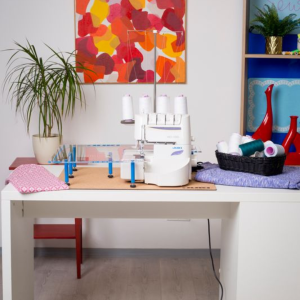
  1. Overlocking: A serger’s primary function is to create secure seams that prevent fabric fraying. Overlocking stitches are formed by multiple threads and loopers that encase the raw edges of the fabric, producing a neat, professional finish. This is particularly useful for finishing seams on garments, ensuring they are durable and long-lasting.
  2. Seaming: Sergers combine fabric with a durable, stretchy seam. This is especially important for knit and stretch fabrics, where flexibility is needed. The strength and elasticity of serged seams make them ideal for activewear, lingerie, and other garments that require a high degree of movement!
  3. Hemming: Sergers can create clean, professional edges using various hemming techniques. Rolled hems are perfect for lightweight fabrics like chiffon or silk, while narrow hems are excellent for casual wear. Blind hems provide an invisible finish, making them suitable for dress pants or skirts. The automatic rolled hem feature on many JUKI sergers simplifies this process, allowing you to switch between different hem types effortlessly.
  4. Edge Finishing: Sergers provide excellent edge finishing for single layers of fabric, such as lightweight or sheer materials. This prevents fraying and gives the fabric edges a polished look, making them ideal for scarves, blouses, and other delicate items. The differential feed ensures that even the most challenging fabrics are handled smoothly.
  5. Decorative Stitching: Beyond functional seams, sergers can also be used for decorative stitching. By using decorative threads and adjusting the stitch settings, you can add a stylish touch to your projects. This can include creating eye-catching edges on garments, adding decorative trims to home décor items, or incorporating unique design elements into your accessories.

Learn more about the stitch options available on a serger by visiting here. (https://sewinwithjuki.com/2023/04/01/stitching-on-your-juki-overlock-serger/)

Creative Possibilities with a JUKI Serger

Fashion: Sergers are valuable in garment construction, providing professional-looking seams and hems! The serger’s ability to create solid and stretchy seams ensures that your garments are not only durable but also comfortable to wear. From T-shirts and leggings to dresses and activewear, a serger can help you create it all, giving your homemade clothing a polished, store-bought appearance.

Quilting: While sergers are not usually associated with quilting, they can be a valuable tool in the quilting process! Using a serger to piece quilt blocks adds a nice touch to your quilting projects, creating firm, finished edges that are less likely to fray. This technique can help make quilted garments, bags, or home décor, where durability and a clean finish are essential due to heavy use! You can also serge the edges of quilt blocks before assembly to make the quilting process faster and more efficient.
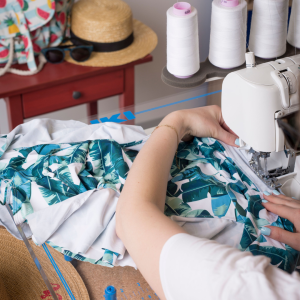
Home Décor: Create a living space with beautifully handcrafted home décor! Sergers are perfect for helping you create durable and personal finishes on home pieces like pillowcases, tablecloths, and curtains. For example, the overlock stitch prevents fraying and adds a clean, professional edge to your projects. You can use your serger to add decorative touches, like ruffles or piping, and enhance the aesthetic appeal of your home décor style!

Accessories: Creating accessories with a serger ensures your projects are sturdy and chic. Bags, pouches, and other accessories benefit from the serger’s ability to produce neat, fray-free edges and strong seams. Whether making a tote bag, a make-up pouch, or a laptop sleeve, a serger can help you achieve a professional finish that withstands daily wear and tear.

Upcycling: Create something new with old clothes by using your serger to alter and embellish them! Serged seams and decorative edges can transform your wardrobe into trendy, personalized pieces. Try adding ruffles to an old skirt, convert a pair of jeans into shorts, or create a patchwork jacket from fabric scraps! The possibilities are endless, and upcycling with a serger saves money and supports sustainable fashion practices.

Investing in a JUKI serger can help you expand your skills and enhance your sewing experience! They offer efficiency, versatility, and professional-quality finishes, whether you’re making clothes, home décor items, or accessories. Embrace the potential of your JUKI serger and explore the endless possibilities it brings to your sewing ideas.

Learn more about JUKI’s Serger lines by visiting us here and here. Happy serving!
Accessorize Your Serger with JUKI

JUKI sergers are renowned for their versatility and precision, making them a go-to choice for beginner and advanced sewists! These machines are designed to handle a wide range of projects and sewing plans and help you create professional-looking seams to add decorative finishes. Today, we will discuss the accessories you can find for our JUKI sergers that will help these projects come to life!

Accessorizing your serger not only enhances its functionality but also allows you to tackle more complex projects with ease. Whether you’re adding elastic, creating perfect hems, or embellishing with beads and piping, the right accessories can significantly improve the precision and efficiency of your work.

Let’s Talk Presser Feet

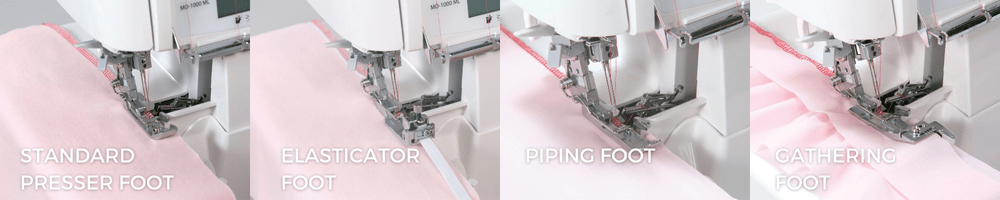
Presser feet are the unsung heroes of any serger, transforming a simple stitch into a professional finish. Each presser foot is designed with a specific function in mind, making it easier to achieve various sewing techniques with precision and efficiency. Here’s a closer look at some of the most essential presser feet for your JUKI serger:

1. Standard Presser Foot: This foot is the workhorse of your serger. It comes pre-installed on most JUKI sergers and is perfect for basic serging tasks like finishing raw edges, sewing seams, and creating overlock stitches. Whether you’re working on lightweight fabrics or heavier materials, this versatile presser foot ensures even feeding and consistent stitch quality. It’s ideal for general-purpose sewing and is often the go-to choice for many projects.

You can learn more by watching here: JUKI Standard Presser Foot Tutorial

2. Elasticator Foot: Adding elastic to fabric can be tricky, but the Elasticator Foot simplifies the process by evenly stretching and stitching the elastic in place. This foot is perfect for creating garments that require stretch, like your swimwear, lingerie, or activewear. The Elasticator Foot also ensures the elastic is attached securely and evenly without the risk of overstretching or puckering the fabric. It’s a game-changer for anyone sewing with stretchy materials!

You can learn more by watching here: How to Use the Elasticator Foot

3. Piping Foot: The Piping Foot is designed to help you easily insert piping into seams. This adds a decorative touch to your projects! You can use piping in home décor items like cushions, pillows, upholstery, and garments to add decorative elements. This foot has a groove that holds the piping in place as you stitch, ensuring that it’s evenly attached with no shifting. The result is a crisp, professional finish that elevates the look of your handmade items.

You can learn more by watching here: Inserting Piping with a JUKI Piping Foot

4. Gathering Foot: Creating ruffles and gathers can be time-consuming, but the Gathering Foot makes it easy! This foot gently gathers the fabric as you sew, allowing you to create even, beautiful ruffles in no time. It’s perfect for adding volume to skirts, sleeves, and home décor projects like bed skirts and curtains. The Gathering Foot also works excellent with lightweight to medium-weight fabrics, giving you consistent gathers without the hassle of manual gathering!

You can learn more by watching here: How to Create Ruffles with the Gathering Foot.

Specialty Plates and Accessories

In addition to presser feet, JUKI sergers offer a range of specialty plates and accessories that can elevate your sewing projects to the next level. These tools are designed to add intricate details and professional finishes to your work, allowing you to explore more creative possibilities with your serger. Here’s a breakdown of some essential specialty accessories that can enhance your sewing experience:

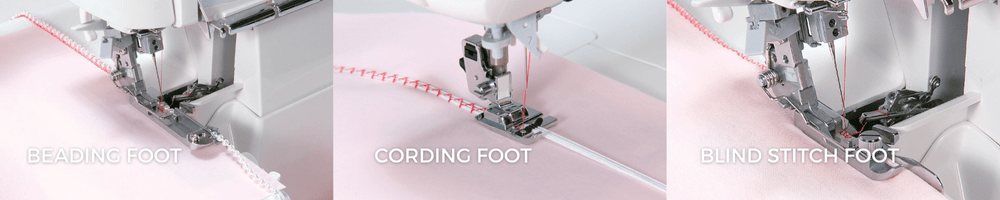
1. Beading Foot: The Beading Foot is a beautiful accessory for anyone looking to add a touch of sparkle to their projects. This foot is designed to sew beads, pearls, or sequins onto fabric precisely and easily. The groove on the presser foot guides the beads while the serger stitches them securely. This accessory is especially popular for bridal wear, evening gowns, and other special occasion garments where delicate embellishments are desired. Whether you’re adding a subtle trim or creating a bold, beaded design, the Beading Foot makes the process smooth and professional!

You can learn more by watching here: Beading Foot Demonstration

2. Cording Foot: The Cording Foot is an excellent tool for adding decorative cords such as yarn and strands of pearls to your sewing projects. This foot is designed to hold the cord in place while the serger stitches it securely onto the fabric. It’s perfect for enhancing the seams of garments, bags, and home décor items, adding a stylish and professional touch. The Cording Foot can accommodate various cord sizes, making it versatile for different projects. You can outline a neckline, add texture to a pillow, or create intricate trims!

You can learn more by watching here: Attaching Decorative Cords with the Cording Foot

3. Blind Stitch Foot: If you want to create invisible hems, the Blind Stitch Foot is a must-have accessory! With this foot, you can sew a barely visible hem from the outside of the fabric, making it perfect for hemming pants, skirts, and dresses. The foot also offers an adjustable guide that helps you position the fabric correctly, ensuring that the stitches are hidden within the hem. The Blind Stitch Foot is beneficial for formal wear, business attire, and any garment where a discreet hem is needed.

You can learn more by watching here: Blind Stitch Foot in Action

Finding the right accessories for your JUKI serger unlocks a new level of creativity in your sewing projects! With the right accessories, you can transform your serger from a simple overlocking machine into a versatile tool capable of handling a wide range of tasks—intricate beading, professional hems, decorative finishes, and more.

Experimenting with different accessories is key to expanding your sewing capabilities! Whether you’re a beginner looking to learn new techniques or an experienced sewist aiming to refine your skills, these tools provide endless possibilities for customization and innovation in your projects. Don’t hesitate to explore and try various presser feet and other serger accessories to see how they can enhance your creative process.

To get a comprehensive overview of the available accessories and how they can benefit your sewing, check out your nearest JUKI dealer here!

JUKI Tip: Using the Needle Threader On Your MO Series

For this month’s JUKI tip, we go over how to use the automatic needle threader that can be found on select serger machines in our MO Series! Creating an easier sewing experience for you, this feature is perfect for getting your machine ready to create, without the hassle.

Follow along below as our National Account Trainer Alba showcases how to thread your automatic needle threader.

The needle threader on the Serger from JUKI is a mechanism that has a lever that goes right and left, whether you’re choosing to thread the right or left needle, before being pushed down to cover the needle in front of the eye.

As you watch the video, you’ll notice how our JUKI National Account Trinaer Alba moves the mechanism to the right-hand position, turning the hand wheel towards herself until the needles reach the highest possible position.

Ensuring the lever is set for the right-hand needle, we’re going to lower the self-threading lever, until it comes right around the needle. Here is where you’ll notice how the mechanism just hugs that needle, giving you the perfect spot to place your thread. Now, remember, for the best experience ensure your thread is not taut, and instead loose. This way the machine is able to thread your needle, without tugging.

Now, as you raise up the needle threader, as shown in the video, you’ll notice how it forms a loop that you can carefully pull through the eye of the needle, completing the threading of your needle. Pull the thread behind, and you’re all set on the right-hand needle!

For the left needle, we’ll position our needle threader for the left-hand position, before lowering the mechanism where it will hug your needle. Next, we recommend using two hands to place that thread in the groove of the needle threader; this will be right at the eye of the needle.

As you raise your needle threader mechanism, you’ll notice the loop form once again, before pulling the thread completely through and towards the back of the machine.

We hope this helps you the next time you want to use the automatic needle threader on your serger machine! What tip do you want to see next from JUKI? Let us know in the comments below!

JUKI Project: Valentine’s Day Printed Top

Join us for this month’s project as we create a printed fabric valentines top using the RICOH Ri 100, with a touch of texture thanks to the TAJIMA Sai 8-needle embroidery machine! For this project, our JUKI National Account Kelly will show us how she used the RICOH Ri 100 to personalize her top and make a love-filled gift!

With the direct-to-garment printer (RICOH Ri 100), you can complete a multitude of projects! From designing your own fabric, like you’ll see done in this project video, to placing images on already constructed bags and home décor, a machine like this will help you personalize your next dream project.

The first step when using a RICOH Ri 100 to print on your fabric is to cut out the blouse pattern from the fabric of your choosing. The reason we want to cut the pattern out first before printing on our fabric is so we can precisely place our designs, save ink, and save fabric!

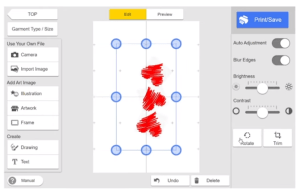
Now that your pieces are all cut out let’s move on to the RICOH Ri 100 designer app that can be installed onto your laptops and computers. Depending on your material and project choice, you’ll set up the RICOH to understand the dimensions and print type you need before moving on to designing. In our project today, we’ll be choosing t-shirts and thin material since we’re working on a Knit jersey material. Keep in mind what tray you’ll be using because the program will ask!

Next is placing and choosing your designs. The best thing about printing is the ability to place almost any design on your material. In today’s project, we’ll be installing our own graphics, but keep in mind the selection of designs offered on the RICOH Ri program when first starting out. Place the designs as you’d like to see them printed. What you see on the screen is what you’ll see printed!

Once you’ve finished your design, you’ll pre-iron your fabric and then place it into the direct-to-garment printer. The time process depends on your designs; the more intricate and colorful, the more time for printing! Once your designs have been printed onto the fabric, go ahead and place your tray in the heater for finishing.

Having our completed fabric, we can now begin constructing our project and creating the blouse! Sewn on our MO-2000QVP and DX-4000QVP, Kelly puts together her pattern pieces to complete a beautiful Valentine’s blouse!

Lastly, if you’d like to add a special touch of personalization, we follow Kelly as she moves over to the JUKI TAJIMA Sai! This is our 8-needle embroidery machine which allows you to embroider a multitude of projects, including shoes, sweaters, hats, and so much more. To start off using the TAJIMA Sai, we’ll use the Writer Plus software that includes designs to choose from, as well as the ability to upload your own, like the RICOH Ri 100.

Like the RICOH Ri 100 software, you’ll choose your project type, material type, and segments that focus on how your stitching will look. If you choose to add embroidery, make sure to do this before constructing your project on the sewing machines.

Once you’ve completed your steps, you’re ready for a night out with your loved one in this cute blouse! We hope you enjoyed learning more about the RICOH Ri 100, and we hope this inspires you to begin making your own fabric and going the extra mile with personalization!

New Year, New JUKI!

Happy New Year, JUKI Lovers! With another year around the sun, we at JUKI are so excited to introduce our new machines and accessories you can find this year at your local JUKI dealer. From sewing machines to accessories, follow along as we cover our new items and what they do.

New for Sewist

The MO-2800

Have you been looking to upgrade your serger? Check out JUKI’s new MO-2800! New and advanced serger users will love the new features and appreciate the ease of use. With features like our JUKI air threading technology, which allows you to thread your machine with the power of air and the touch of a button, and the automatic needle threader, you’ll enjoy the experience of serging like never before thanks to a quick and easy setup!

Sewists and quilters alike will appreciate the power of this machine and its ability to piece quilts or hem clothing beautifully, no matter the project. You’ll also be able to enjoy a new serger accessory! Our new Curve Foot was created to handle those curved portions of your material smoothly and produce beautifully finished seams, helping you create projects with a quality you’re proud of.

Provided with the patented Tweak with Adjustment (TWA, a JUKI exclusive), it is possible to easily correct excess thread and fabric curling during overcasting. This is just another step in how JUKI is here to help you create easily!

The MO-80CB

Update your sewing studio and skill by trying your hand at serging! With the MO-80CB JUKI overlock serger, advanced and beginner sewists can begin learning how to create. Thanks to its automatic rolled hem, differential feed, and free arm capabilities, garment creators can attach sleeves, hem pants, and more!

Work on building your own closet and updating your current wardrobe by re-creating your closet with the magic of serging! Whether you’re hemming old clothing or building new outfits from scratch using your favorite stretch fabric material, having a serger in your studio is the perfect way to up your sewing game and build your wardrobe.

New For Quilters

The MO-3000QVP

Introducing JUKI’s newest Air Serger, meet the Akane MO-3000QVP! Helping sewists like you sew like a pro, this new serger introduces features we haven’t had before. Features like a chain-off thread cutter, an automatic thread supply, a micro-lifter, and more will help you create with ease and raise our project quality!

Whether your focus is on garments or quilting, this serger will help you create those thicker and larger pieces thanks to the wider throat space! Additional features include a magnet needle tray, LCD screen, and the option to operate your machine by either hand or foot using the knee-lever or foot control.

Taking your serging to new heights, the Akane MO-3000QVP is an excellent addition to your studio space!

The Tabletop Fabric Frame

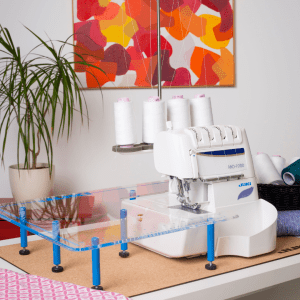
Now for quilters, JUKI has created its own Tabletop Fabric Frame! This frame is perfect for creators who work in small spaces and want to experience the joy of a long arm without committing to the space needed for a stand-up frame!

Offering quilters the opportunity to free-motion quilt on a frame that lengthens up to 48 inches wide and allows up to a 12″ throat space, you can comfortably create those designs you’ve been dreaming of. Above that, this frame is easy to store away and lightweight making it perfect to quickly get to work or end your project day!

Want stitch regulation? Check out the Sure Stitch Elite add-on! This LCD touchscreen addition to your machine will allow you to easily customize stitch length presets, handle speed adjustment, and give you an edge warning alarm.

JUKI Paddle and Quilting Rings

Whether you’re new to quilting, or an avid quilter looking for an accessory to help you create, our new JUKI quilting paddles and quilting rings are the perfect tools to keep in your studio!

Depending on your preference, these tools are great to keep on hand when it’s time to begin placing designs and free-motion quilting on your creations. Because of the non-slip grip material underneath these tools, they’ll be able to easily drag and move your quilt, helping you seamlessly move your project around your workspace as you free-motion quilt.

Also, due to the paddles’ size and the quilting rings comfort grips, these tools will help keep your hands and arms comfortable while free-motion quilting, helping you create more designs with less hassle and strain.

As we enter the New Year, keep up with JUKI for future new accessories and machines. Working on creating tools for sewists and quilters that you will love; we can’t wait to show you what’s coming up! Have you been dreaming of an accessory or machine feature from JUKI? Let us know in the comments below what future tool you want JUKI to come out with!