Valentine’s Day can be an opportunity for couples to strengthen their bond through shared activities and heartfelt moments! What better way to commemorate this occasion than by delving into an array of delightful sewing projects designed for two?
With the precision and versatility of JUKI machines complemented by the embroidery finesse of Tajima Sai and the printing features of the RICOH Ri 100 machines, let’s explore an assortment of heartwarming projects tailor-made for crafting love-filled memories together.
1. Culinary Harmony: Matching Aprons
Picture this: it’s Valentine’s Day, a day filled with love, laughter, and shared moments in the kitchen! As you whip up a delicious meal together, the matching aprons will bring a touch of laughter, a playful reminder of your shared love for culinary adventures and cheesy projects. It’s not just about the gift—it’s about the shared experiences, the laughter, and the beautiful memories you’ll create while cooking up a storm together, making this Valentine’s Day truly unforgettable.
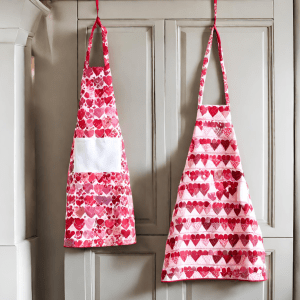
To create your set this Valentine’s, here are a few things to have on hand. Choose durable and easy-to-clean fabrics suitable for aprons, such as cotton, linen, or canvas. Also, select a pattern that suits your skill level and desired style! Various apron styles are available, from simple waist aprons to full bib aprons with pockets, so find one that fits your cooking needs. Ensure the pattern is adjustable to fit different body sizes so you and your partner feel comfy in the kitchen!
Personalize these aprons with embroidered initials, whimsical patterns, or cute culinary motifs using the precision and creativity of our Tajima Sai or with the precision and versatility of JUKI machines complemented by the embroidery finesse of Tajima Sai and printing features of the RICOH Ri 100 machines. Let’s explore an assortment of heartwarming projects tailor-made for crafting love-filled memories together. Pay attention to details that can create a cohesive look. This includes matching or coordinating fabric patterns, colors, trims, or embellishments for both aprons! You can also add pockets and topstitch for added durability and aesthetic appeal.
For sewing aprons for the kitchen, you can use a standard or walking foot. A standard presser foot is suitable for most lightweight to medium-weight fabrics commonly used for aprons. A walking foot can help feed the fabric evenly and prevent shifting if you’re working with thicker fabrics or multiple layers. You can also consider using a zigzag stitch or an overcasting stitch to finish the edges of the apron for a clean and durable finish.
2. Dreamy Comfort: Personalized Pillow Covers
Valentine’s Day is a canvas for celebrating our unique love stories, and what better way to paint that picture than with personalized pillow covers? Imagine the joy of snuggling up to pillows adorned with inside jokes, shared memories, or heartfelt messages. It’s a chance to turn ordinary cushions into a delightful daily reminder of your special moments together!
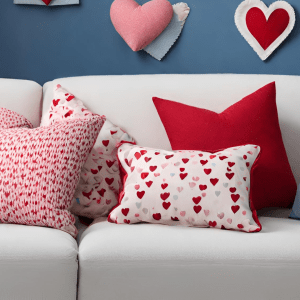
For your own Personalized Pillow Covers, choose fabrics that complement your home decor or convey the theme or message you want to personalize. Take accurate measurements of your pillows before cutting the fabric to ensure a proper fit, and add seam allowance for a better finish. Add a closure! Choose an envelope closure, zipper closure, button closure, or even a snap, depending on your preference and sewing skill level.
Remember the inside! Depending on the fabric used and the desired finish, consider adding an inner lining or interfacing to give the pillow cover structure and durability. You can also add piping, trims, or decorative edges to enhance the aesthetic appeal of the pillow cover.
For adding piping, trims, or decorative edges, consider using a JUKI Piping Foot or a JUKI Overcasting Foot. The JUKI Piping Foot, designed with a groove for the piping cord, enables precise stitching close to the cord for a professional finish when attaching piping or decorative trims along the pillow cover edges. Alternatively, the JUKI Overcasting Foot is suitable for adding trims or finishing edges to prevent fraying, allowing for decorative overcasting stitches along the pillow cover’s perimeter.
Personalized pillow covers offer plenty of room for creativity! Experiment with initials, love quotes, or adorable motifs using the intricate capabilities of Tajima Sai embroidery machines, or check out our
With the precision and versatility of JUKI machines complemented by the embroidery finesse of Tajima Sai and the printing features of the RICOH Ri 100, let’s explore an assortment of heartwarming projects tailor-made for crafting love-filled memories together and add a personalized and heartfelt photo or hand-drawn design to your pillow covers.
3. Snugly Warmth: Cozy Blankets
Creating a cozy blanket for your partner this Valentine’s Day is a heartfelt gesture that encapsulates warmth, comfort, and love! Sewing or quilting a blanket allows you to pour love into every stitch, selecting the softest fabrics, personalized touches, and perhaps even embroidering initials or a heartfelt message.

Find a theme for your love quilt! Whether it’s a theme of your relationship or following the Valentine theme and using colors and designs that resonate with romance, this will be the basis for your fabric options. Traditional Valentine’s colors like red, pink, and white work well, but you can also opt for softer hues or a combination of your partner’s favorite colors.
If you’re into quilting, create a patchwork blanket using heart-shaped fabric pieces or a quilt design with love-themed patterns. Quilting can add a charming and intricate touch to the blankets!
To help you design this project, we recommend checking out JUKI’s new Hearts and Wings Ruler Set! This set offers the Cable Tool, Mini Heart, Traditional Hearts, Feathered Hearts, and Bird Bracket Chain rulers. Each ruler serves as a unique template, helping you bring individuality to your quilt! Whether you’re a seasoned quilter or a novice, the Hearts & Wings Ruler Set is an excellent addition to your tool set.
You can also add an extra touch of love with love quotes, poems, or meaningful messages embroidered into the blanket design using your Tajima Sai or your machine’s letter stitch options. Adding decorative elements like lace trims, ribbons, or sewn-on heart-shaped patches enhances the blanket’s romantic vibe.
4. Unified Fashion: Embroidered Sweaters
Creating matching embroidered sweaters for your partner this Valentine’s Day is a heartfelt gesture that goes beyond a typical gift! It’s a beautiful way to express your love and unity as a couple. Sewing these sweaters allows you to infuse them with personalized touches, such as initials, meaningful symbols, or a special message, uniquely representing your bond.

Regarding the design, consider Valentine’s Day motifs like hearts, Cupid’s arrows, lovebirds, flowers, or romantic phrases. Opt for thread colors that evoke the Valentine’s Day palette—red, pink, white, and shades of purple. Metallic threads can add a touch of sparkle to your designs!
Remember to use a stabilizer to prevent puckering or stretching while embroidering, and use the smallest hoop necessary to secure the sweater without stretching it too much. When embroidering, plan the placement of your design thoughtfully. Centering it on the chest or towards the hemline can create a balanced look. Avoid areas that might cause discomfort when worn. Use the embroidery capabilities of the Tajima Sai machine to add monograms, intricate designs, or symbols that symbolize unity and warmth onto your sweaters!
Want to try out your hand at creating personalized sweaters? Use your digital sewing machine and check out the letter features, or use your Tajima Sai and follow along here for a demonstration on creating your own set!
5. Personal Footprints: Customized Shoes
From whimsical designs to meaningful initials or inside jokes intricately woven into the fabric, these shoes aren’t just footwear—they’re a token of your love. Gift them the joy of walking in style and stepping into every adventure with a reminder of your love!

For this project, select shoes made of a fabric that can accommodate embroidery. Canvas or denim shoes work well. We recommend testing your embroidery design on a similar fabric or scrap material to gauge how the stitches will appear on the shoe material. Adjust the design or thread colors as needed for better visibility or effect. Remember to use stabilizers appropriate for shoes! Self-adhesive or tear-away stabilizers can work well for this project, supporting the fabric during embroidery without leaving residue.
When it’s time to embroider, hoop the shoe fabric carefully and securely without damaging the shoe. Use smaller embroidery hoops suitable for the shoe’s size, ensuring the material remains taut but not overly stretched. Adjust your embroidery machine settings according to the shoe fabric. Test different stitch densities, speeds, and tensions to ensure a smooth and accurate embroidery process. Also, enjoy the pre-installed designs of the Tajima Sai program and add initials, patterns, or unique designs onto the canvas shoes!
Catch our February project live next week as we show you how to use the Tajima Sai to create your own pair here!
Celebrate your love and togetherness this Valentine’s Day by embarking on these heartwarming embroidery projects. With the precision of the JUKI and the capabilities of the Tajima Sai machine, transform simple fabrics into cherished tokens of your shared love and commitment!
Happy Valentine’s Day, JUKI lovers! We can’t wait to see your projects!


 sewinwithjuki.com