In this JUKI tip, we have JUKI Educator Kelly with JUKI America focus on the needle threader for the DX-4000QVP! This is a fabulous tool found on your DX Series machines, so let us give you the right steps to ensure that it works every time you’re ready to create.
When you thread the DX-4000QVP you’re following a numerical system. The system starts with 1 where you begin thread set up, threading your machine by the guide above the needle to number 6 where you get to the final steps to thread your needle, which are 7 and 8. This part is simple! Follow the number system as you thread your machine from top to bottom.
At Step 7 you’ll put the thread in the needle threader! Watch as we pop the thread in there, and push the needle threader lever down. This will deliver the thread through the eye of the needle and then you simply just pull the loop to the back. After your needle has been threaded, the thread cutter is number 8. Here you trim your thread by pulling the thread piece back and cutting, and you’ll be all set to begin sewing!
It’s that easy! Thank you so much for joining us today for another tip from JUKI.
Please Subscribe and we look forward to seeing you again on another tip or project!
When it comes to sewing, the magic is in the details, and nothing adds a touch of flair quite like the right decorative stitch! Whether you’re embellishing a cape or creating a statement dress, JUKI’s decorative stitches open up a world of creative possibilities. In this adventure, we’ll dive into our favorite stitches and share tips on when and where to use them to make your costume stand out!
Machine Options
Before we dive into specifics, let’s take a moment to talk about the JUKI sewing machines that offer decorative stitches. Known for their precision and durability, JUKI machines come equipped with a wide variety of stitches that cater to every sewing need, from basic to intricate projects.
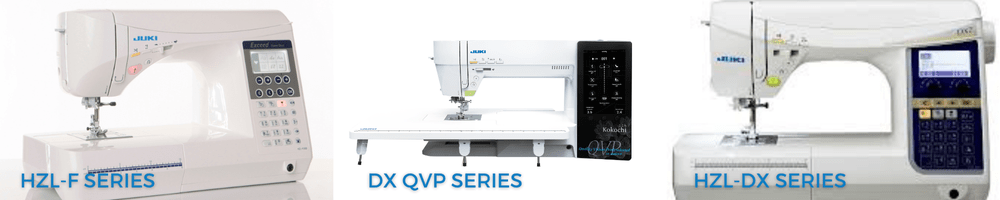
JUKI HZL-F Series: The HZL-F Series are powerhouse options that can reach over 250 built-in stitches, including decorative. You’ll find everything from floral patterns to geometric designs, perfect for adding unique touches to your projects. This model also includes alphanumeric stitches, so you can personalize your creations with names or messages!
JUKI DX QVP Series: The DX QVP Series offers up to 287 stitch patterns, including several exclusive decorative stitches designed for quilters and fashion creators alike. This machine is perfect for costume accessories that require precise stitching and detailed embellishments! The machine’s advanced features, like the floating presser foot, make it easy to work with thick fabrics or multiple layers.
JUKI HZL-DX Series: Reaching up to 287 stitches, including 16 different buttonhole styles and various decorative stitches, the HZL-DX Series is ideal for those who want to experiment with various designs in one project. The machine’s intuitive controls make it easy to switch between stitches, allowing you to quickly add intricate details to your projects.
Decorative Stitches On JUKI
Now, let’s talk about some decorative stitches in your machines. These stitches are more than just pretty patterns—they’re functional add-ons that can elevate your sewing projects. Here are a few recommendations on how to make the most of these stitches in your next creation:
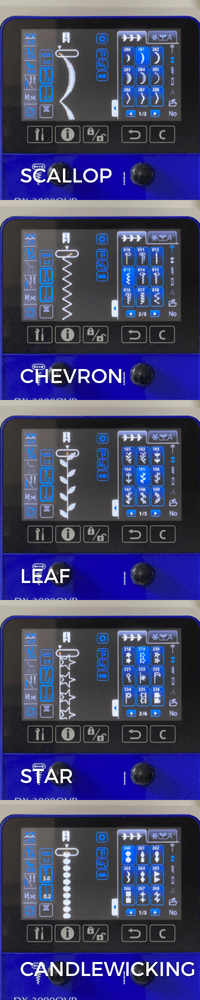
Scallop Stitch: The scallop stitch adds a delicate, feminine touch to the edges of the fabric. It’s perfect for finishing off a scarf with a soft, wavy edge or adding a whimsical border to a cape. Pair it with a contrasting thread for extra pop. It is perfect for the edges of scarves, capes, and hems.
Chevron Stitch: The Chevron stitch brings your projects a bold, geometric flair. This is a fantastic choice for accenting belts or bag straps, offering durability and a stylish design. It also works wonderfully around the brim of a hat, adding texture and visual interest. Perfect for belts, bags, and much more!
Leaf Stitch: The leaf stitch is ideal for nature-inspired designs. Imagine a flowing cape with a vine of leaves winding around the edges or a bag with leafy embellishments. This stitch adds an organic feel to your projects, making it perfect for costumes with a natural or fantasy theme. Perfect for capes, bags, and collars.
Star Stitch: The star stitch is playful and eye-catching, perfect for superhero-themed costumes. It can be used to create star-studded borders on capes, add a touch of sparkle to hats, or embellish belts and bags. This stitch is a must for any costume that needs a bit of magic. Perfect for capes, hats, and superhero or space-themed accessories.
Candlewicking Stitch: The candlewicking stitch creates a textured, almost bead-like effect on the fabric. Use it to create intricate designs on scarves or add texture to belts. It’s a great way to introduce a three-dimensional element to your accessories. It is perfect for scarves, belts, and detailed embellishments.
Bringing It All Together: Creating the Perfect Costume Accessories
Now that we’ve covered some of our favorite decorative stitches let’s talk about how to bring them together in your projects. When designing costume accessories, consider the overall theme and how the stitches can enhance it. Here are a few ideas:
Hats: Add a chevron or star stitch around the brim to create a statement piece that ties in with your costume’s theme.
Capes: Use a combination of leaf and scallop stitches to add movement and elegance to the edges.
Belts: A bold chevron or candlewicking stitch can transform a simple belt into a standout accessory.
Bags: Incorporate a variety of stitches like the leaf and star to add personality and texture.
Remember, the key to successful decorative stitching is practice and experimentation. Try different thread colors, stitch lengths, and placements to see what works best for your project.
Whether creating a full costume or adding a special touch to an accessory, JUKI’s decorative stitches offer endless possibilities. We hope this guide inspires you to experiment and have fun with your sewing projects. Don’t forget to share your creations with us—happy stitching!
Welcome to the world of serging! Whether you are an experienced sewist or just starting your journey, a serger, also known as an overlock machine, is an invaluable tool that can elevate your sewing projects to a professional level. In this blog, we’ll explore the basics of sergers, their functions, and the creative possibilities they offer, focusing on JUKI sergers, renowned for their quality and reliability!
What is a Serger?
A serger is a specialized sewing machine designed to enhance the finishing of sewing projects by performing multiple functions in a single step. Unlike traditional sewing machines, which usually stitch using one or two threads, a serger ranges from two to five to create overlock stitches.
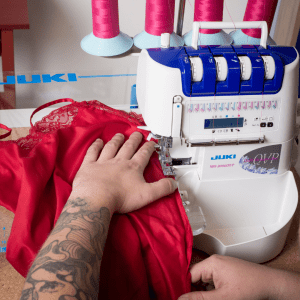
The primary function of a serger is to trim seam allowances and enclose the raw edges of the fabric inside a thread casing. Overlocking is achieved through loopers and needles that work together to form secure, stretchy seams that prevent fabric from fraying. Sergers simultaneously trim, stitch, and overlock your projects to save you time and effort. This makes sergers indispensable for achieving professional-quality finishes on a variety of fabrics!
The overlocking capability of a serger is a unique advantage, especially when working with knit or stretch fabrics! Using multiple threads and loopers allows the serger to produce strong, flexible seams that stretch without breaking, which is essential for garments and projects that require elasticity. Additionally, the clean, finished look of overlocked seams adds a level of polish to any sewing project, whether it’s clothing, home décor, or accessories. By effectively preventing fraying and unraveling, sergers ensure the longevity and durability of finished items, making them a valuable addition to any sewist’s toolkit!
Features Found on a JUKI Serger
One of the standout features of JUKI sergers is our innovative air thread technology, which revolutionizes the threading process and enhances the overall sewing experience. This technology uses a jet of air to effortlessly thread the loopers, eliminating the frustration often associated with manually threading the machine. It is perfect for those who have trouble threading their needle. With the push of a lever, threads are instantly guided through the machine, significantly reducing setup time and allowing sewists to focus more on their creative projects!
Air thread technology simplifies the threading process and ensures consistent and reliable performance. It minimizes the risk of threading errors, leading to skipped stitches or thread breakage, ensuring smooth and uninterrupted sewing. This feature is great for those who work with multiple thread changes or different types of fabrics, creating a hassle-free and efficient way to prepare the machine for various projects! You can learn more about the differences between traditional and air thread sergers by visiting our past blog here. (https://sewinwithjuki.com/2024/04/13/juki-tip-air-thread-sergers-vs-traditional-manual-sergers/)
Our sergers also offer multiple thread capability, allowing for 2, 3, 4, or even 5 threads to be used in various combinations, providing a wide array of stitch options. This versatility is ideal for different types of fabrics and sewing techniques.
Other important features are
Differential feed: this ensures smooth and even stitching on various fabrics, preventing issues like puckering or stretching.
Automatic rolled hem function: This function makes it easy to create professional rolled hems without changing the presser foot or stitch plate.
Adjustable stitch length and width: this allows customization to suit specific projects.
Color-coded threading guides: This simplifies the threading process and makes it accessible to beginners.
Basic Functions of a Serger
Understanding the basic functions of your serger is crucial for getting the most out of it. Here are the core capabilities:
Overlocking: A serger’s primary function is to create secure seams that prevent fabric fraying. Overlocking stitches are formed by multiple threads and loopers that encase the raw edges of the fabric, producing a neat, professional finish. This is particularly useful for finishing seams on garments, ensuring they are durable and long-lasting.
Seaming: Sergers combine fabric with a durable, stretchy seam. This is especially important for knit and stretch fabrics, where flexibility is needed. The strength and elasticity of serged seams make them ideal for activewear, lingerie, and other garments that require a high degree of movement!
Hemming: Sergers can create clean, professional edges using various hemming techniques. Rolled hems are perfect for lightweight fabrics like chiffon or silk, while narrow hems are excellent for casual wear. Blind hems provide an invisible finish, making them suitable for dress pants or skirts. The automatic rolled hem feature on many JUKI sergers simplifies this process, allowing you to switch between different hem types effortlessly.
Edge Finishing: Sergers provide excellent edge finishing for single layers of fabric, such as lightweight or sheer materials. This prevents fraying and gives the fabric edges a polished look, making them ideal for scarves, blouses, and other delicate items. The differential feed ensures that even the most challenging fabrics are handled smoothly.
Decorative Stitching: Beyond functional seams, sergers can also be used for decorative stitching. By using decorative threads and adjusting the stitch settings, you can add a stylish touch to your projects. This can include creating eye-catching edges on garments, adding decorative trims to home décor items, or incorporating unique design elements into your accessories.
Fashion: Sergers are valuable in garment construction, providing professional-looking seams and hems! The serger’s ability to create solid and stretchy seams ensures that your garments are not only durable but also comfortable to wear. From T-shirts and leggings to dresses and activewear, a serger can help you create it all, giving your homemade clothing a polished, store-bought appearance.
Quilting: While sergers are not usually associated with quilting, they can be a valuable tool in the quilting process! Using a serger to piece quilt blocks adds a nice touch to your quilting projects, creating firm, finished edges that are less likely to fray. This technique can help make quilted garments, bags, or home décor, where durability and a clean finish are essential due to heavy use! You can also serge the edges of quilt blocks before assembly to make the quilting process faster and more efficient.
Home Décor: Create a living space with beautifully handcrafted home décor! Sergers are perfect for helping you create durable and personal finishes on home pieces like pillowcases, tablecloths, and curtains. For example, the overlock stitch prevents fraying and adds a clean, professional edge to your projects. You can use your serger to add decorative touches, like ruffles or piping, and enhance the aesthetic appeal of your home décor style!
Accessories: Creating accessories with a serger ensures your projects are sturdy and chic. Bags, pouches, and other accessories benefit from the serger’s ability to produce neat, fray-free edges and strong seams. Whether making a tote bag, a make-up pouch, or a laptop sleeve, a serger can help you achieve a professional finish that withstands daily wear and tear.
Upcycling: Create something new with old clothes by using your serger to alter and embellish them! Serged seams and decorative edges can transform your wardrobe into trendy, personalized pieces. Try adding ruffles to an old skirt, convert a pair of jeans into shorts, or create a patchwork jacket from fabric scraps! The possibilities are endless, and upcycling with a serger saves money and supports sustainable fashion practices.
Investing in a JUKI serger can help you expand your skills and enhance your sewing experience! They offer efficiency, versatility, and professional-quality finishes, whether you’re making clothes, home décor items, or accessories. Embrace the potential of your JUKI serger and explore the endless possibilities it brings to your sewing ideas.
Learn more about JUKI’s Serger lines by visiting us here and here. Happy serving!
JUKI sergers are renowned for their versatility and precision, making them a go-to choice for beginner and advanced sewists! These machines are designed to handle a wide range of projects and sewing plans and help you create professional-looking seams to add decorative finishes. Today, we will discuss the accessories you can find for our JUKI sergers that will help these projects come to life!
Accessorizing your serger not only enhances its functionality but also allows you to tackle more complex projects with ease. Whether you’re adding elastic, creating perfect hems, or embellishing with beads and piping, the right accessories can significantly improve the precision and efficiency of your work.
Let’s Talk Presser Feet
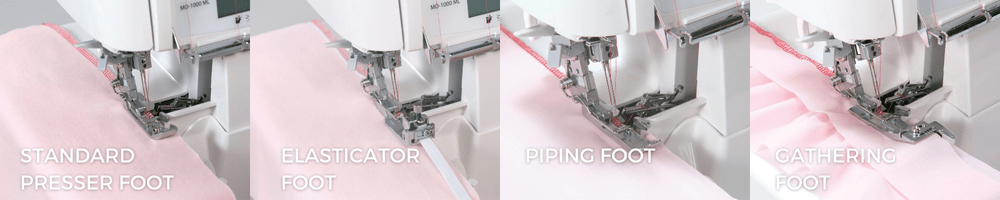
Presser feet are the unsung heroes of any serger, transforming a simple stitch into a professional finish. Each presser foot is designed with a specific function in mind, making it easier to achieve various sewing techniques with precision and efficiency. Here’s a closer look at some of the most essential presser feet for your JUKI serger:
1. Standard Presser Foot: This foot is the workhorse of your serger. It comes pre-installed on most JUKI sergers and is perfect for basic serging tasks like finishing raw edges, sewing seams, and creating overlock stitches. Whether you’re working on lightweight fabrics or heavier materials, this versatile presser foot ensures even feeding and consistent stitch quality. It’s ideal for general-purpose sewing and is often the go-to choice for many projects.
2. Elasticator Foot: Adding elastic to fabric can be tricky, but the Elasticator Foot simplifies the process by evenly stretching and stitching the elastic in place. This foot is perfect for creating garments that require stretch, like your swimwear, lingerie, or activewear. The Elasticator Foot also ensures the elastic is attached securely and evenly without the risk of overstretching or puckering the fabric. It’s a game-changer for anyone sewing with stretchy materials!
3. Piping Foot: The Piping Foot is designed to help you easily insert piping into seams. This adds a decorative touch to your projects! You can use piping in home décor items like cushions, pillows, upholstery, and garments to add decorative elements. This foot has a groove that holds the piping in place as you stitch, ensuring that it’s evenly attached with no shifting. The result is a crisp, professional finish that elevates the look of your handmade items.
4. Gathering Foot: Creating ruffles and gathers can be time-consuming, but the Gathering Foot makes it easy! This foot gently gathers the fabric as you sew, allowing you to create even, beautiful ruffles in no time. It’s perfect for adding volume to skirts, sleeves, and home décor projects like bed skirts and curtains. The Gathering Foot also works excellent with lightweight to medium-weight fabrics, giving you consistent gathers without the hassle of manual gathering!
In addition to presser feet, JUKI sergers offer a range of specialty plates and accessories that can elevate your sewing projects to the next level. These tools are designed to add intricate details and professional finishes to your work, allowing you to explore more creative possibilities with your serger. Here’s a breakdown of some essential specialty accessories that can enhance your sewing experience:
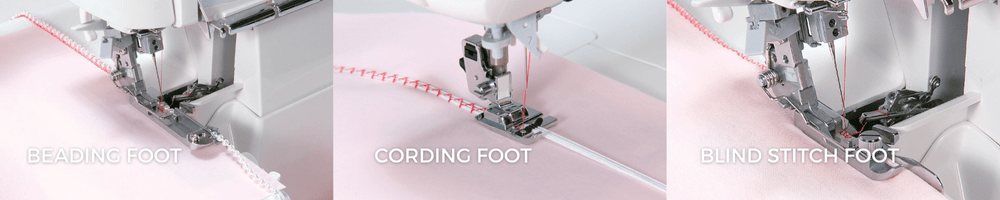
1. Beading Foot: The Beading Foot is a beautiful accessory for anyone looking to add a touch of sparkle to their projects. This foot is designed to sew beads, pearls, or sequins onto fabric precisely and easily. The groove on the presser foot guides the beads while the serger stitches them securely. This accessory is especially popular for bridal wear, evening gowns, and other special occasion garments where delicate embellishments are desired. Whether you’re adding a subtle trim or creating a bold, beaded design, the Beading Foot makes the process smooth and professional!
2. Cording Foot: The Cording Foot is an excellent tool for adding decorative cords such as yarn and strands of pearls to your sewing projects. This foot is designed to hold the cord in place while the serger stitches it securely onto the fabric. It’s perfect for enhancing the seams of garments, bags, and home décor items, adding a stylish and professional touch. The Cording Foot can accommodate various cord sizes, making it versatile for different projects. You can outline a neckline, add texture to a pillow, or create intricate trims!
3. Blind Stitch Foot: If you want to create invisible hems, the Blind Stitch Foot is a must-have accessory! With this foot, you can sew a barely visible hem from the outside of the fabric, making it perfect for hemming pants, skirts, and dresses. The foot also offers an adjustable guide that helps you position the fabric correctly, ensuring that the stitches are hidden within the hem. The Blind Stitch Foot is beneficial for formal wear, business attire, and any garment where a discreet hem is needed.
Finding the right accessories for your JUKI serger unlocks a new level of creativity in your sewing projects! With the right accessories, you can transform your serger from a simple overlocking machine into a versatile tool capable of handling a wide range of tasks—intricate beading, professional hems, decorative finishes, and more.
Experimenting with different accessories is key to expanding your sewing capabilities! Whether you’re a beginner looking to learn new techniques or an experienced sewist aiming to refine your skills, these tools provide endless possibilities for customization and innovation in your projects. Don’t hesitate to explore and try various presser feet and other serger accessories to see how they can enhance your creative process.
To get a comprehensive overview of the available accessories and how they can benefit your sewing, check out your nearest JUKI dealer here!
Today, we’re excited to introduce our newest JUKI Ambassador, Amanda Gerard, the talented founder and owner of SewBestie LLC, located in the heart of Oceanside, California! With over 20 years of sewing experience, Amanda has turned her passion for textile art into a thriving business that serves the San Diego and North County communities. SewBestie LLC offers a variety of classes designed with beginners in mind, making the art of sewing accessible and enjoyable for both children and adults.
Amanda’s journey began at 11 when she first noticed her mother repairing and hemming clothing on her sewing machine. Though her mother was not an expert sewist, Amanda’s curiosity was piqued, and she asked to learn more. With a simple introduction to the basics from her mother —how to turn on the machine and thread it—Amanda’s started learning through trial and error! Her first major project, a Renaissance Noble costume, proved to be both a challenge and a revelation. Despite the difficulties of working with upholstery, satin, boning, and grommets, Amanda finished the costume and discovered her love for textile art.
“I have been lucky my entire life to have a very vivid imagination, so I can look at a fabric and immediately see in my head where it’s going to go and how it is going to match specific patterns and placement in a design.”
Creativity is at the core of Amanda’s work! She deeply loves bright colors and high-contrast designs, often gravitating toward rainbow palettes that bring her strong imagination to life. When designing custom garments and accessories for clients, Her favorite projects are those where clients give her creative freedom! With a theme and budget, Amanda can explore new techniques and push the boundaries of her craft. In recent years, vinyl has become one of her preferred materials, particularly in bag-making, where she enjoys experimenting with clear and smooth varieties. Collaborating with independent designers has been especially fulfilling for Amanda, as she’s loved helping bring their unique visions to life.
When asked about the fabrics and patterns she enjoys most, Amanda shouted out her love for vinyl! Transitioning from clothing to bag-making was a significant shift in her creative journey, but one that she was excited to embrace. Working with vinyl, particularly in the form of backpacks or makeup bags, has opened up new avenues for her creativity.
To further enhance her skills, Amanda has attended various workshops over the years, with one class elevating her journey to new levels she hadn’t touched before. A few years ago, she attended an industrial machine workshop with Ann Benvenuto of Simple Artful Stuff in Dallas, Texas. This experience introduced her to the world of industrial straight stitch machines, specifically geared towards bag making! The workshop, which focused on crafting leather bags, provided Amanda with invaluable knowledge about working with leather and the tools and machines required for the process. This experience led her to invest in JUKI’s Industrial 1541 and 1341 machines, which have become essential in her leather crafting and larger vinyl projects. Since then, Ann has continued to be a mentor and source of inspiration for Amanda, whose skills and passion for sewing have continued to grow since that pivotal workshop.
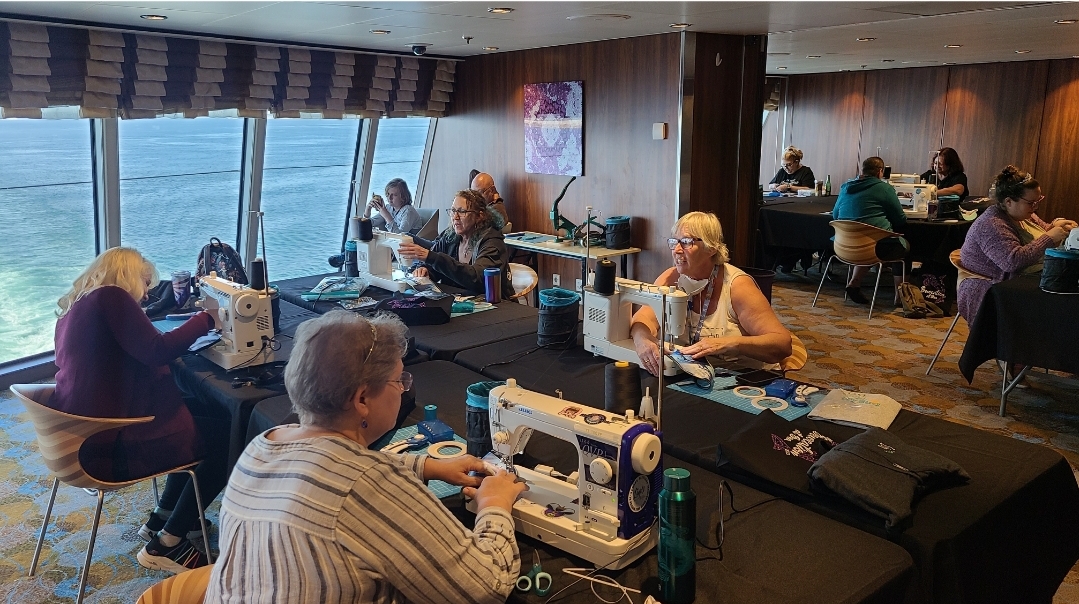
Amanda’s love for sewing goes beyond creating, and now she shares her knowledge of the hobby she loves. Opening her first sewing classroom in 2018 was an exciting and nerve-wracking experience for Amanda. In discussing her plans with her husband, she realized there were no similar classes or workshops available in their area of South Carolina. While her husband worried that this indicated a lack of interest, Amanda believed it was because no one had yet filled the gap. And her instincts proved correct!
The community’s response was overwhelmingly positive, with children and adults eager to participate in her classes. Today, SewBestie’s classes boast a roughly even split between kids and adults, reflecting the widespread enthusiasm for sewing that Amanda has helped cultivate. However, some challenges came with tackling this new venture.
“I didn’t think that I had enough knowledge to share with other people… Once I started sharing my knowledge and walking people through the basics, I realized how much I knew.”
One challenge Amanda faced when she first started SewBestie LLC was imposter syndrome and questioning whether she had enough knowledge to share with others. Amanda pushed forward, even with these doubts, and surprised herself with the knowledge she had accumulated over the years of sewing. She’s gone on to develop foundation projects for her students, designed to build their skills progressively. Each project builds upon the last, allowing students to grow confidently as they learn.
While Amanda’s classes have continued to succeed, she admits that she still contends with imposter syndrome and believes it’s important to remain humble and open to learning every day.
In the long run, teaching others to sew has become one of the most rewarding aspects of Amanda’s career. She thrives when watching her students, particularly adults, overcome their fear of trying something new. Children, she notes, tend to be fearless, while adults are often more cautious. Seeing the moment when a student has a breakthrough—when something finally clicks—it’s that light bulb moment she loves to witness. She consistently encourages her students to trust the process, even if they’re unsure how everything will come together.
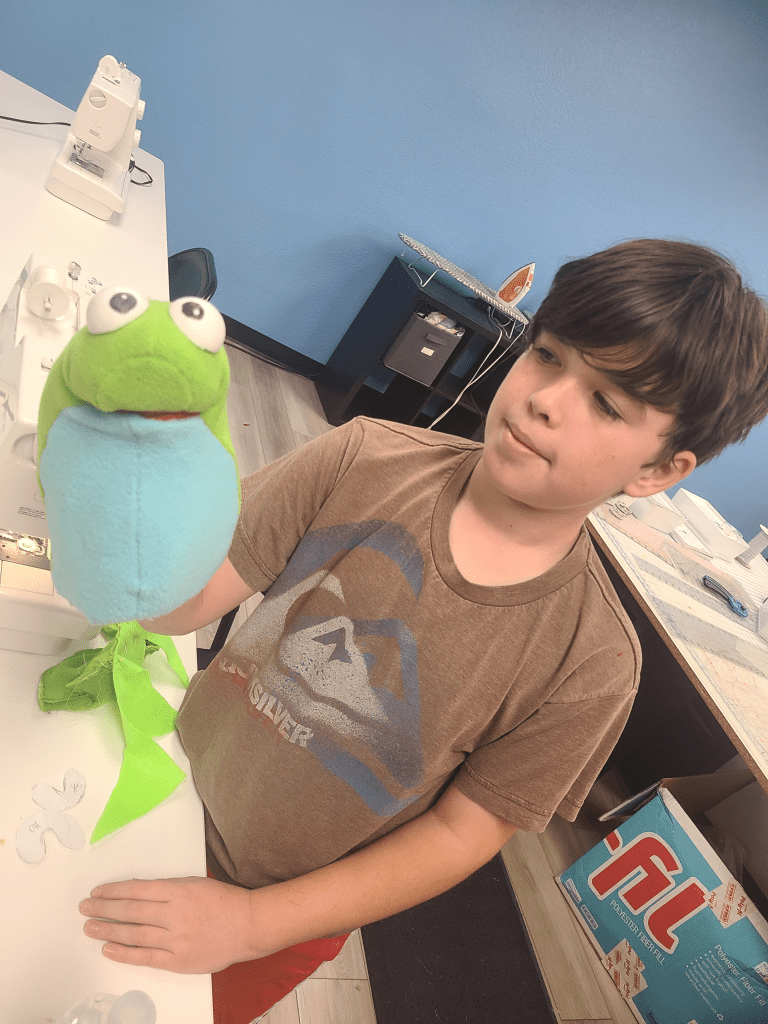
Since opening her classes, Amanda’s most memorable teaching moment has been with a student named Ryan, who has been a student at SewBestie for a few years. Ryan, a young student, once brought in a hand-drawn picture of an animal monster and, with Amanda’s guidance, turned it into a stuffed animal within two hours, impressing her with his passion! Because of his passion, Amanda has helped Ryan explore the world of heavier fabrics with the JUKI TL.
As Amanda looks to the future for SewBestie, she is excited about expanding their lessons by including retreats and events and continuing to work on their YouTube channel. With a goal of reaching 10,000 subscribers, Amanda is eager to continue sharing her love for sewing with an even wider audience! You can learn more about SewBestie’s YouTube by visiting here.
For aspiring sewists and entrepreneurs, Amanda’s advice is simple: Don’t stop learning and always keep your passion at the forefront. She says, “When you enjoy your passion, it shows, and the business will come.”
Amanda Gerard’s journey from self-taught sewist to successful entrepreneur and JUKI Ambassador is a testament to the power of passion, perseverance, and creativity. We’re thrilled to have her as part of the JUKI family and can’t wait to see how she continues to inspire and teach others in the years to come!
“Don’t stop! Learning is not something that happens overnight; it’s a process that takes time and practice.”

 sewinwithjuki.com