Beginning Your Sewing Journey with JUKI

Have you been watching sewing videos? And find yourself interested in patterns and crafts? We’re here to help you find a suitable computerized beginner machine with JUKI! Finding your first machine can be daunting, especially with all the features and products out there, but we’ve all been there!

To help you learn about machine features, accessories, and more, we’ll dive in on some key things you should keep in mind when searching. Buying a suitable machine doesn’t mean buying the most expensive machine, but instead the best machine for you.

Let’s start this guide by reviewing what a computerized sewing machine is.

A computerized machine offers the most effortless experience for the new sewist in today’s world. Ran by a computer, all functions on the sewing machine can be easily controlled. Precise and loaded with multiple features, these machines can offer unforgettable experiences.

Every feature can now be controlled with a computer. From stitch length to the order of decorative stitches you use, it is all broken down at a touch of a button. For those that find themselves growing in their sewing journey, a computerized machine is an excellent tool for having versatile options for creating.

What Stitches Do I Need?

Choosing a suitable machine will depend on what projects you’re creating! This is why it’s essential to know what type of stitches you’ll need. While computerized sewing machines come with many stitch options, below, we’re going to list some key ones you should keep an eye out for, as well as some extras!

The Must-Have’s

The Straight-Stitch: Adjustable from 0 – 5mm, the straight stitch can be used for locking stitches at 0mm or moved to 5mm for basting and gathering. The average stitch length will be 2.5 mm for most projects. Remember, you’re going to be trying your hand at different projects when you first start, so make sure you’re versatile in your projects by changing the stitch length.

Zig-Zag Stitch: Adjustable in length and width, the zigzag stitch is used for stretchy materials.

The Add-On’s

Buttonhole Stitch: An automated version of the zigzag stitch, a buttonhole stitch will secure your buttons well when creating.

Stretch or Knit Stitch: Plan on sewing with knits? The stretch or knit stitch is the ideal choice. Stretch your knits without worrying about popping stitches once stitched using the feature. Zig-zag can get the job done, but stretch or knit stretch will make the job easier.

Blind Hem Stitch: No matter your project, a blind hem stitch is a great feature, which basically hides your hems on skirts, pants, and more.

Let’s Talk Features

After you’ve decided on what stitches you’ll want, think about what features you’re looking for. Now in days, many machines offer features that make sewing easy and fast. While these aren’t needed, think of those features that will improve your experience. To start you off, we’re going to go over some top features all sewist love!

  • Lighting: make sure to find a machine with good lighting! From needle threading to seeing your stitches, we want to be able to see our project come together.
  • Needle Threader: Make life easier with these features! This feature offers you a chance to thread your needle without the work.
  • Needle Up/Down: Use the needle up/down feature when turning fabric or pivoting.
  • Adjustable Speed Control is another feature that is perfect for new sewists wanting to experiment with different speeds.
  • Moveable Needle Position: Attach zippers and top stitching easily with the ability to move the needle position.
  • Built-In Free Arm: Attach sleeves, work on tight projects, and more using a built-in free arm, usually found when removing the accessories box.

Don’t Forget Accessories and Presser Feet!

Accessories from HZL-70HW-A

Depending on what projects you plan to create, it’s best to have the right accessories and presser feet on hand. So let’s go back to that question from earlier, what do you plan on creating?

If you’re working on apparel, look for presser feet like the Zipper Presser foot, Buttonhole Presser foot, and Button Attaching Presser foot. These three accessories will save you headaches in the future and allow you to create professional-looking garments.

Quilting is easier done when you have the right feel with you. So look for presser feet like the ¼ Guide Foot and a Quilt Guide. While your machine may not come with these two accessories, they will help you when you begin creating your projects.

Are you looking to create home décor? First, search for presser feet like an Invisible Zipper Foot, Applique Presser Foot, or Gathering Foot. As long as your machine is compatible with these feet, you can now add professional finishing touches to your table mats, pillows, and more.

Our JUKI Recommendations

If you’re looking at JUKI for your first electrical and computerized sewing machine, we have some great options all beginner sewists can enjoy!
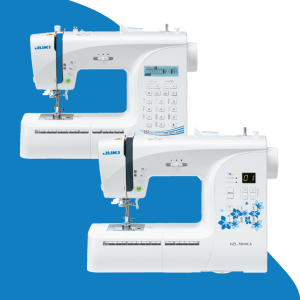
The HZL-70HW-A and HZL-80-HP-A

Compact and easy to use, the HZL-70HW-A and HZL-80-HP-A offer easy storage and travel! So take this sewing machine to your classes and retreats as you begin your journey. With features all sewists enjoy, like the automatic needle threader, needle up and down, and dropping down the feed dogs to free motion quilt, it offers the chance to grow in your skills and make your experience fun.

Equipped with 80 or 197 stitch patterns (depending on the machine you enjoy best), buttonhole patterns, and a variety of accessories, it offers beginners the opportunity to create various projects. It also includes the zipper foot, decorative stitch foot, blind stitch hem foot, and so much more, helping you build your accessory kit from the first purchase.
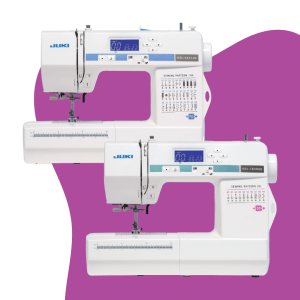
The HZL-LB5020 and HZL-LB5100

What we like to call a beginner’s dream, the HZL-LB Series is user-friendly and comes with a complete range of features in a small compact size! Experts and beginners can enjoy features like an automatic needle threader, stitch control, drop feed, needle up/down, and more. So whether you’re focusing on quilt creation or taking on your couch pillows, it can help your projects become a reality.

Simple in its design, the HZL-LB Series offers 20 to 100 stitch patterns (depending on whether you love the HZL-LB5020 or HZL-LB5100 more), allowing quilters and apparel sewists to create seamless designs with ease on their projects.
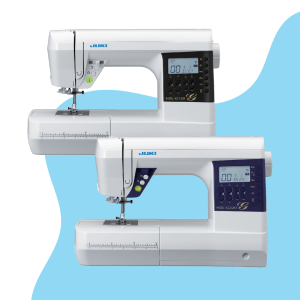
The HZL-G120 and HZL-G220

Moving to a fully computerized machine, we’re moving onto an option some beginners might shy from, but it does include those features they’ll love! The HZL-G Series offers you the chance to take on big projects while being easy to use and beginner friendly. It also provides a box-feed system, allowing you to create beautiful seams even at a beginner level.

Still offering those features we love like the automatic needle thread and up/down. You also get a larger sewing space and a fine overcasting stitch.

The machine also offers the chance to easily work with heavy material, like denim, and has a large variety of presser feet options for garments, quilters, and home décor sewists to enjoy when they’re creating. JUKI even offers kits compatible with this machine curated for heavy users, quilters, and those that love adding a creative touch.

When It’s Time To Buy

Decided what machine you want to get and are ready to buy? Then, contact your nearest JUKI dealer here! We always recommend finding your local dealer when you can go for two big reasons: training and support.

Finding a dealer that can assist you in setting up and finding a suitable machine is essential when you’re entering the world of sewing. In addition, these shops can offer you sewing classes, maintenance support, technical support, and much more.

Now that you have a plan for what you’re looking for, we hope this helps you find the right machine for you!

JUKI Small Business Seminar: Marketing Strategies for the Small Business Owner

When you’re a small business owner, marketing can be challenging to do on your own. Many have trouble finding and reaching the right audience, and from there, getting that audience to visit in person or an eCommerce shop. If you’re having difficulty deciding how to market your product or services, follow along as we give options on the top strategies business swear by and how to use these strategies for your business. Having the right strategy can help you drive traffic to your store and increase shop sales.

These strategies are easy and quick to implement, making it easier to begin today and test what options work best for you and your business. So don’t get stuck on marketing, and find fun ways to get the work done right.

Strategies to Implement Today

Let’s review five strategies you can implement into your marketing plan today.

Email Marketing

Email marketing refers to those email promotions, newsletters, and advertisements you receive in your inbox from brands that you’ve subscribed to or shopped from before. You can use this as a way to inform customers of new products, promote sales, educate them on products or services you offer, and so much more.

Since this is a communication form owned exclusively by you, you can choose what’s implemented and how you will design and send these email marketing campaigns. These programs’ costs can range from $20 to hundreds depending on your needs. Below are some programs you can look into that are perfect for email marketing.

Email Marketing Programs:

  1. Constant Contact
  2. SendinBlue
  3. MailChimp
  4. ActiveCampaign
  5. GetResponse

Keep in mind that many of these services offer automated email marketing campaigns, making life easier for you and saving you time. Below are some examples of how you can use automated email campaigns.

  1. Emails upon Purchase: These can be sent after checkout and help send shipping information, customer service information, and anything else you feel is essential for the customer’s purchase.
  2. Promo Emails: Use these campaigns to promote new products, back in stock announcements for popular items, and sale promos your shop might be having like cyber Monday.
  3. Relationship Building: Use this platform as a way to share business newsletters. Share videos to introduce yourself, products, or services. Promote your blog or team members. Think of this as a road between you and the customer.

Finding Your Influencer/Affiliate partner

One of the best ways to market your service or product is finding those influences or affiliated businesses with a trusted customer base that resonates with your brand.

Influencers involve partnering with creators who align with your brand message and promote your product or services on their pages. They can bring high user engagement to your social network pages and website and create a relationship between you and your niche base. If you’re going to work with an influencer for your brand, the top-selling social media sites are Instagram, Youtube, Facebook, Tiktok, and Twitter.

Affiliate marketing, on the other hand, is a business-to-business transaction. Usually, the affiliate you work with will help you generate those leads and sales you’re hoping for. These are often paid companies that find fun ways to promote your brand for you. They can share it on their blogs, podcasts, social media platforms, websites, and more.

Google Ads

This marketing strategy is a little more pricey than the ones we’ve mentioned, but let’s talk about how they work and their cost.

Misunderstood and labeled as tricky to use, Google ads can be one of the best ways to reach your customer base. The search engine can run your ads to those looking for products similar to yours by using keywords. For example, if someone searches “personalized t-shirt”, you can promote your products under this, bringing in new customers.

There are different ads you can run. One type is a text that commonly pops up after searching for a product or service. These are labeled as Ads and show up in a blue or green link URL. Another is google shopping and product advertising with images. You can place products in their shop with carousel images, prices, and reviews. These are also labeled with a small tag that says Ad for customers to be aware of.

When it comes to cost, you can go as low as $5 and higher. You only pay when your ads are clicked, and you have the ability to target your ads to the right customer base. By choosing preferences on location, search history, and more, your product has a higher chance of going to the right customer base.

SMS – Text Message Marketing

One of the new and fastest ways to reach your customer base, SMS marketing offers a new and innovative way to share sales, purchase updates, and so much more. With over 90% of SMS marketing messages opened, compared to emails that average 20%-30% opening rate, SMS is a great way to connect with your audience.

Like an email marketing system, you control what content your campaigns have. You can create promotions for sales, membership exclusives, campaigns, and more. These can also be scheduled and sent out at any time. A thoughtful and purposeful campaign can do well on an SMS campaign and bring in those sales you’re looking for. Look below for recommendations on your SMS programs.

SMS Marketing Programs:

  1. Clickatell
  2. ClickSend
  3. BurstSMS
  4. Trumpia
  5. SlickText

Get on Social Media

One of the best things you can do for your brand is exposed your business to social media sites. You can promote and sell your products and services by using social networks. You have the option to pay for your post to be boosted (non-organic advertisement) or to not pay at all and use tricks like hashtags and geolocations to bring attention to your socials (organic advertisement.)

Many social media sites are out now, and each one has its own audience and trend. To choose the right channel where you should market, pay attention to who is in your niche and how you plan to advertise to them. Choosing the right channel can also depend on the merchandise you’re selling and your goals.

Your goal when using social media as a tool for marketing usually falls along with the following:

  • Building a relationship with the customer base
  • Bringing in new leads
  • Showcasing your brand
  • Increasing sales

The best way to complete this effectively is by creating content, scheduling your posts, and automating what you can. Remember to take this a step further and communicate with your followers. Respond to comments, like posts that tag or reference you, repost relative stories, and keep up with customer-related questions. Building a relationship through these services is one of the best ways to create new and returning customers.

The Next Step

If you’ve been researching new ways to market your business, take one of these techniques and try it out! Trial and error can be the best way to see what works for your customer base and you when it comes to marketing. By taking the initiative to try new marketing tactics, you can follow the results and see what options are best for your sales and overall branding.

Some strategies will work better for others than you, and this is okay! Marketing is about finding your audience and reaching out to them on their channels—test techniques and channels to see where you can get the best response from shoppers.

Whatever technique you choose, don’t forget to change it up every while and explore new channels. Marketing starts with you and deciding what best ways will get your name out there.

Do you have tips for those marketing their small business? Let them know and leave a comment below!

JUKI Spotlight: Exploring House of Lilli with Anjori Halder

Meet small business owner Anjori Halder, creator, and designer for House of Lilli, a business that does embroidery a little differently. Known for her free motion embroidery work created by free motion quilting on the HZL-F600 sewing machine, Anjori has begun making a name for herself in the sewing world. From beautiful full portrait designs to small motifs that bring her apparel to life, let’s learn about how Anjori discovered her skills in embroidery work, where she began, and where she plans to go!

It all started with a wedding invite in 2010. One day, after becoming a bridesmaid to her dear friend Veronique, Anjori needed a crinoline slip for a themed dress! In her “I want to DIY everything” phase of life, she decided to take it upon herself to create a slip with the help of some blogs and a machine off Craigslist. Even after “crudely” finishing her first piece of apparel, her journey in sewing had truly begun.

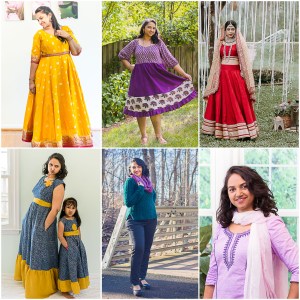
Outfits created by Anjori through sewing, upcycling, and embroidery

“I call it my therapy and use it constantly to de-stress. But I also use sewing to keep my mind sharp.”

While the journey was on and off, Anjori would find time to complete refashions and housewares in her downtime from her career as a software engineer and project manager. It wasn’t until she transitioned to a stay-at-home mom that Anjori truly began immersing herself in sewing. Finding the need to do something and gain a sense of accomplishment, she threw herself into the hobby. However, she would soon find out that sewing could be toxic after experiencing the push of social media on her work.

“That need to sew turned toxic, though. Social media and the idea that you had to be creating content all the time to grow followers, to, in turn, grow your business took a toll.”

This moment would change the direction in which Anjori was running her business. After learning about slow fashion and revaluating how she was running her business, Anjori decided it was time to do things differently. Slowing down her work, she began creating again for pure enjoyment and not just for the sake of creating.

Outfits created for Anjori’s daughter through sewing, upcycling, and embroidery

Indie patterns and pattern testing brought the fun and creativity back to sewing for Anjori. She began by creating clothing for her daughter, honing her skills at a smaller scale, and was able to grow her confidence in garment creation. After sewing an Anarkali from a sari that her late mother had gifted her, Anjori’s confidence in garment creation for adults rose as well.

Inspired by those she was creating for, she focuses on how her creations will be used and enjoyed before sewing. Her favorite inspiration is her daughter, a strong-willed and goofy personality who had an obsession with construction vehicles! After her daughter requested a dress with a bulldozer on it, and Anjori had no luck finding one, she decided to test her skills in embroidery and make her one! Continuing to create for her daughter, Anjori focused on embroidering designs and sayings that would inspire her daughter in life.

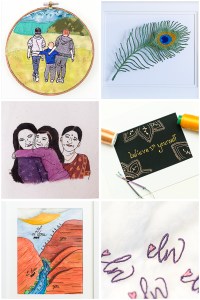
House of Lilli showcases this with Anjori’s creations focused on positive & reaffirming messages. Her embroidered art shop concentrates on creating art with only a machine, thread, and her hands. Pulling from her heritage, she creates Indian garments, or garments with Indian motifs such as paisleys, peacocks, elephants, and tigers. Completed with free motion embroidery through the free motion quilting feature, you can see the pops of color and bright energy she pulls into her work. Described by friends as positive and always looking for the bright side, it’s no wonder she brings this into every project she creates, not letting mistakes in her projects hold her back.

“Mistakes are opportunities to learn and keep going or realize change is needed and pivot to something new.”

Free Motion Embroidered Designs

What’s our favorite part of her creative process? The unique use of free motion quilting as free motion embroidery! Gravitating toward embroidery work, even as a child, Anjori knew that adding images and designs would be the next step in going from homemade to handmade. Unfortunately, it was here where she hit a wall. Knowing that the cost of an embroidery machine could be high, she found herself at a standstill on what step to take next. It wasn’t until she stumbled upon creator Emma Giacalone on Instagram that she discovered the possibility of embroidering using free motion quilting.

A new door in creating had been opened, and Anjori walked right in! Finding a new way to bring her art to life, she was excited about how simple the process was to begin. All she started with was a sewing machine that could drop the feed dogs, thread, fabric, and a design. It would take time before she began using a darning foot, admitting to still skipping that step on some days!

Using the HZL-F600, she created her designs quickly and easily fill them in. Creating embroidery using the HZL-F600 is fun and different and has allowed Anjori the freedom of creation in embroidery while sticking to her budget. When asked about what she recommends for JUKI users out there who want to try their hand at free motion embroidery through free motion quilting, she advised having the following tools in your sewing kit:

  • Embroidery hoop
  • Stabilizer of some sort (washable or tear away)
  • Open toe darning foot
  • Heat erasable pen

While using a machine with ample throat space has been helpful, as well as her tools, she also advises to seek out training! After taking a sculptural embroidery class from Meredith Woolnough and learning new tricks and tips for her projects, she encourages others to invest in themselves and their hobbies.

“Never be afraid to invest in learning.”

While opening her small business has been a journey, she knows that planning and strategy are what build a business. As a small business owner, you are now the marketing manager, designer, producer, shipper, and so much more. Success can be different for everyone, so Anjori advises taking time to figure out what success is to you and not comparing yourself to other businesses. She also recommends getting to the nitty gritty and taking those “boring” business courses that can assist you in running yours!

Taking her own advice to heart, she’s recently taken a business course presented by Jan Ditchfield and has begun reworking her strategies and plan. So while we wait for the new and improved House of Lilli to rise, we’re so excited we were able to introduce her creations and technique!

Created using Free Motion Embroidery

Continuing her work in embroidery, Anjori hopes to keep instilling positive messages in her creations and sharing her work with others.

“Creating with my hands, whether it is sewing, painting, drawing, or knitting, is a treat for my soul. I find it relaxing and fun, with a sense of accomplishment when you complete a project. Of course, in the end, you usually end up with something nice to look at too.”

To learn more about Anjori and her journey in embroidery, follow along below for her social links!

Visit House of Lilli’s website today to keep up with her blog and sign up for her newsletter!

Keep up with Anjori’s free motion embroidery work on her Instagram here!

JUKI Small Business Seminar: Setting Up Your Logistics

You’ve finally started your small business and have a product ready to be sold, your website should be up and running, your budget and finances should be in order, and you have those customers prepared to buy. Now that you have a start-up, let’s discuss getting your product to the customer!

Logistics is how you move materials, components, and products between your suppliers, storage locations, and customers. There are three things you should keep in mind as a seller: speed of delivery, stock of a product, and logistics cost. So let’s dive into your business and review how you create your products and how you’re getting them to the customer.

Lead Times and You

When your business begins to grow in sales, you might be reconstructing your process on where you buy supplies. Buying supplies at your local craft store for a business can be pricey, and when your sales reach a larger scale, it’s not cost-effective anymore.

When you begin to set up your logistics, consider critical lead times. For example, how long will it take for a customer to review your product, how long will it take to process an order and ship it, and how long will it take for you to receive the supplies you need for your product? Asking yourself these questions can help you plan for the cost and speed of your orders and shipments.

Knowing the lead time on the processes in your business will allow you to have smoother communication and expectation within your business and with the customer.

Shipping Carriers

When it comes to your process, shipping time to your customers should be a priority, especially in today’s society we’re shipping the same day, and overnight has become the norm. Because of this, shipping companies will work with small businesses by assisting them in maintaining good relationships with their customers and offering reasonable rates. You can also inquire about assistance provided for small businesses like logistical assistance and managing inventory. Here are the top 5 shipping companies we recommend for small businesses.

  1. United States Postal Service
  2. Sendle
  3. UPS
  4. DHL
  5. FEDEX

United States Postal Service

Ships goods both domestically and internationally, offers discounts and loyalty credits to small businesses, and delivers goods within 2–8 days on average. In addition, it provides free application programming interfaces (APIs) that allow small businesses to add shipping tools to their websites easily.

USPS shipping costs vary based on package size, delivery location, and delivery speed.

TIP: Deliveries on Sundays and holidays typically come with an added cost.

Sendle

An Australia-based small business shipping company, Sendle is best for small packages because it guarantees the best price for domestic packages up to 20 pounds. Shipping is 100% carbon neutral, and there are no subscriptions or contracts involved. They are well known for beating the price charged by major carriers for packages under 20 pounds.

TIP: packages cannot pass 20 pounds, and international shipping is unavailable.

UPS

If you ship large products, UPS will be the best option for you. They offer competitive rates (large flat rate boxes start at $18.40) and have resources for small companies that can assist in preparing your packages and information on palletizing your products if needed. They also offer same-day delivery in some cases.

Small businesses can get discounted pricing from UPS, with shipping incentives ranging from 20% to 50%, depending on the desired shipping speed and the small business’s average weekly shipping volume.

TIP: Some APIs, application programming interfaces, can’t be used on customer-facing websites.

DHL

If your business has taken you overseas, DHL Express is the best for those international shipments. They have a long-lasting history in international shipping and offer resources for small businesses that engage in global trading.

Costs vary widely based on your package’s size, whether it’s an import or export, the shipping speed, surcharges, and any optional services you choose.

TIP: DHL is known for many surcharges and optional service fees, so keep a close eye on your shipping agreement to avoid cost surprises.

FEDEX

FedEx is known for everyday shipping, even weekends, which means your product is delivered faster. FedEx can assist in shipments domestically and internationally and has a shorter lead time than others. Shipments in the US are usually 1-5 days and 3-7 for Alaska and Hawaii.

Small businesses can also benefit from their small business program, offering discounts on shipping, printing, money management tools, and more. They also provide a yearly contest where small businesses can win funds.

CON: Small package shipping costs are higher than USPS. However, they can arrive faster.

Packaging

When it’s time to package, we know how important it is that your product arrives to the customer safe and on time. The first step to completing that goal is ensuring you have the suitable packaging material for your product. One of the things to keep in mind before buying your material is knowing that purchasing in bulk will save you money down the line and is worth the investment. So follow along as we share the top things you’ll need for your packaging process.

Boxes and Mailers

Begin with deciding how you’re going to ship your product to the customer. The most popular options are boxes and mailers.

Cardboard boxes can offer the best protection for many products. Whether your product is a perfect square or an odd-shaped size, a cardboard box with the correct dimensions is an excellent choice for shipping purposes. You can choose to personalize these boxes and find them in different styles, colors, and sizes. These can be bulked orders or found at your local shipping store.

Mailers are great for small or flat products and less prone to damage. You can personalize these to your company’s brand, like cardboard boxes, coming in various colors, styles, and sizes. You can also choose to purchase mailers that come with a form of protection, whether this is internal cushioning or outer material that can handle bad weather.

Depending on your products, you can choose to keep an assortment of shipping materials available to use. However, keep in mind your product when purchasing shipping material to not waste funds on unnecessary boxes or mailers.

Cushioning and Filler

Keep your items safe and secure by purchasing cushioning and filler material. When shipping, these are crucial key material pieces as you want the product to arrive to the customer exactly how it left you.

Cushioning material is used for fragile items like glass, porcelain, or ceramic. Think of bubble wrap, foam peanuts, paper as options to keep the product from shattering or breaking in its packaging.

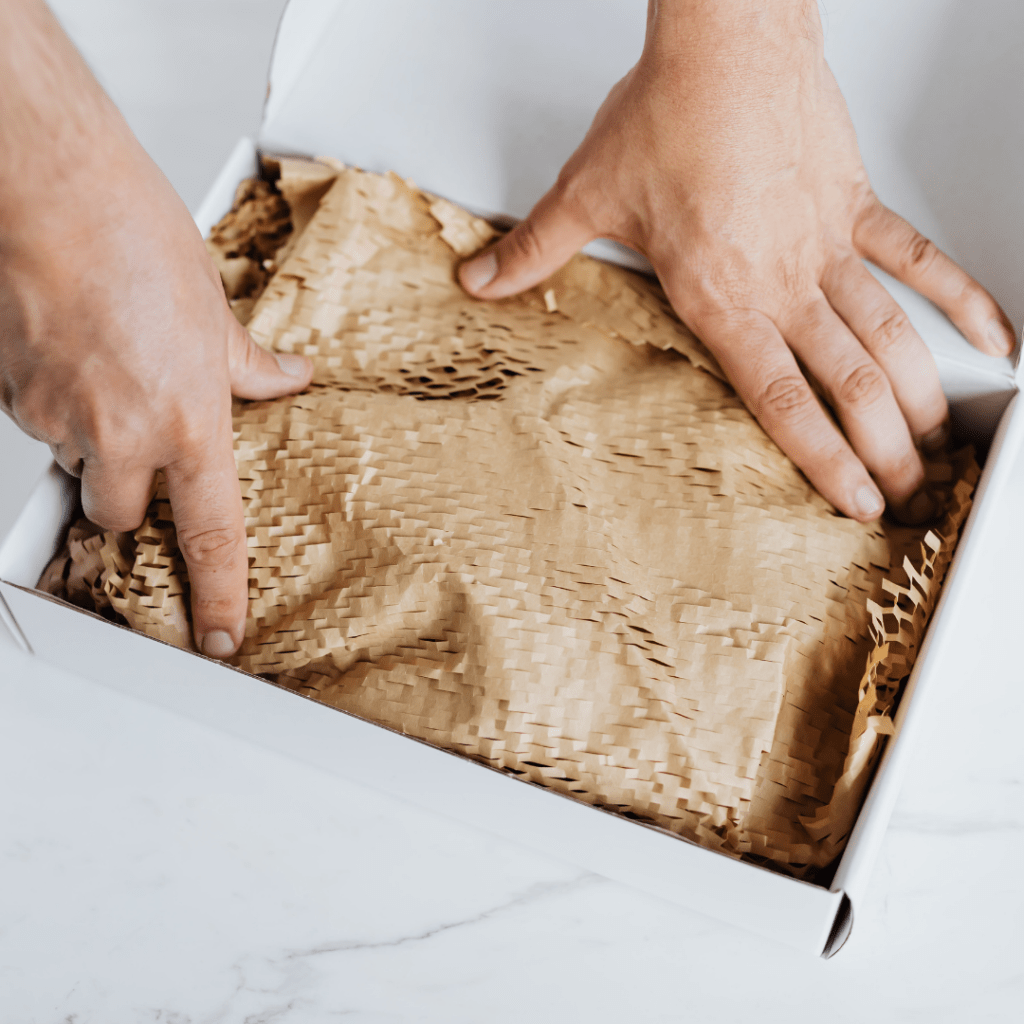
Void Filler can be used for any product. With material options like craft paper, air pillows, shredded paper, and others, these pieces of material will keep the item from moving around or crashing into each other if you’re sending more than one product at a time.

Keep these materials on hand at all times, as you wouldn’t want to ship products out without some filler to avoid broken or chipped products on arrival.

Labeling and Tape

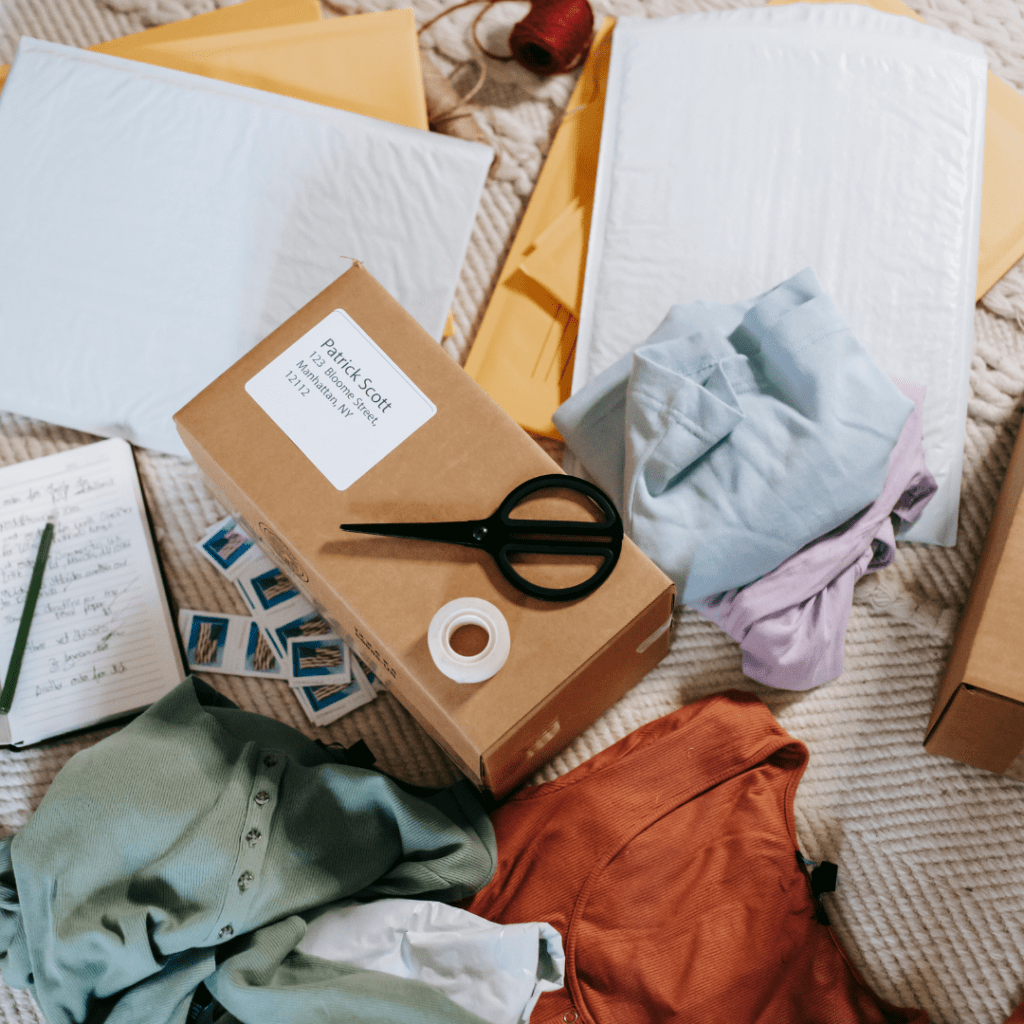
Once your package is well prepared and safe to be closed up, you’ll need to seal and address it before shipping. Using quality tape and labels is the best way to confirm your product arrives to the correct customer on time and safely.

You can even create personalized packaging tape to stand out from competitors since packaging tape comes in various colors and sizes. Having suitable tape will save your product from accidents in the shipment process. You can also choose to invest in a tape dispenser if your company sees a pickup in shipments, which can help the processing speed.

Labels are also created in different sizes and styles. Used mainly for addressing the customer, make sure to use good labels to ensure it won’t fall off in transport. Labels can also include your company logo, specialty stickers like “handle with care” and more. Keep in mind that you can personally create these labels and style them to fit your product and small business.

Get Ready to Ship!

Now that you have the basic information for shipping and handling logistics for your small business think of ways to make yourself stand out. Packaging and shipping don’t need to be boring and can be another way your company stands out from competitors!

Look into eco-friendly merchandise for shipping and packaging. Include thank you letters, promos, or small freebies to induce excitement and customer loyalty. Create an unboxing experience for customers by creating a process that showcases your brand when opening a package from you, like wrapped apparel in tissue paper with a sticker to open the merchandise.

Your package is a window into your business for customers, so make sure to focus on your packaging like you would your product!