JUKI Designer Ambassador: Charles Lu

Introducing Charles Lu, Canadian fashion designer, “Next in Fashion” Alumni, and our new JUKI Designer Ambassador! Born in Ontario, Canada, Charles began sewing at a young age, inspired by his mother’s career. Developing a keen interest in sewing, he continued practicing, motivating him to move to London, UK, at the age of 18 to train at Istituto Marangoni, the London school of fashion and design. It was here that Charles further developed and mastered his technique in garment construction. As a result, Charles has designed and produced garments for global clientele, showcased his collection in London, and created his label. Follow along as we deep dive into Charles’s story and follow his journey to where he is today.
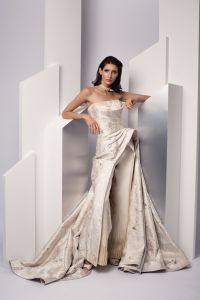
Charles’s journey in fashion began with his mother, his true inspiration. Charles’s mother assisted in her aunt’s clothing manufacturing company in pre-wear Vietnam and then for Levi’s and OshKosh when she first arrived in Canada as a refugee. Charles was strongly deterred from using her sewing machines as a child but was fascinated with her sewing room ever since he could remember. They often went shopping for fabric together in the bargain section, where Charles watched on mesmerized and begging for her to teach him her art. When this failed, due to Charles young age, he moved forward and began visiting local libraries in the hope of finding books on sewing to be learning. Starting with hand-stitched projects, the only sewing he could do, Charles found his creative outlet in life.

“Now, my mother and I have this special language and mutual passion for sewing. We love to sew together, and she is who I always want to impress first. She’s my biggest supporter, and her heart lives in my work.”

By the age of 10 or so, Charles was finally granted permission to work on his mother’s JUKI industrial machine. Two decades later, Charles still loves his mother’s JUKI, now his own. He adds, “it’s intuitive and makes sewing a true pleasure despite how frustrating the sewing process can be. I often use materials that are on the cusp of resistance to regular machines, so I find it comforting to have something I can fully rely on.” Claiming himself as a perfectionist, willing to correct each small detail he notices, he considers his JUKI an extension of himself. “My brand and JUKI share the same ethos of precision and quality, so being an ambassador is an honor and a fitting dream.”

In the present, Charles finds himself enjoying his journey in sewing, claiming his most tremendous success has yet to come. While he found success in the accumulation of a finished collection in the past, he realized this mindset wasn’t allowing him to enjoy the final product and present, as he was always thinking of the next project. His new outlook in his creative process has allowed him to enjoy each collection individually and mentally process his creations. With a desire to learn how every kind of garment is created and understand the construction and materials, Charles focuses on understanding each project’s technical aspect and concentrating on small details. As he states, “perhaps my greatest success is constantly expanding my arsenal of knowledge in my craft.”

His motivation to continue learning stems from his domination of past design failures, and a desire to create a story through his work. Each piece he’s made can be seen as a snapshot or extraction from a period in his life. In many ways, he claims his fashion and art are a memoir and a stamp to his life’s journey, allowing him to keep a visual representation of a diary alive. He finds his favorite projects are those driven by passion. Continuing his goal to constantly keep learning, he used this past year as a form of exploring new avenues in the fashion world he had shied from before. Facing these new projects with apprehension but excitement, he was able to produce over 30 individual pieces on his own for his collection, ranging from corsetry to puffer coats.

As Charles continues his pursuit in the art of fashion, he’s excited to see how the industry has grown recently. “The resurgence of home-sewing and growth of eager creators/designers. There is a beautiful return to craft thanks to part in the sharing of knowledge due it social media. A lot of luxury clothing has reached an entirely unattainable price point and conversely, fast fashion is oversaturated with issues from lack of sustainability, quality, and ethics. I respect anyone who tackles this sort of craft.”

Like many of you, his love for sewing shows itself at that moment when you can see a project and design finally coming together. He understands those moments when it feels like so many things can go wrong, and they do, but he also knows something is rewarding and comparable when the garment finally starts to take shape and come to life. His advice to new sewers is to remember those moments when mistakes are made, to permit yourself to do so. Creating these mistakes is only a step in uncovering secrets that sewers can only find through trial and error.

“It is through the failures that we learn, improve, and innovate.”

We hope you enjoyed getting to learn more about Charles Lu with us!

Follow along on his journey with us and learn more about our designers at (ambassador website) today!
JUKI Designer Ambassador: Kovid Kapoor

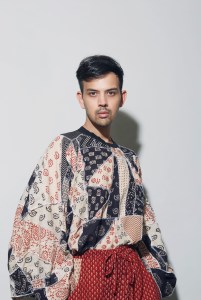
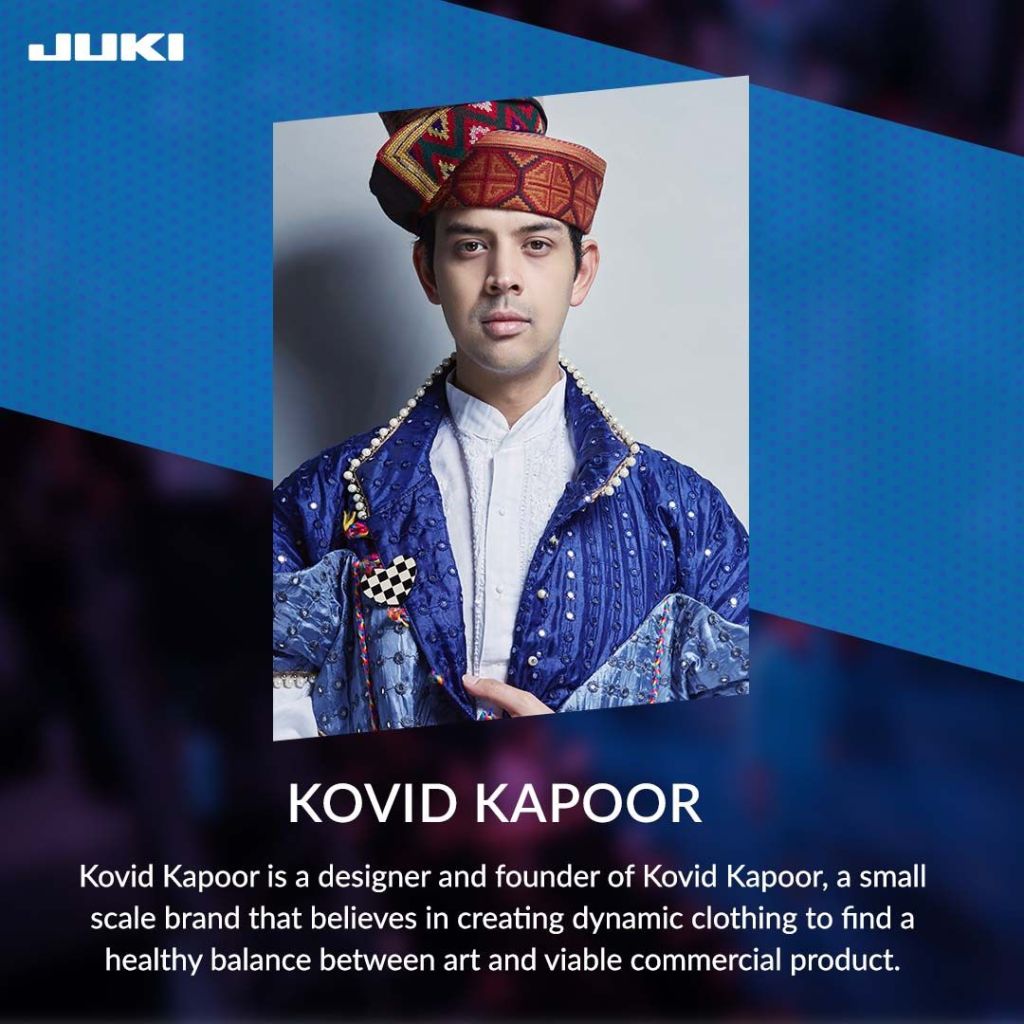
Today we’re introducing a new addition to the JUKI team, Kovid Kapoor, one of our new JUKI Designer Ambassadors! Based in Brooklyn, New York, Kapoor is an Indian fashion designer that focuses on the luxury and high-end fashion market. Holding an impressive background in fashion, Kapoor has won the National Textile Corporation’s Young Designer Hunt competition in India, completed his master’s in fashion design from the Academy of Art University, and was a contestant on the 17th season of Project Runway. So it’s no surprise his work has gone on to be featured in well-known fashion titles like Elle USA, Elle India, and Vogue Italia. Follow along as we share more about Kovid and his life in fashion below!

Photo Credit: Kovid Kapoor

Starting at a very young age, Kovid learned how to hand sew from his grandmother. Finding love for art, he continued to be passionate about the hobby through his teenage years and adult life. During the foundation years of his bachelor’s degree, Kovid started using sewing machines in his work. As Kovid shares, “It was one of the most crucial subjects and essential skills to develop a successful garment.”

Kovid’s brand is a small-scale brand that believes in creating dynamic clothing to find a healthy balance between art and viable commercial product. Inspired by tales and stories that celebrate feminine and LGBTQ stories, he believes fashion should represent an individual’s identity and be used as a form of self-expression. Focusing on contemporized pieces with a traditional twist, his line is relaxed yet helps buyers feel confident in their look. His motivation for creating his pieces is a therapeutic process, “What motivates me to create is to project and express my thoughts and creative aspirations through fashion and clothing. It’s a therapeutic process of self-reflection, and every collection helps me evolve not just in my creative space but also my emotional space.”

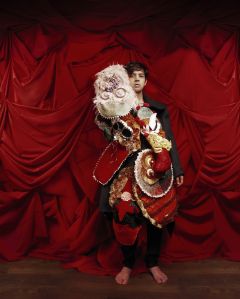
Besides his fashion brand, Kovid has accomplished great success in the art world of fashion. His favorite art piece to date was a conceptual art wear garment inspired by the Mask Project Series, in collaboration-with Akshit Bhardwaj. This art piece was an enlarged garment version of a mask, designed with three-dimensional details. Enjoying the organic process of the garment creation and the carefree approach with which they followed, the final pieces reflected their experience in the creative process. Another art piece, one he claims as his greatest success, was for an installation in the Asian Art Museum vault. A 12-foot tall saree dress tent made for art directors Adrienne Pao and Robin Lasser, designed with bright colors and traditional style. Click here to view the art piece!

Photo Credit: Kovid Kapoor

Currently, Kovid is working on his upcoming collection all constructed on his trusted Juki machine. A must-have tool, Kovid shares a good sewing machine is worth the investment because of its importance in elevating the speed and efficiency of his work. Describing the upcoming collection as something new and fresh, he’s beyond thrilled to showcase the new line once completed. With a passion for his work, Kovid’s love for sewing comes from the process of creating. “There is something very rewarding about constructing something yourself. It adds a personal touch to an otherwise store-bought world.”

As we finished getting to know Kovid, he had one final tidbit of advice for new sewers in the community, “The key to success in sewing is consistency and practice. Sewing is a skill that is finessed with practice and time so it’s completely fine if the initial projects don’t work the important thing is to keep practicing.”

We hope you’ve enjoyed getting to know Kovid Kapoor! Follow along as we continue to join Kovid in his fashion journey, and visit us here to learn more about Kovid and our other designers!

Clean Up with JUKI!

When was the last time you gave your machine some TLC? Today we’re going to go over some general tips on how to keep your sewing machine maintained and ready to sew! If your machine needs a deep cleaning, take it to a nearby sewing machine technician.

Let’s start with the basics: cleaning, oiling, and changing the needle.

External Cleaning

The best place to start cleaning is the outside of your machine. Turn all power off and unplug your machine before removing the needle and presser foot. This is a safety precaution to save you from being pricked.

Grab a microfiber cloth and dampen just a little and get to work! Stay away from using any harsh chemicals on your machine or solvents. We recommend a small amount of dissolved detergent or dish soap if you find a stain that won’t come out.

For those hard-to-reach spaces, we recommend using your craft pipe cleaner. It’s best to do this at a slow pace to avoid unnecessary damage to your machine, especially near a spot with wires. This way, you can avoid bending or wrongly adjusting anything.

Internal Cleaning

Once the outside of your machine is looking clean, let’s move on to the needle plate area. While each machine is different, your manuals will display how to remove your needle plate. If you find yourself without a physical manual, remember JUKI places digital manuals on our websites.

Begin by removing the screws from your needle plate using a T-shape screwdriver. Next, place the screws somewhere safe and secure. We don’t want to lose any!

Once you have removed the needle plate and secured your screws, it’s time to dust! Here we recommend using the brush your machine comes with or grabbing that craft pipe cleaner to remove the lint and dust. If you find any loose threads, use your tweezer to capture those stray strands slowly.

*Never use canned air on your machine. This will cause dirt and lint to be pushed further into your machine rather than clean it.*

Once you’ve dusted the general area, it’s time to focus on your bobbin area. Your first step is to remove the bobbin case and shuttle hook. Once that’s removed, you’ll be able to clean the space behind it where lint and dust fall. Remember to be gentle in the process, your machine has many parts and tricks, and it’s best to go slow and easy when cleaning.

Our best recommendation is to service your machine regularly. A professional sewing machine technician will safely clean out those spots you might have missed and access parts we wouldn’t recommend doing yourself.

Needle Plate & Bobbin Area for DX-4000QVP

Oiling

The first thing to know about oiling is not all machines will need it. The best place to find your answer is in your manual. Remember, if you find yourself with a lost manual, JUKI uploads our machine manuals on our website!

Something to keep in mind is that non-computerized machines, like our TL series, need regular oiling. However, our machines like the DX series are computerized and self-lubricating, so you do not need oil.

We recommend checking out our video here for maintenance and lubrication knowledge for our TL series.

If your machine requires oiling, your JUKI machine will come with a plastic container of sewing machine oil. You can also purchase this from your local sewing machine shops. Remember, your manual is your best friend! Requirements on where and how can be found there when it comes time to oil. We recommend applying one drop of oil to each arrow point shown above for every 4 to 8 hours of sewing. Use machine oil (New Defrix Oil No. 1) or similar supplied with the machine.

Changing the Needle

One of the most important things you can do is change your needle. Needles can dull, get bent, and become damaged, and it’s one of the most significant factors in your machine performance. We recommend changing your needle every 8 hours of usage or starting a new project.

A tip to keep in mind is that the flat side of the needle will usually face away from you on our DX series machines and face towards the right on our TL machines.  Recommend checking your manual. Always confirm that your needle is pushed up and that your screw is tightened to secure the needle in place.

Remember, depending on your project and fabrics is how you choose your needle. You want to make sure you’re using the right one for the job between different types of needles and sizes. This will lower the chances of needle breakage and machine error. Things to consider when choosing your needle are the fabric type, project idea, and thread.

When it comes to maintaining your machines, it’s best to take your time and go slow. If you’re ever in doubt about how to clean your machine, visit us on our JUKI Home Sewing Youtube page here.

You’ll be able to find maintenance videos on many of our machines and more! Don’t forget to stay tuned as we continue to launch new videos on JUKI machines and more.

JUKI Designer Ambassador: Mah-Jing Wong

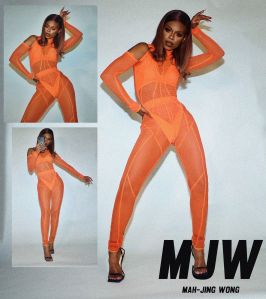
Welcoming new JUKI Designer Ambassador, meet Mah-Jing Wong! Founder and Designer for his line Mah-Jing Wong, he began sewing as a child under his grandmother’s teachings. An activity they loved doing together, sewing is the connection to his childhood and grandmother he keeps with him to this day.

His beginning in sewing is a sweet memory, with his first project being a hat! First seen on Michael Jackson and wanting his own, he went to his grandmother and asked how to create his own. From there, he completed his first project, grandmother along his side, and step by step sewed it together. This event would set the tone for his future career.

Later in life, Mah-Jing would attend the Arts Institute of Philadelphia, where he received a Bachelor of Science degree in Fashion Marketing. In his senior year, he would begin interning with top fashion designers Zac Posen. It was here that he began planning to create his own clothing brand that launched in 2011. Inspired by Japanese anime and the Marvel Comic book world, his work uses simple silhouettes with hand-dyed prints and geometrical shapes. His favorite work to create is his bodycon dresses, seen during his time as a contestant on Project Runway.

Since his time on project runway, Mah-Jing has continued to move up in the fashion industry, working with superstars such as Cardi B, Megan Thee Stallion, Chole Bailey, and many more! With his work garnering attention for its style and boldness, it has been featured in pop lifestyle settings like stage performances, music videos, and magazine covers. Mah-Jing continues to wow his followers as he works on the new collection, with orders already being placed.

With a design style that is innovative and fun, Mah-Jing’s favorite sewing trend right now is the exposed overlock thread. Using his JUKI overlock MCS-1700QVP, his favorite tool in his studio, he can create the base for all his creations and easily add this trend.

Mah-Jing states his experience in sewing has been rewarding. Like anything in life, sewing has had its ups and downs, but it remains his safe space for expressing his creativity like so many of you. His piece of advice for sewers is this, “stay calm and trust the process.” A saying we all understand in sewing and quilting.

We hope you enjoyed getting to know Mah-Jing as much as we have JUKI Lovers! So follow along with his journey and JUKI today and visit us here today!

Which fashion piece was your favorite? Let us know below!

JUKI Designer Ambassador: Megan Smith

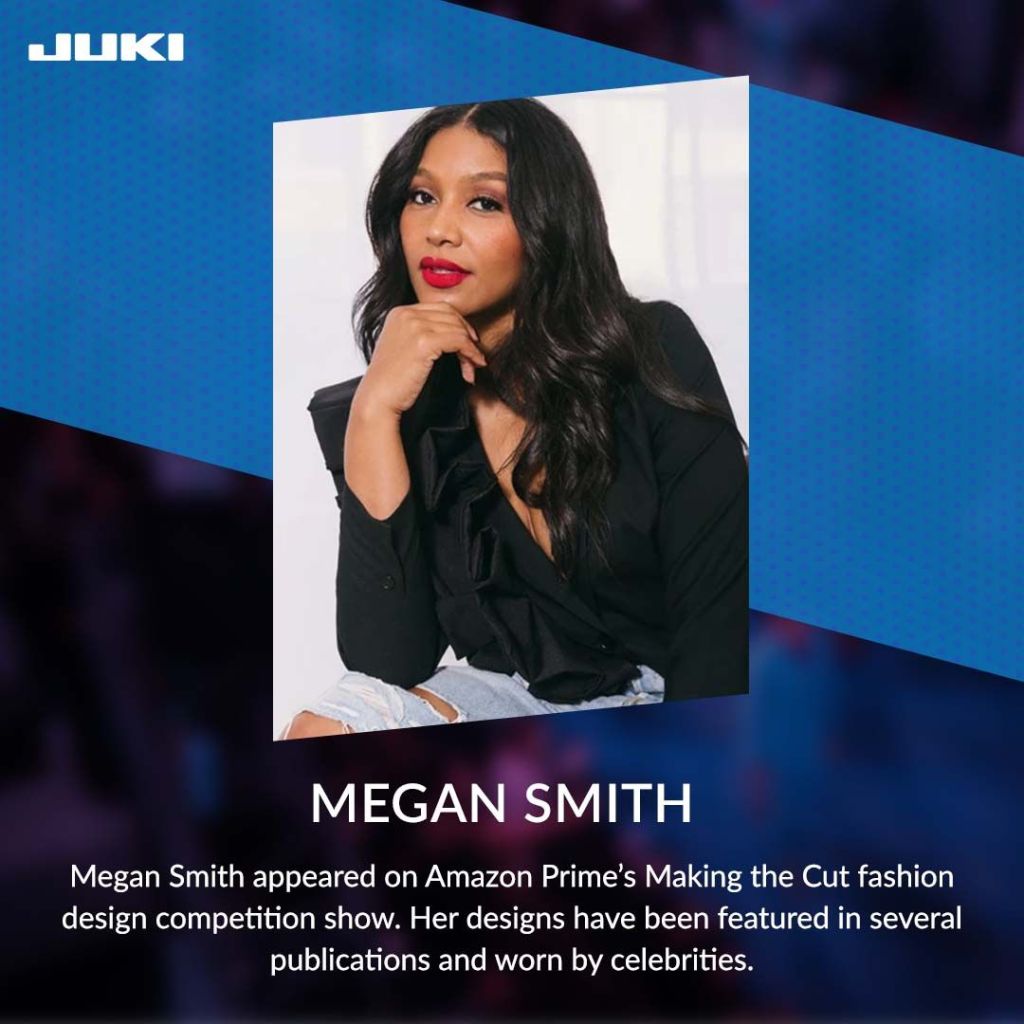
Joining us as a new JUKI Designer Ambassador is Megan Smith, creator and founder of Megan Renee, a sustainable women’s contemporary brand. We are so excited to introduce Megan to you, JUKI Lovers! Follow along below through our interview with Megan and her journey in sewing.

Megan’s story starts like many of ours; she joined the sewing world because of her love for fashion and art. The ability to create her garments and showcase her personality led to the fashion and designs she shares today. Contemporary and lively, her designs are inspired by women, the arts, and traveling. Finding inspiration in her experiences, she can create pieces that truly speak from her soul and love of color. Using the art of sewing to relax, she loves the peace it brings when she’s creating.

“It’s a stress reliever, and I love having the ability to create something beautiful.”

Her love of sewing and designing has brought her great success in the fashion industry like having the chance to compete on Amazon Prime’s “Making the Cut.” Proud of the work she created while on the show, she was impressed with how quickly she put together her designs and brought them to life in such a short time in each episode. Her favorite tool to keep on hand while on the show? Her snipping scissors! With the speed she was creating, this tool was perfect for keeping up. Finishing as a top 4 finalist, her work was praised by Naomi Campbell and other judges for her edgy looks. Amazing!

Since “Making the Cut,” Megan has focused on her fashion line “Megan Renee,” a line that empowers and celebrates bold and unapologetic femininity. The contemporary brand focuses on reducing waste after witnessing the effects of fast fashion in the industry. For example, her first collection, created out of sustainable deadstock fabric, was perfect for her vision. Using her own originally designed prints, she was able to digitally print the fabric and reduce the ink and water needed for traditional printing. Her favorite trend, which can be found in her designs, is patchworking and color blocking, radiating the boldness she strives for, Megan’s had the opportunity to work with celebrities like Issa Rae, Becky G, and Dominique Fishback.

As Megan continues to take the fashion industry by a storm, she’s most excited about finishing and launching her new fall collection. Megan’s time in the fashion industry has been as challenging as it has been rewarding. With the experience she obtained from working in other fashion companies to her time on “Making the Cut,” she’s been able to learn new tricks in sewing and launched her clothing line. Her motivation to continue creating is honest, “it’s the feeling I get once I complete a design. I love seeing how my garments make my customers feel, and I like doing photoshoots after we’ve finished a collection.”

We are so excited to see Megan’s new fall collection and her future work! We hope you enjoyed getting to know Megan more with us, and we’ll leave here with some parting advice from Megan herself to new sewers out there, “Practice, practice, and practice. Keep going and learning no matter how hard it may seem.”