Thread is one of the most overlooked puzzle pieces in serging and honestly, one of the most impactful. It’s easy to focus on the machine, the fabric, or the technique and treat thread as an afterthought. But your serger is running three, four, sometimes even five threads simultaneously at high speed, which means the type, weight, and quality of thread you choose affects everything. Think of your stitch formation, seam strength, tension balance, and the overall finish of your project.
This month, in celebration of National Serger Month, we’re pulling back the curtain on thread. We’re going to talk about what types work best for serging, why creators choose cones over spools, and how to get your tension balanced. Whether you’re just getting started with your JUKI serger or looking to level up your technique, understanding thread is one of the easiest ways to get better results immediately.
Thread Types for Serging
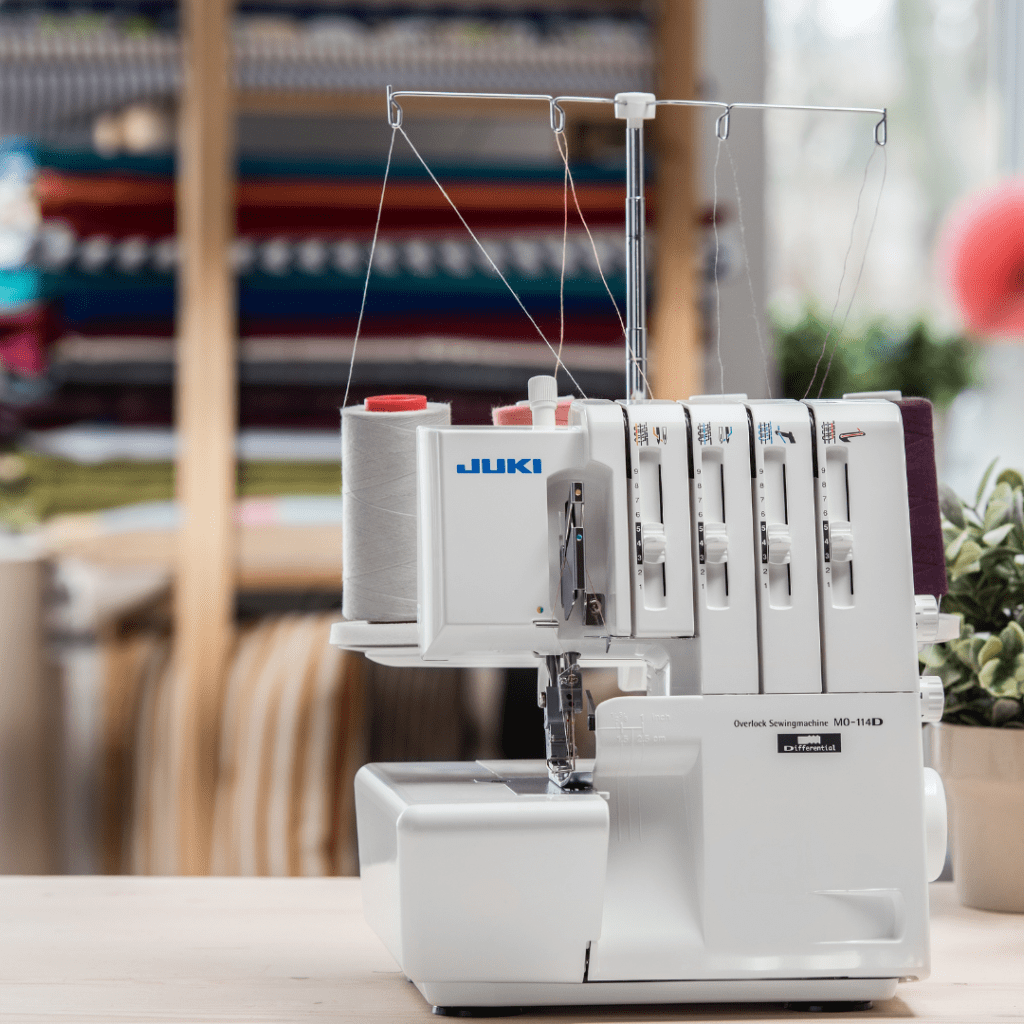
Here’s something that often surprises newer sewists: not all thread is created equal, and your serger is far less forgiving about it than your regular sewing machine. Because serging is fast and running multiple threads simultaneously, the type and quality of thread you choose has a real impact on how your stitches form and how your seams hold up.
If you use the wrong thread, you may find tension issues or unexpected snapping in your projects. But if you use the right one, everything can come together beautifully. Below are the most common thread types you’ll find in sewing shops, and when to reach for each one:
Polyester Thread: This one is the most versatile choice for serging. Polyester is strong, stretchy, and resistant to heat, so it’s a great choice for knits, activewear, and everyday garments. It’s also colorfast and widely available on cones.
Cotton Thread: Cotton thread is great for natural fabrics like quilting cotton and linen. It has less stretch than polyester, so it’s best to use this when working with woven fabrics where seam stretch isn’t needed. A great choice for quilts. We recommend looking for a finer weight for serging.
Wooly Nylon: A textured, stretchy thread that fills in beautifully for rolled hems and decorative edges for knit projects. It’s soft against the skin, and it has excellent coverage.
Serger / Overlock Thread: Specially formulated for the high-speed, high-tension demands of serging. These threads are finer than standard sewing thread, which helps with balanced stitch formation and prevents the seam from becoming too bulky.
Thread Cones vs. Spool
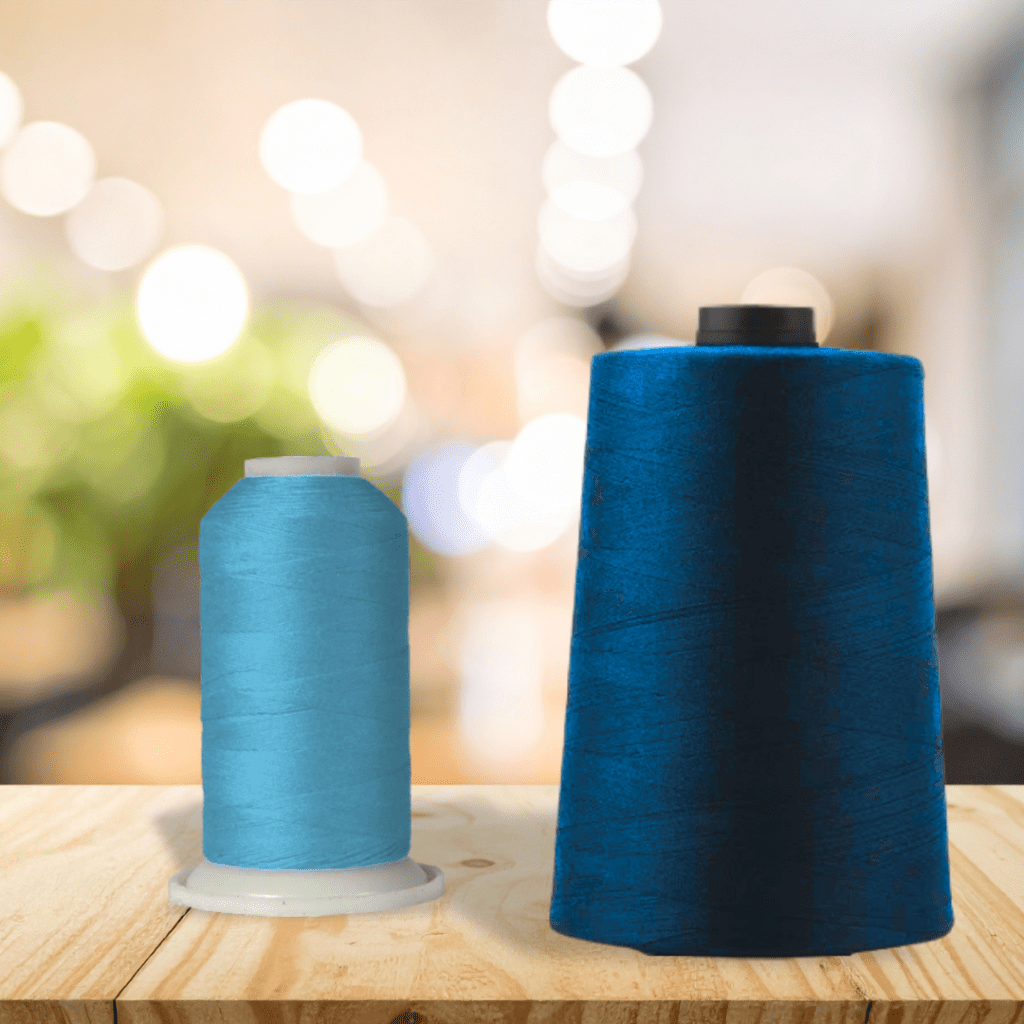
If you’re new to serging, you’ve probably noticed that serger thread comes on large cones rather than the small spools you use on a sewing machine. Here’s why it matters:
- Cones hold significantly more thread. Typically, they’ll hold 1,000–3,000 yards, which is essential for a machine that uses 3–5 threads simultaneously.
- Cone thread is wound cross-wound (at an angle), which allows it to unwind freely from the top without the spool spinning. This prevents tangles at the higher speeds sergers operate.
- Standard sewing spools can be used on a serger in a pinch, but they may require a horizontal pin or spool cap to feed correctly and can cause tension inconsistencies.
For best results, use quality overlock cones. Your JUKI serger was designed with cone feeding in mind.
Tension Basics for Serging
Tension is the most misunderstood part of serging, and the most adjusted. Unlike a sewing machine with one or two tension dials, a serger has separate tension controls for each thread: typically, the upper and lower loopers and one or two needles.
Here’s a simple baseline to remember: when your tension is balanced, the stitches will interlock exactly at the fabric edge. It’s not pulling to the top or the bottom. If you see loops on the top of the fabric, your looper tension may be too loose. If the stitches pull to the underside, try loosening the needle tension.
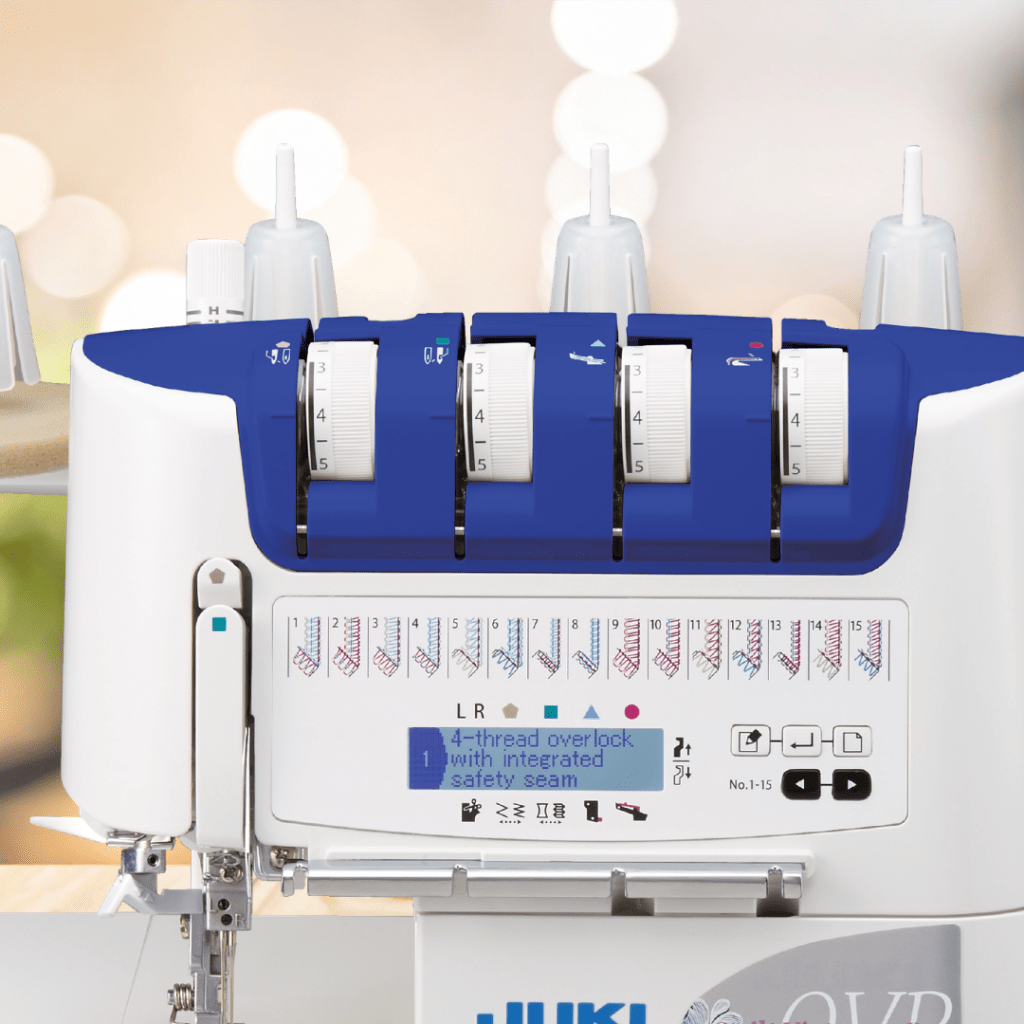
Always test your tension on a scrap of the same fabric before starting your project; fabric weight and stretch affect how the thread behaves significantly.
- Start with your machine’s default tension settings and adjust one dial at a time.
- Make small adjustments: a half-number change can make a big difference.
- Keep notes on settings that work well for specific fabric types.
The thread might seem like a small detail, but it touches every part of your serging experience. From the type of thread you choose and how it’s wound on the cone, to the way tension behaves across all those thread paths working together at once, thread matters.
Getting comfortable with thread is one of those foundational steps that makes everything else click. Your stitches become more consistent, your troubleshooting gets easier, and the whole process becomes much more enjoyable.
If this has you itching to get more out of your serger, we’d love to help you take the next step. Browse our full lineup of JUKI sergers here to find the machine that fits your sewing style and skill level. When you’re ready to feel the difference in person, use our dealer locator to find an authorized JUKI dealer near you. There’s nothing like a test drive to help you find the right machine for your needs!

