How to Start Your Embroidery Business         

A hobby where the community is ever-growing, embroidery is forever growing in popularity around the world. Due to this, it’s no surprise so many have begun their own business in embroidery projects ranging from fashion to accessories to home décor. Thankfully it’s never been easier to set up your own embroidery business! So whether you’re starting from a corner in your room or a more extensive scale location, we’re here to explore things you need to know before starting.

What Skills Will I Need?

Before starting any business, it’s essential to understand what skills you need to know first. If you don’t know a skill, that doesn’t mean you can’t start a business; it only means it’s time to pick up a new skill! Don’t forget that you can also reach out to friends and family you want to work with who already have those skills you need.

Machine Operation:

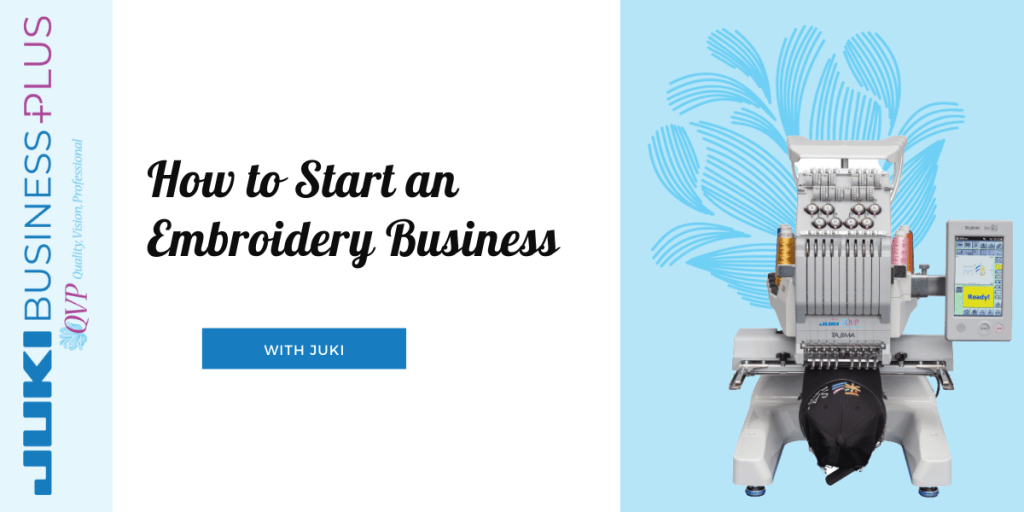
Handling an embroidery machine is exciting, and while it comes with a small learning hill, once these machines are set up, they’re an exciting new thing to use! An embroidery machine like the Tajima Sai is perfect for businesses and hobbyists who want to upgrade. Its software, Tajima Writers Plus, converts text to embroidery data or creates embroidery data by combining registered designs and text. It’s easy to switch thread color, set embroidery positions, make adjustments, and more using its digital screen, helping new users handle the machine easier.

Design Software and Creating Art:
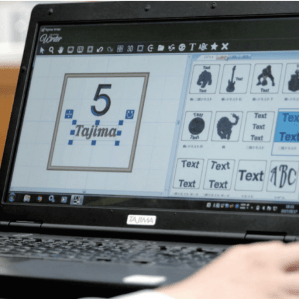
When opening up an embroidery business, the vital thing to keep in mind is that you don’t need to be artistic, just creative! Like the Tajima Sai, some machines come installed with their Writer Plus Software used for digitizing, editing, and font software and are accessible on its LED screen. Finding a machine with built-in software is one the best ways to start an embroidery business, as this will keep you from having to purchase another part for your machine separately.

When it comes to creating artwork, you need your PC and machine. For example, computerized embroidery machines require vector images. This can be accomplished through software like Adobe Illustrator. By designing art on Adobe Illustrator, a popular application with many guides and how-to-use references on the internet, you can create your artwork. Once it comes to downloading these new artworks onto the machine, it’s dependent on what form of software you have.

An Illustrator Embroidery Plugin is plugin software that converts a vector image into an embroidery pattern. You can also choose Embroidery Software, such as Tajima Sai Writer Plus Software, which can import your Adobe Illustrator vector image and transform it into a pattern used by an embroidery machine. Keep in mind that these programs are likely to work on the machine they’re created for and not others in choosing Embroidery Software.

What Equipment Will I Need?

The Machine: 

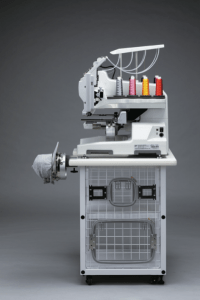
While this will depend on the size of your business looking to set up, you’re going to need to start with one machine. There are many different options on the market, and this will be your most valuable asset. When choosing a suitable machine it should be able to keep up with productivity (think of machine speed and consistency) and easy to operate. The Tajima Sai, for example, was created with small businesses in mind. This means it’s compact, easy to use for beginners, comes with the programs you need, and includes the accessories you need for embroidery. Finding the right package when purchasing a machine can also save money in the long run, as this will keep you from needing to buy accessories or extra programs at a later date.

Embroidery Merchandise:
There are two options you can follow when starting your business, made to order or order to be made. The concept behind these is that you can choose to have constant inventory or keep a list and only create when an order is placed. While these two things can be changed, it’s best to always have stock of items you’re going to embroider on ready to be used.

Some popular items we recommend are:

  • T-shirts
  • Polo Shirts
  • Home Décor
  • Handbags
  • Sweaters
  • Caps

When you start choosing items for your shop, think of who you’re selling to and focus on what type of items customers in your niche are purchasing embroidered.

How Do I Market My Business?

The first thing to do when marketing your new small business is to determine what your goals are. What do you want to achieve? Is it a revenue goal or a profit goal? How many sales per month do you need to generate that revenue? Having a clear idea of what success is to you will help you to define a budget.

Website:

The first thing we recommend having is a shop base like a website or Etsy shop. Think of this as the public face for your online or at-home business. Here you’ll be able to share your company message, introduce yourself to buyers, and showcase your products and services in a way that’s unique to your brand. Keep in mind ‘Key Words’ (In terms of Search Engine Optimization, better known as SEO, they’re the words and phrases that searchers enter into search engines, also called “search queries.”) Using the right keywords on your website for your product will help you show up in higher ranking on search engines.

Advertising:

Once you have your budget think of where your audience is based. Free marketing you can start with is creating social media accounts that you’re audience uses. For example, if your audience is between the ages of 30-55, you’ll have a high chance of finding sales on Facebook. If your audience is mothers, you can post on Pinterest and Instagram. Ways to be found on social media rely on hashtags, geo-location (when you tag a city or spot), and getting others to put your name out there.

Paid advertising differs, but it’s still important to keep in mind what websites and google searches your audience is doing to promote correctly. Startup businesses can look into programs like Google ads, Yahoo Ads, and paid Facebook and Instagram Ads.  

Opening up Shop
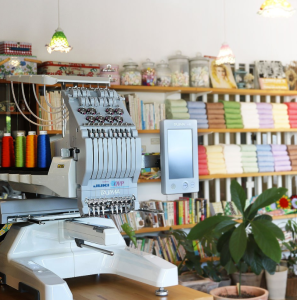
Once you have your machine, products, and website up, it’s time to start putting yourself out there! Take advantage of social media sites and use these as a platform to reach and interact with your audiences. So many people enjoy finding new items to buy on their social pages, and getting yourself on there is a great way to reach customers.

There’s a reason why embroidery businesses do well. Whether it’s the fun in personalization that’s available, or the opportunity to purchase from a small business something unique and in their interest, the market is always welcoming new ideas. To keep your company successful, focus on what you can control and make sure you choose the right equipment and programs. With these being the foundation to a long-lasting business, it’s essential to choose suitable materials.

We hope this helps give a glimpse into the beginning of opening your own embroidery business! Visit here to check out JUKI’s Tajima Sai embroidery machine to learn more about its Writer plus Software, the machine’s speed, features, and more!


JUKI Small Business Seminar: Have You Found Your Niche?

Join us every last Saturday of the month for JUKI’s small business seminars designed to help you start or grow your at-home sewing, quilting, embroidery, or direct-to-garment business.

When it comes to owning your own small business, finding your niche is one of the first goals you should focus on. While you can have all the supplies in the world, and top equipment, not knowing your niche will leave you lost. Take the time to consider who you’re selling to and what kind of designs and work you’ll need to do to hit that audience base

Sometimes finding your niche can be coincidental. If you create a t-shirt for your daughter’s dance friends, and everyone loves it, you might find yourself attending dance recitals with moms and supporters wearing your shirts. Think of finding your niche as an upside pyramid. The top is wide and covers everything on earth, it’s up to you to trickle down and see what’s at the point for your market.

Who are you marketing to?

The best way to start your small business is by planning who you’re going to sell to! Having a target audience or niche will help you build ideas for designs or connections to go after that will grow your shop. Below are some examples of audiences you could market towards.

Hobby and Niche Markets

Are you obsessed with comics, cars, and more? Many groups of people enjoy having products that are different and creative, and allow them to show support for their favorite things in fun ways! Think of what groups you resonate with that you could create custom shirts for.

Car Hobby: If you find yourself having fun puns or art ideas for cars, those in the car community would enjoy having new products like t-shirts they could wear to car shows to show off their personality!

Punny Jokes: Something so many people enjoy are good puns and jokes. Creating material with fun graphics, or even quotes is a great way for people to show off who they are. Think of fun socks, printed t-shirts, or canvas bags with fun quotes.

Pop Culture References: With media constantly expanding and growing, you’re always likely to stumble upon a TV show, movie, or band that has a following. Create things in your style that fans would enjoy wearing as a form of pride and excitement in their likes.

Events and Show Markets

In a world where there is always something going on, events and shows always need some merchandise and freebies!

Charity Events: Charity events are always circulating. Many times these events include team t-shirts to set apart company teams, or for individuals who are volunteering! Connect with your local charities and see who needs a partner for event merchandise. These events are not only a great way to get your business out there, but they will allow others to see the quality of your work and bring in new connections for future events. 

Trade Shows: If you’re located in an area where tradeshows are common, look into exhibiting at these events! Many times teams will set up their shops on-site and sell their goods and creations while customers are attending. You can also look into what tradeshows are happening near you and create custom products to sell beforehand.

Sports Events: does your town have a kickball league? Look into what leagues are in your area for options on creating merchandise for their teams! Many companies, schools, and friends have their own sports leagues that require team t-shirts, tote bags, hats, and more.

Create Your Brand

For those who have a mind filled with artwork and fun style, look into creating your brand! These projects may seem big, but you get to choose how you create and sell. Many small businesses are known for having their select few designs that they focus on. We recommend starting with 3-5 designs you want to place on merchandise and going from there when creating your brand.

Once you’ve picked your niche deep dive into what’s popular in the community. Whether it be characters, quotes, styles, or more; these tips will help you create your shop and build up a profitable business. The more you know your audience, the more likely you are to create pieces that others find special and worth buying. Small niche consumers pay more as well because of the low product options available for them to choose from.

Whether you choose to market to corporate, or to your local community, finding your niche is the essence of creating a profitable and successful company. Don’t be afraid to join niches that seem popular, the same reason people go to Walmart instead of Target can be the same reason someone goes to you instead of another seller. Begin with categorizing people so that the game plan is more concrete. Research their demographics, interests, jobs, etc. Once you reach the point where it’s too narrow, go up a level until you find your sweet spot. Try to find a niche where there are enough people to market to, and then go for it!

5 Reasons to get the RICOH Ri 100, Direct to Garment Printer

Have you been in the market for a direct-to-garment (DTG) printer? Imagine opening a business where you can create pieces as simple as team t-shirts to make your brand? Then, check out the RICOH Ri 100, perfect for those starting their DTG business and wanting a quick, easy, and reliable start-up machine!

With the DTG business continuing to boom, we’ve noticed how fun and easy it can be to create products on our RICOH’s. From canvas tote bags to intricate wall tapestries, realizing the opportunity for limitless possibilities on what you can create and sell is a great point when choosing to go into DTG.

Compact and Portable 

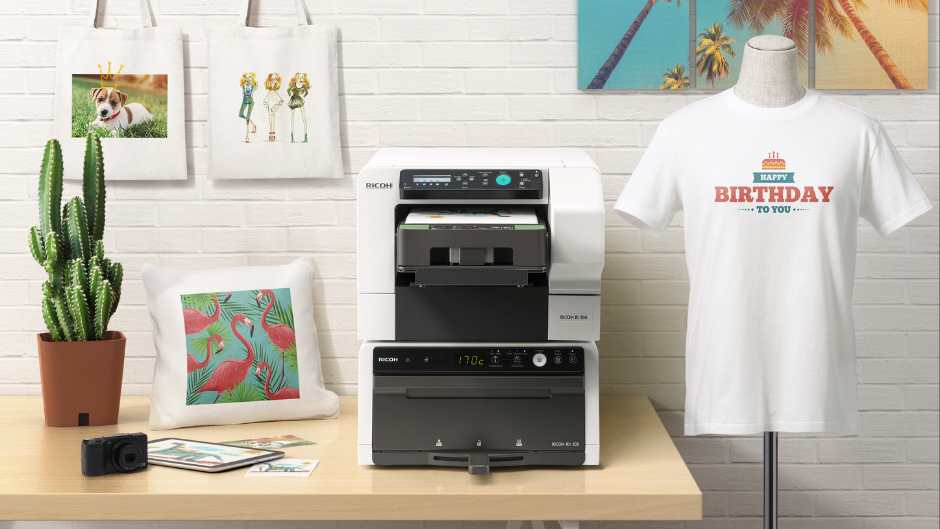
Starting your business for many means working directly from their homes. RICOH knows this, and that’s why their RICOH Ri 100 was created with small space in mind, making a compact and portable machine while able to handle the job. Find enjoyment in printing then and there, whether you’re taking your machine traveling with you to events or working from a small corner in your apartment. Built at 15.7″ x 27.5″, its small size will save you room for your supplies and products to fit.

High-Quality Images and Products

Using RICOH’s InkJet technology, it’s able to print pieces that are vibrant and colorful. Perfect for any design, whether it’s a picture you directly took or a drawing of it, the vibrancy and details will showcase every time. In addition, your garments will stay comfortable, and all designs are colorfast since they are printed directly onto the fabric.

Easy-to-Operate Software

Not everyone is tech-savvy, and that’s why the RICOH Ri 100 was created with the beginner user in mind. Perfect for those learning the DTG business, the RICOH Design Software lets you import and edit images before printing, with no specialized knowledge or skills required. So whether you’re working from your laptop or smartphone, your art and designs can be printed with ease.

Safe and Effortless Technology

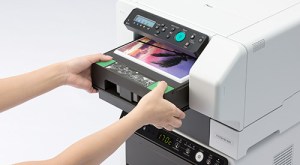
Find comfort in how easy it is to use the RICOH Ri 100. Reaching new heights of easy operability and designed with safety in mind, this machine offers you a fast and fun experience. The intuitive design allows all DTG users, from beginners to advanced users, to preheat, print, and use the Finisher option to fix the design safely. Periodic maintenance is carried out through a simple process, automatic and semiautomatic, and you’re provided resources and more from the RICOH and JUKI sites for customer support.

Low Entry Cost

One of the most important things to keep in mind when starting your business is budgeting and finding the suitable machine within your budget for your needs. As one of the lowest entry cost machines in the DTG industry, the RICOH Ri 100 is perfect for those who are stepping into the industry and don’t want to deep dive into a high investment machine. In addition, you can complete the whole printing process on this machine alone by featuring an all-in-one design with the option to purchase the finishing heater add-on.

Choosing the Right Machine for You

When choosing the suitable machine for you, remember to keep your budget, space, and the volume of products you can plan to create. The RICOH Ri 100 is perfect for those shops who want to bring DTG into their business and enjoy an avenue of products that are quick to make and easy to re-produce. With the ability to change designs from one t-shirt to the next, and the limitless options on what you can design, the RICOH Ri 100 is an excellent machine for a growing business.

Starting Your Direct-To-Garment Business with JUKI & RICOH

Opening a small business is a fun and exciting venture, whether as a hobby to gain extra income or hopes for a new career. There are many reasons to look into starting a direct-to-garment (DTG) business. Maybe you’re someone who has a head full of great ideas, has friends who are always looking for custom t-shirts for their company events, or perhaps you’re someone who loves to design. Regardless of why, today, we’re going to discuss how to start your DTG business from including markets to sell to, tools to start, and how to sell your products.

Who’s Your Niche?

Before jumping into a DTG business, it’s crucial to think about whom you’re going to sell to, as this will set the basis for what you create and where you sell. So first, create a customer profile based on the following criteria: age, gender, lifestyle, location, profession, and occasion. You can also ask yourself what problem is this product solving for this customer? Examples of different customer profiles are listed below.

The Hobbyist

Have you ever found yourself looking for a t-shirt that captures your love for quilting? Nowadays, you can find a t-shirt for almost every interest due to small business artists who focus on creating products for these specific customers. So whether it’s sewists, car enthusiasts, or even cat owners, there’s a t-shirt for that. You can enter this segment by looking at the competitors’ designs and identifying what you can offer that is different. For example, the pet industry is a huge industry dominated by big brands. The competition is currently creating t-shirts with generic pet faces on them. You can differentiate your brand and create a unique segment of personalized, one-off t-shirts with customers’ pet’s faces on them. By targeting the right niche, you can create appealing products that bring revenue. 

Charity and Corporate Events

If you’re someone who’s attended a local charity or corporate event, you’ve probably received a t-shirt with a design related to that event. So whether it’s charity sports events, Christmas parties, or retreats, these events are a perfect niche to enter since there is a high volume of events and product quantity. 

Fashion

If you’re someone who leans towards creating and personalizing clothing, look into your own branded looks. With the ability to print onto canvas totes, sweaters, t-shirts, and more using a direct-to-garment printer, you can create your own branded line using the designs and patterns you’ve designed. There are always people looking to express themselves in unique and fun ways.

What Do You Need To Start?

Once you have your business plan that includes a niche and product line, it’s time to start looking at equipment. These are some basics you’ll need to think about:

  • A DTG Printer like the RICOH Ri 100
  • A Finisher or Heat Press like the RICOH Rh 100
  • Replacement Ink Cartridges 
  • Software and Computer
  • Materials

DTG Printer & Finisher

DTG Printing is a groundbreaking technology that surfaced in the ’90s. Like your home printers, a DTG will directly print onto an array of products like t-shirts, canvas bags, fabrics, and more using inkjet technology. Over the years, the fashion industry has seen a rise in those who want to wear personalized or unique garments. As a result, DTG is a growing industry, which is why it’s an excellent option for someone looking to begin their own small business.

A DTG printer like JUKI’s RICOH Ri 100 is an all-in-one DTG printer that can print images onto light-colored cotton or polyester* garments using state-of-the-art DTG technology with the lowest initial investment. In addition, there are various bundles available that offer the printer and finisher together or individually for your budget. We recommend contacting a local JUKI Business Plus Dealer for recommendations and pricing on bundles. Whether you purchase just the printer or the combo of printer and finisher, the turnaround when printing and heat pressing a t-shirt is about 3 to 10 minutes, creating a fast, low-cost turnaround.

Software & Drivers

There are two software’s you need to know about when starting your DTG business. The software you’re going to use to make the products, and the software you’re going to use to design the products.

For example, the RICOH Ri 100 offers easy-to-operate design software that lets you import and edit images before printing, with no specialized knowledge or skills required. In addition, the software comes with built-in designs and fonts. With the ability to print photos, designs, and more, this is a great option that removes a high learning curve.

In addition to the software that comes included with the printer, other affordable design software is available. For example, Paint.net, Paintshop pro, InkScape, and Gimp, are free or lost cost software that allows you to create art for your projects without breaking the bank. For a step up, look into the Adobe programs Illustrator or Photoshop. While these work on a monthly subscription, they’re both commonly used programs with many free and easy to follow guides you can use when starting.

The Supplies

Your customers will want to get a bang for their buck, so consider this when deciding on fabrics and product choices. Today, affordable, lightweight, heavyweight, 100% cotton, 100% polyester, and blended fabrics and blank products can be found on wholesale sites. Some examples of popular wholesale brands are Hanes and Anvil. When it’s to purchase, buying in large quantities reduces the cost of materials.

In addition, you can expand your business (like the personalized pet t-shirt we mentioned earlier) by introducing other products like pillowcases, tote bags, infant onesies, towels, and more. By branching from the t-shirt business, you can enter new markets and increase revenue.

Where to Sell

Once you’ve finalized your merchandise and have your products ready to go, look into your options for selling. Many options include online shops, in-person events like conventions and farmer’s markets, and brick-and-mortar stores. 

First, let’s discuss online shops. From creating your website to signing up for handmade marketplaces, there are various options. Before you are ready to commit, some platforms allow you to do a limited trial. The trial will enable you to test and research if this is right for your product. If you are comfortable creating a personalized website with a custom URL and have an established audience, we recommend website building and hosting companies like Squarespace and Wix. If you are looking for an all-in-one solution with high traffic volume but sacrificing a bit of branding, we recommend marketplaces like Amazon Handmade and Etsy. Whether you go for your website or an established e-commerce platform, each option requires sellers to pay either for a custom URL, listings, transaction, or payment processing fees.

Are you someone that loves to interact with others? Then, another great option is in-person events! Research local events in your area where you can have a tent or a booth. Are you selling custom cat t-shirts? Attend a local pet convention. Events like your local weekend farmer market or a yearly convention are great places to start. The great thing about JUKI’s RICOH Ri 100 is how portable it is, meaning you can take it with you! The RICOH Ri 100 can fit into a space as small as 15.7″ wide x 27.5″ deep, making it one of the smallest DTG printers. In addition, the printer and its finisher can be stacked to maximize functionality without sacrificing space so that you can create custom pieces on site. 

**Some states or cities will require a business license, so keep this in mind when applying for your stand.

How to Sell

Once you’ve finalized who, what and where it’s time to start thinking about how you will market your products. One of the best ways to get your products and brand out there is by utilizing social media. The best thing about social media is that it is free! Some platforms do offer paid advertisement options for your posts. Below are some things to keep in mind:

  1. Look into creating multiple social media channels for your shop (Facebook, Instagram, Pinterest, Tiktok, and so on.)
  2. Think of your niche and what platforms they use for marketing on
  3. Define your marketing goals (build brand awareness, generate sales, or engage with customers)
  4. Post content daily when possible
  5. Interact with your followers

Social media is used by millions of people every day, making it a great tool to attract customers. Take advantage and put your brand out there!

Now that you know the basics of where to start, we hope you have a clearer vision of where you want your business to go. Direct to garment is a growing business where creativity and being different is a great thing! So what more do you want to know about the DTG business? Let us know down below!