Sew Your Way to Wellness with JUKI

Finding solace and peace can sometimes feel difficult in the whirlwind of modern life. Yet, nestled amidst the threads and fabric, an age-old craft exists that weaves not just fabric but a profound sense of well-being—sewing. Beyond its practical applications, sewing offers therapeutic benefits that can positively impact mental, emotional, and physical health across all ages.

Join us as we delve into the transformative impact of sewing as a form of therapy and discover how it can bring joy, healing, and a sense of fulfillment to our lives during this particular month dedicated to quilting!

Creativity and Self-Expression

Sewing is one of our favorite forms of self-expression at JUKI. From selecting fabrics to envisioning designs, it nurtures creativity in its purest form. The freedom to experiment with colors, textures, and patterns fosters a sense of artistic exploration. As individuals engage in the creative process, they unearth a channel to express their unique personalities and emotions. 

Sewing with JUKI machines isn’t just about stitching fabric together; it’s a canvas for creativity and self-expression. With the array of stitches, presser feet, and precision we offer, JUKI machines empower creators to bring their visions to life. From intricate embroidery that can be done on our TAJIMA Sai machine to tailored garments or personalized accessories, every stitch tells a story and reflects the maker’s individuality.

The next time you’re creating, play with new colors and fabrics, try a new technique or presser foot, and learn from your mistakes as you grow your skills!

Sense of Achievement and Goal Setting

The journey from a plain piece of fabric to a finished creation is one of the most significant accomplishments when we’re creating. Setting out with a vision and witnessing it materialize through dedication and effort significantly boosts self-esteem! Whether small or large, a sense of achievement will always boost our moods. And the moments in sewing when we can break down complex patterns or designs into steps that work out? It’s a feeling of triumph we all love.

Sewing, especially when using a JUKI sewing machine, can significantly contribute to a sense of achievement and goal setting. As you set out to complete a sewing project, establish specific goals—mastering a new technique, completing a certain number of stitches, or finishing a project within a timeframe. Creating goals is an exciting way to keep fostering your skills while enjoying the process and not rushing.

Each step, from choosing the fabric to mastering intricate stitches, presents mini-milestones contributing to the larger goal. Achieving sewing goals leads to increased self-confidence, a sense of competence, and the motivation to set and conquer more ambitious goals in the future. With the precision and features of a JUKI machine, you can transform the process into a fulfilling journey that nurtures both skills and a sense of achievement.

Community and Connection

Beyond the solitary moments spent with needle and thread, sewing creates threads of connection between individuals. Joining sewing classes or communities opens doors to shared experiences and camaraderie. It fosters a sense of belonging as like-minded individuals gather to exchange knowledge, tips, and encouragement. The collaborative spirit within these groups fosters a sense of support and solidarity, forging friendships that often extend beyond the seams of a fabric.

At JUKI, we strive to harness these therapeutic benefits by offering classes at tradeshows, dealer events, and online live projects catering to various skill levels and interests. From beginners eager to start their sewing journey to sewists and quilters looking to refine their craft, our events were created to nurture creativity and foster community! You can visit our page here to stay updated with where JUKI will be next.

Our Projects Page showcases a variety of projects designed to ignite your creativity and provide a platform for self-expression! Each project is crafted to encourage skill development while allowing individuals to immerse themselves in the calming and fulfilling realm of sewing. Please create your own JUKI Project and tag us the next time you’re creating!

Embrace the Healing Stitch

Sewing transcends the mere act of crafting garments or quilts; it stitches together a tapestry of well-being. Its therapeutic benefits extend beyond the finished product, nurturing mental clarity, emotional balance, and a profound sense of fulfillment. It serves as a gentle reminder to pause, breathe, and immerse oneself in the transformative power of creation!

Whether you’re seeking stress relief, an avenue for creative expression, a sense of accomplishment, a project to pass the time, or a community to connect with, sewing, with its soothing needle and healing stitches, is a hobby everyone can enjoy. Embrace the therapeutic moments of sewing and discover a pathway to wellness that intertwines artistry, mindfulness, and community.

Join us here to start your journey today and try your hand at one of our projects! We can’t wait to see what you create.

Note: Dates and availability for events and projects can be found on our website. Get ready to sew your way to wellness!
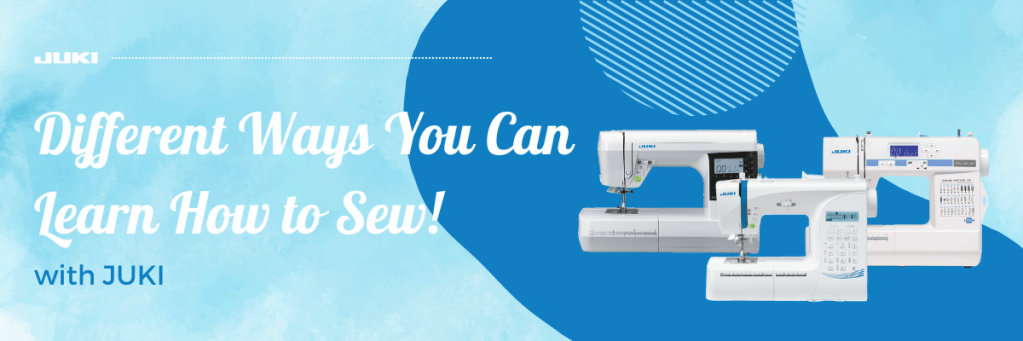
Different Ways You Can Learn How to Sew!

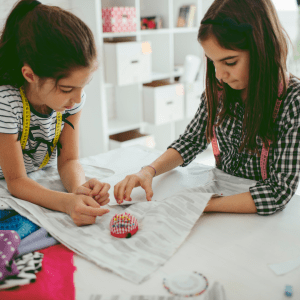
Have you been looking to pick up sewing but need help figuring out where to start? Then join us as we’ve gathered four different ways you can begin learning today! From in-person classes to self-study, the world of sewing is now at the touch of our fingers, and we will share how you can access this information.

Passed Down Knowledge

If you have a family member, or friend, who loves the hobby and may even be the reason you’re interested in learning, don’t be afraid to reach out and ask for some lessons! Having a connection in the sewing and quilting world will help you learn techniques, allowing you to practice on their machines before purchasing your own, and a lesson on what features they commonly use that you can practice using.

Choosing your first sewing machine can be intimidating if you need to become more familiar with what machine features you’ll need or what stitches you’ll use. Practicing with a family member’s or friend’s machine will make you get comfortable with the options available and help you understand what you need to create your projects. If you’re interested in learning more about beginner sewing machines that JUKI offers, you can learn more here.

Working with family and friends will also give you the feedback you need. While attending classes and using online resources is an option, we’ll cover these options in the following sections of the blog, having a connection that can provide feedback will be extremely useful when you create throughout the day. So take the time to learn from their past projects, follow along as they show you how to use different techniques, and ask those questions you would be embarrassed to ask in front of a class.

In-Person Training Classes

The easiest and most common way of learning to sew is by researching your local area for sewing and quilting classes! Many times you’ll find these programs in your local libraries, your nearest sewing and quilting machine dealers, or at specialized locations that offer crafting classes.

For example, if you’re a new owner of the Miyabi J-350QVP, you might be looking for some training on how to use your longarm quilting machine. At JUKI, we offer the opportunity to attend a longarm training 3-day course that teaches users the basics of the machine and how to use it and shares information on the Quilter’s Creative touch. These classes are offered at select JUKI dealers and can be found here.

You can also attend quilting and sewing tradeshows to find in-person sewing classes! For example, at JUKI, you can commonly find us hosting serger classes at OSQE, with sign-up availability on the OSQE website here. These classes are offered nationwide as the tradeshow travels from coast to coast, helping new sewists hone their skills.

Check out your local community colleges and community centers for sewing class events! These programs are usually offered at low rates and allow you to learn the basics of sewing. The classes also provide an opportunity to receive feedback and ask those questions you’ve been having. Don’t worry if you can’t attend face-to-face classes; thanks to the online world, we have many more options!

Using Your Online Resources

Thanks to the internet, we can now access many videos focusing on sewing skills, projects, tutorials, and so much more. Almost any question you have can now be answered with just one search. Using this, new sewists and quilters can find free or paid online resources to teach you how to complete certain stitches, use presser feet, thread your machines, and more!

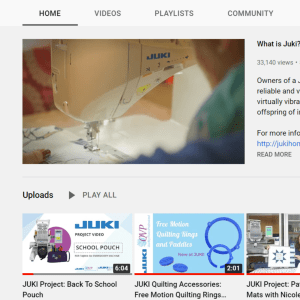
These teaching formats can come in videos, PDFs, online books, and online classes, allowing you to find different resources as you learn new skills and techniques. One of the best resources you can find content on is YouTube! On JUKI Home Sewing’s YouTube, you can find out how to operate your machines, set them up for sewing, and check out accessories and what they’re used for. You can also follow along with past projects and lives, where we demonstrate how to create a project from beginning to end.

There are countless online creators out there who are so excited to demonstrate techniques, projects, skills, and machine features for new sewists and quilters like you, and the content can be found for free or at low costs. You can, however, choose to invest in your skills and join online programs with teaching professionals who show you how to build your skills step-by-step and offer constructive feedback and knowledge you can learn from, usually offered at varying prices depending on the skill level of the instructor.

Lastly, take advantage of what influencers in fashion and quilting can teach you on their social media pages! While many creators focus on posting project-based content, many will bring it to their media outlets for learning moments. These quick snippets can explain how to use a presser foot and other accessories to keep on hand, and much more.

Hit the Books!

Let’s go back to the original days of sewing and check out the books available for quilting and sewing! Many of these books will offer resources on beginner basics for using your sewing machine, provide tips and tricks on what tools you’ll need in your studio, what presser feet are and which ones to have on hand to complete specific techniques, and even walk-throughs of a series of projects you can begin creating to start building your skill set.

There are also book resources that explain how to maintain your machines, offer beginner to advanced sewist projects where you build your skill set as you create, and so much more. Check out your local libraries or bookstores to see what’s available, and remember to browse the internet for recommended books!

No matter how you decide to learn, picking up a new hobby is a great adventure! Whether you go online and try it alone or pick up some classes at your local community center, sewing and quilting are great hobbies for letting your creativity flow. We hope today’s blog encourages you to start working on your hobby and learning new skills!

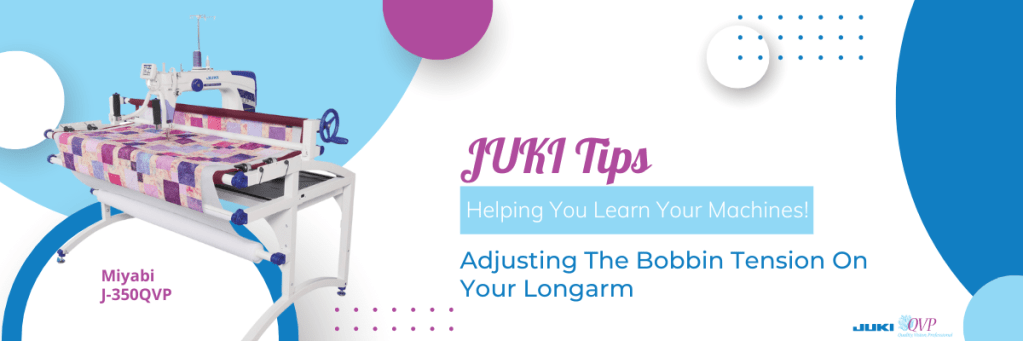
JUKI Tip: Adjusting The Bobbin Tension On Your Longarm

For this month’s JUKI Tip, we’re focusing on adjusting the bobbin tension on your longarm machine like our Miyabi J-350QVP! A common question we hear from sewists and quilters is, “how do I adjust the tension for my bobbin on my longarm?” We’re going to start off today’s JUKI Tip by covering what bobbin tension is, how to get true good tension for your next project, and a tool we think all quilters and sewists can benefit from having in their tool kit!

Follow along below as our JUKI National Account Trainer Alba demonstrates setting the bobbin tension for her Miyabi J-350QVP Longarm machine and how she finds the perfect tension for her project needs.

The first thing we cover is what our bobbin case and bobbin look like. For our JUKI longarm machines, you’ll need an M-Class bobbin and bobbin case. Inside the bobbin case, you’ll find its spring, which prevents backlash as your bobbin turns inside. Always check on your spring when changing bobbins, confirming its blue color to ensure it’s good to go! If you notice the blue haze diminishing, it’s time for your spring to be replaced.

Now it’s important to take care of your bobbin case! Handle with care to ensure that the metal doesn’t receive any bumps or bending from drops. This will affect your tension in the long run and how the bobbin pulls on your thread.

Starting off with a full bobbin, we’ll place the bobbin thread inside the bobbin, ensuring to pull the thread to the right side, before placing the bobbin in the bobbin case and stretching the thread to where the slit is so that it falls right into that tension area. That area is what holds the thread tension when you’re creating. Now the two screws you see on the side can be used to adjust the tension. By turning the screws in 15-minute increments, as opposed to twisting it fully, you’ll be able to adjust your tension slowly to your goal tension number. Remember, lefty loosey and righty tighty!

There are two ways to test your tension. One way to test your tension is by hand. You can do this by setting the bobbin on your palm, making sure to face the bobbin away from you as it normally would in the machine, and then pulling on the thread. You’ll want to make sure you can pull the thread up, slowly lifting it from your palm without the bobbin releasing from the bobbin case. The second way, a technique that offers more precise measurement, is using a tool like the TOWA Guage.

The TOWA Gauge is a tool quilters will love because of the assistance it can offer when you’re trying to get that perfect tension. The goal place our trainer recommends is between 180 and 200. However, her favorite is a little lower at 150. On a longarm, you want your tension to be able to handle multiple layers of batting and fabrics, so you’ll want your top thread and lower thread to meet right in the middle of your batting for good strong tension.

Following along on our youtube video, you’ll notice how inserting the bobbin into the TOWA Gauge is like inserting the bobbin into your longarm machine. Make sure to listen for a click as your setting your bobbin to ensure it’s placed in properly. Next, stretch the thread and run it along the bottom side of the first wheel and up and around to the top; here, you’ll begin to notice the gauge move. As your thread goes into the thread guide and out to the side, pull steadily and even to measure the tension. From here, you’ll be able to decide if you need to adjust the tension number to your preferred goal tension.

Once you’ve finalized your perfect bobbin tension, you can focus on your needle and thread combination. Having the right bobbin, needle, and thread is what will help your projects finish successfully and beautifully, but we’ll cover those combinations soon!

Thank you for joining us in this month’s JUKI Tip, where we focused on how to adjust the bobbin tension on your longarm machine. What JUKI Tip do you want to see next? Let us know in the comments below!

5 Ways to Personalize Your Projects

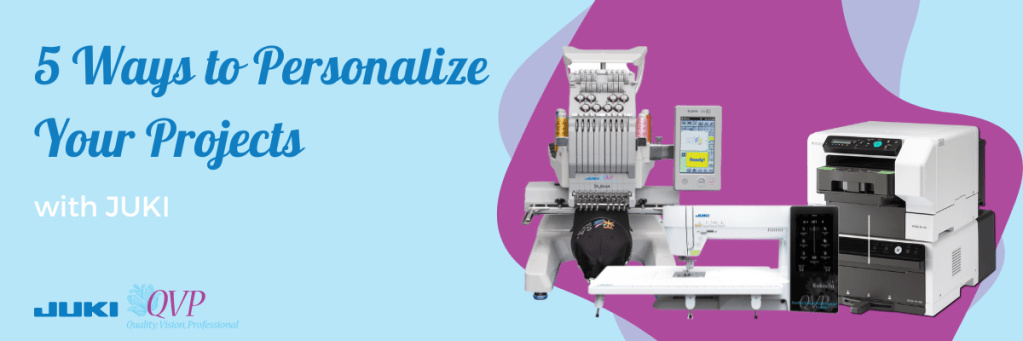
As creators, we love being inspired by other sewist and quilters, but how do we take their inspiration and personalize it? Today we will discuss five ways to personalize your sewing and quilting projects. From adding lettering to printing on designs, there are so many ways we can find a project and turn it into our style. So follow along and check out what machines and accessories we recommend for your personalization touches.

Adding Lettering

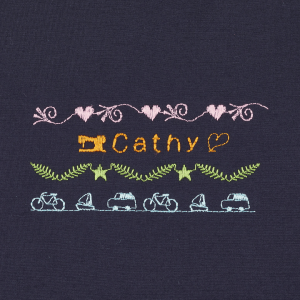
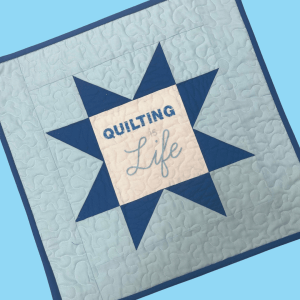
Whether you’re inspired to create a tote bag, or a sweater, adding lettering to your projects can be just the touch of personalization you need! Add your initials with your partners on a sleeve to create the perfect valentines gift, place your child’s name on their new school bag, or gift a quilt with a quote to your loved one using the lettering feature on your creations.

To add this personalization technique, you can use an electric computerized sewing machine that offers lettering, like the Kokochi DX-4000QVP! An electronic computerized sewing machine like the DX-4000QVP offers lettering stitch choices, ranging in different fonts, that will allow you to quickly and easily stitch in your child’s name, favorite quote, or number one sports team name!

Adding lettering is an easy way to personalize your next project and can be done with just a tap of your finger and a stitch!

Adding Embroidery Designs

Using a specialized embroidery machine, you can start adding your designs and bring texture to your projects by adding a touch of your personality! For example, add a cool design to sneakers, pet collars, or even a child’s teddy bear to create a project representing you or the gift receiver.

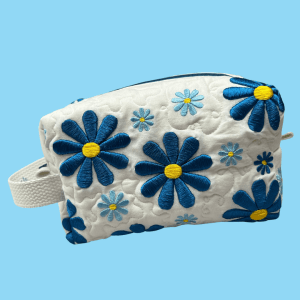
A machine like the JUKI/Tajima Sai 8 Needle Embroidery Machine is an example of a machine that can offer this feature! With 8 different color options, you can create beautiful flowers, animals, and a scenic view from your last hike. Art is limitless with what you can create on an embroidery machine. Adding embroidery can be an exciting art form when creating personalized projects!

Want to try your hand at embroidering and creating a makeup bag? Learn how to create this makeup bag with our JUKI Ambassador Nicole Moore here!

Designing Your Fabric

Have you found yourself wanting a specific fabric design? Been drawing some designs of your own? Then take the leap and design your own fabric! With a machine like a Direct-To-Garment printer, the options in patterns and designs for your projects are now endless, thanks to the ability to design your own fabrics right from your studio.

The RICOH Ri 100 can help you print your art designs and patterns onto fabric easily and quickly. From canvas fabrics for your tote bags to cotton for your memory quilts, enjoy the freedom of designing and creating anything for your imagination, and enjoy a material that no one else would have!

Try your hand at printing your own fabric with this east mini quilt project! Learn how to create your own with our JUKI Ambassador Nicole Moore here!

Adding in Photos

Whether it’s a family photo or a memory from your favorite trip with friends, adding a memory photo to a project like a t-shirt or a quilt is a great way to personalize your projects! Whether you’re embroidering designs with free motion quilting, using a Direct-To-Garment printer, or using an embroidery machine, there are limitless ways you can get to designing and including your photos in your projects.

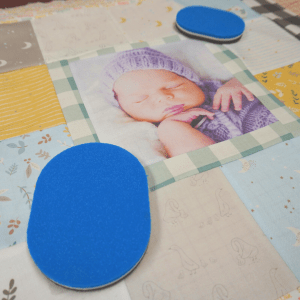
Our favorite projects are memory quilts users create with photos! From sweet newborn gifts to anniversaries and holidays, a quilt created with personalized love is an excellent idea for your next gift project! Using a machine like our Direct-To-Garment printer, the RICOH Ri 100 can easily print and place your photos directly onto the fabric you’re creating, letting you put your focus on your quilt block designs.

Want to create your own memory quilt like the one shown for your loved one? Follow along here to learn more here!

Creating a Set

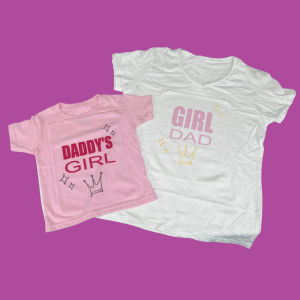
One of the best things about personalization is the freedom to be creative in what we embroider and print on. Personalize your next gift by creating a matching set! Whether it’s a set of make-up bags for traveling, or a matching set of t-shirts for the father and daughter duo, sets can be a fun gift that allows you to try different project ideas.

One of the best ways to create sets is to intermix your work! Print on your fabric, embroider your design and sew it all together to create something unique and different. Whether your project is small, like a glasses case, or large, like a king quilt, adding these touches of personalization will bring the whole idea together!

So the next time you create a project, add your name, embroider a design, or print on a pattern and show your personality when showing off your project!

Want to try your hand at creating a matching set? Check out our Daddy and Daughter duo set project here!

Want to personalize your next project? Then, visit us here today to find your nearest JUKI dealer!

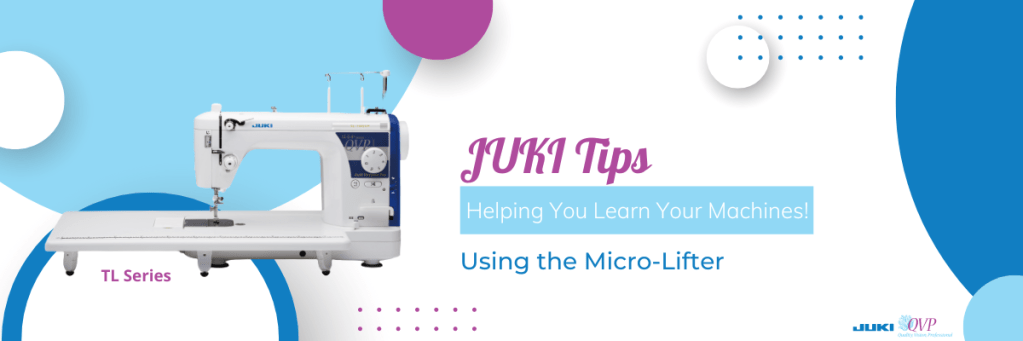
JUKI Tip: Using The Micro-Lift on the TL Series

For this month’s JUKI Tip, we’re focusing on the micro-lifter feature that can be found on your TL series machines! Now, a common question we get is, “what is different about the Micro-lift feature from the presser foot pressure?” To show the difference, we’re going to use the TL-18QVP because it has two different locations for each feature.

Now the presser foot pressure, as it sounds, is the amount of pressure the foot puts on the fabric you’re sewing. For example, if you’re moving your project, the presser foot pressure is what will help you keep that nice straight seam. With the Micro-lift feature, your presser foot pressure will stay the same, but the height of the foot will change. Raised above the feed dogs, your foot will now have space to create using multiple layers of fabric, thick fabrics, complete binding easier, work on handbags, and so much more.

Our favorite part is not needing to adjust the presser foot pressure as often when using the Micro-lift feature, helping your project process become more simple.

As you watch the video, you’ll be able to follow along as our National Account Trainer Alba demonstrates how the Micro-lift feature looks when in use, and how easily the fabric you’re working on will go through. From 8 layers of denim to 15 layers of denim, you’re able to see how the fabric smoothly glides through; the needle easily sewing through the material.

We hope this video encourages you to try your hand at the Micro-lift feature on your machine and that it helps you create beautiful projects with quality style! What JUKI Tip are you hoping to see next? Let us know in the comments below!