New Year, New JUKI Accessories

This year, get ready to level up your crafting game because JUKI has just dropped a variety of new accessories for 2024 that’ll make your sewing adventures a breeze!

From the innovative EB-1 buttonhole device specially crafted for the TL series to the whimsical hearts and wings ruler set and the versatile tears and tails ruler set, JUKI has unleashed an exciting collection of new notions for your sewing projects.

Check out our new 5-piece scissor set, ready to tackle any cutting task with finesse or the convenient pen oiler for seamless machine maintenance, and brace yourself for the stylish new trolley bag designs available in small and large sizes. We’re about to explore all that’s new!

Whether you’re a seasoned pro or just starting your stitching journey, these new JUKI accessories will elevate your crafting experience. Join us as we take a closer look at these game-changing tools, unpacking their features and discovering how they can revolutionize how you approach your sewing projects. So, grab your threads and bobbins because we’re about to embark on an exciting exploration of JUKI’s latest offerings for 2024!

EB-1 Button Hole Device
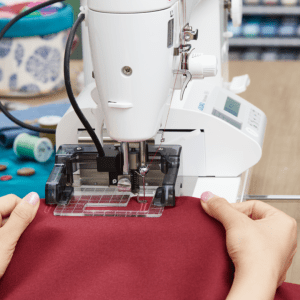
The EB-1 by JUKI is a game-changer for sewists aiming to elevate their garment creations. Its compatibility with the TL semi-industrial sewing machine marks a revolutionary leap in buttonhole creation, empowering creators to effortlessly add that perfect finishing touch to their chic dresses or stylish shirts.

This accessory boasts various features designed to ensure precision and convenience with every stitch! From setting button diameters ranging from 5mm to 32mm seamlessly to offering a Clear Presser Foot for easy alignment, the EB-1 prioritizes user-friendly functionality. Moreover, its flexibility allows adjustments in zigzag and knife widths, stitch density, and even sewing speed, putting creative control firmly in the hands of the sewist.

One of the standout features of the EB-1 is its remarkable memory function! This function retains the latest settings, ensuring consistent performance throughout your projects. Its versatile four-direction layout for buttonhole placement opens doors for compatibility with various sewing endeavors. Including essential accessories like different height correction plates and non-slip sheets enhances stability and precision, enabling professional-quality buttonholes with ease.

Say goodbye to fighting with your buttonhole projects and welcome a new era of sewing simplicity with the EB-1. This indispensable tool guarantees flawless results, whether sewing for style or functionality!

Hearts and Wings ruler set

The new Hearts & Wings Ruler Set from JUKI isn’t just a set of tools; it’s a gateway to unleashing boundless creativity for sewists! Specifically designed to be used as templates with the quilting ruler foot, this set opens up a realm of possibilities for stitching intricate and captivating designs. Dive into a world of fun as you explore the various rulers within this kit, each offering its unique flair to elevate your sewing projects. With tools like the Cable Tool, Mini Heart, Traditional Hearts, Feathered Hearts, and Bird Bracket Chain, your creative journey becomes a canvas waiting to be adorned with captivating patterns!

Dive into nature-inspired motifs, envisioning sprawling vine-like cable patterns reminiscent of twisting branches or delicate feathered hearts mirroring the grace of natural elements. Or, explore city-themed designs with structured, geometric heart outlines, infusing an urban vibe into your creations. Try your hand at whimsy and playful designs with the Mini Heart ruler. These rulers open doors to crafting lively and fun patterns that add a touch of joy and creativity to any project! Whether mirroring nature’s serenity, capturing cityscapes’ vibrancy, or infusing playful elements, the Hearts & Wings Ruler Set empowers sewists to bring their envisioned designs to life with precision and flair.

Tears & Tails Ruler Set
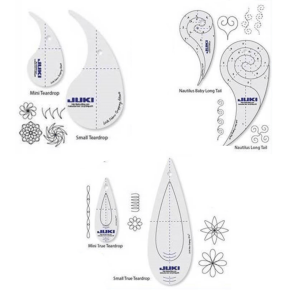
The new ruler kit we’ve released is the Tears & Tails Ruler Set! This set is a transformative addition for any sewing enthusiast diving into quilting or decorative stitching. Like the ruler set above, you’ll want to pair this set with the quilting ruler foot before diving into creative exploration!

With a diverse range of rulers, such as the Mini Teardrop, Small Teardrop, Nautilus Baby Long Tail, Nautilus Long Tail, Mini True Teardrop, and Small True Teardrop, the possibilities for crafting intriguing and diverse patterns are endless. Whether envisioning delicate tear-shaped motifs or intricate nautilus-inspired designs, this comprehensive set empowers you to craft captivating patterns that add depth and personality to your projects.

Create delicate and flowing patterns reminiscent of leaves, petals, or even gentle ripples on water using teardrop and nautilus-inspired rulers. Or to transition city-inspired designs, employ structured and linear motifs that echo the architectural elements or the bustling energy of an urban landscape. These rulers offer a gateway for sewists to craft designs from their dreams onto projects, whether in quilts, garments, or other textile creations!

JUKI 5 Piece Scissor Set
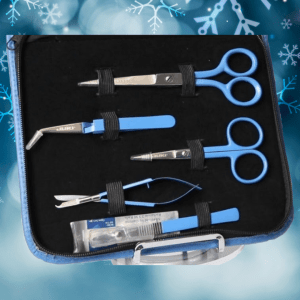
Crafted exclusively by Famore for JUKI, the 5-piece Scissor Set is a game-changer for your sewing, quilting, or crafting room! The scissor set is built with medium powder blue handles that are not just stylish but also super comfortable, and it includes a matching zipper case –the perfect home for these beauties!

These scissors and snips are like a dream team for your fabric-cutting adventures! This set has covered you, from precision cutting to tackling those pesky seams with the surgical seam ripper. Trust me, once you get your hands on these, you won’t want to let them go! This set includes scissors, snips, tweezers, and a surgical seam ripper.

JUKI Pen Oiler
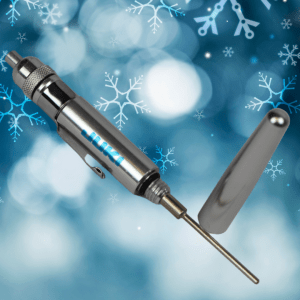
Let’s discuss a game-changer for your machine maintenance routine—the JUKI Pen Machine Oiler! Imagine having this nifty tool in hand, perfectly crafted to reach those nooks and crannies of your sewing machine that always seem impossible to lubricate. This oiler is like a secret weapon, ensuring your beloved JUKI machines perform at their best!

Whether you’re rocking a TL semi-industrial powerhouse or a long arm series beauty, this pen oiler’s got your back, keeping those gears turning smoothly with its precise applicator designed to hit all the right spots. It’s like giving your machine a spa day—because, hey, they deserve some TLC, too, right? If you’re all about keeping your sewing sanctuary in tip-top shape, this oil pen is about to become your new best friend. Smooth stitching sessions await!

JUKI Trolley Bags
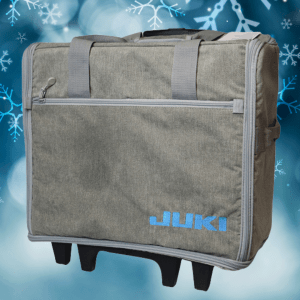
Lastly, let’s discuss the new design for our JUKI trolley bags that makes your machine-toting life a breeze! The bag has a sleek Chenille fabric exterior, spiced with classy gray details and an embroidered JUKI logo. They come with a front pocket and two inside mesh wall pockets, helping you bring all those notions you’ll need for your class or retreat!

These bags fit most sewing machines and sergers in JUKI’s lineup, giving your beloved gear a comfy ride with options to load from the front or the top. Whether you’re lugging around your MO-3000QVP or your Kokochi DX-4000QVP, these trolley bags are the perfect wingman for your sewing adventures. Curious about dimensions? They measure 10″ wide, 19″ long, and 16″ tall and 23″ wide, 12.5″ long, and 16″ tall. Those sizes are a roomy nest for your machine to relax while traveling!

So, say hello to your new trusty sidekick for your sewing escapades—the JUKI trolley bags are ready to roll!

To learn more about our latest accessories, visit us here today!
Different Ways You Can Learn How to Sew!

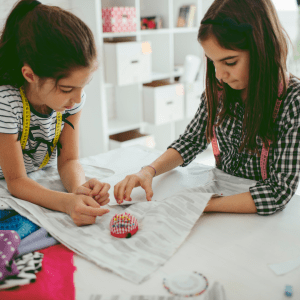
Have you been looking to pick up sewing but need help figuring out where to start? Then join us as we’ve gathered four different ways you can begin learning today! From in-person classes to self-study, the world of sewing is now at the touch of our fingers, and we will share how you can access this information.

Passed Down Knowledge

If you have a family member, or friend, who loves the hobby and may even be the reason you’re interested in learning, don’t be afraid to reach out and ask for some lessons! Having a connection in the sewing and quilting world will help you learn techniques, allowing you to practice on their machines before purchasing your own, and a lesson on what features they commonly use that you can practice using.

Choosing your first sewing machine can be intimidating if you need to become more familiar with what machine features you’ll need or what stitches you’ll use. Practicing with a family member’s or friend’s machine will make you get comfortable with the options available and help you understand what you need to create your projects. If you’re interested in learning more about beginner sewing machines that JUKI offers, you can learn more here.

Working with family and friends will also give you the feedback you need. While attending classes and using online resources is an option, we’ll cover these options in the following sections of the blog, having a connection that can provide feedback will be extremely useful when you create throughout the day. So take the time to learn from their past projects, follow along as they show you how to use different techniques, and ask those questions you would be embarrassed to ask in front of a class.

In-Person Training Classes

The easiest and most common way of learning to sew is by researching your local area for sewing and quilting classes! Many times you’ll find these programs in your local libraries, your nearest sewing and quilting machine dealers, or at specialized locations that offer crafting classes.

For example, if you’re a new owner of the Miyabi J-350QVP, you might be looking for some training on how to use your longarm quilting machine. At JUKI, we offer the opportunity to attend a longarm training 3-day course that teaches users the basics of the machine and how to use it and shares information on the Quilter’s Creative touch. These classes are offered at select JUKI dealers and can be found here.

You can also attend quilting and sewing tradeshows to find in-person sewing classes! For example, at JUKI, you can commonly find us hosting serger classes at OSQE, with sign-up availability on the OSQE website here. These classes are offered nationwide as the tradeshow travels from coast to coast, helping new sewists hone their skills.

Check out your local community colleges and community centers for sewing class events! These programs are usually offered at low rates and allow you to learn the basics of sewing. The classes also provide an opportunity to receive feedback and ask those questions you’ve been having. Don’t worry if you can’t attend face-to-face classes; thanks to the online world, we have many more options!

Using Your Online Resources

Thanks to the internet, we can now access many videos focusing on sewing skills, projects, tutorials, and so much more. Almost any question you have can now be answered with just one search. Using this, new sewists and quilters can find free or paid online resources to teach you how to complete certain stitches, use presser feet, thread your machines, and more!

These teaching formats can come in videos, PDFs, online books, and online classes, allowing you to find different resources as you learn new skills and techniques. One of the best resources you can find content on is YouTube! On JUKI Home Sewing’s YouTube, you can find out how to operate your machines, set them up for sewing, and check out accessories and what they’re used for. You can also follow along with past projects and lives, where we demonstrate how to create a project from beginning to end.

There are countless online creators out there who are so excited to demonstrate techniques, projects, skills, and machine features for new sewists and quilters like you, and the content can be found for free or at low costs. You can, however, choose to invest in your skills and join online programs with teaching professionals who show you how to build your skills step-by-step and offer constructive feedback and knowledge you can learn from, usually offered at varying prices depending on the skill level of the instructor.

Lastly, take advantage of what influencers in fashion and quilting can teach you on their social media pages! While many creators focus on posting project-based content, many will bring it to their media outlets for learning moments. These quick snippets can explain how to use a presser foot and other accessories to keep on hand, and much more.

Hit the Books!

Let’s go back to the original days of sewing and check out the books available for quilting and sewing! Many of these books will offer resources on beginner basics for using your sewing machine, provide tips and tricks on what tools you’ll need in your studio, what presser feet are and which ones to have on hand to complete specific techniques, and even walk-throughs of a series of projects you can begin creating to start building your skill set.

There are also book resources that explain how to maintain your machines, offer beginner to advanced sewist projects where you build your skill set as you create, and so much more. Check out your local libraries or bookstores to see what’s available, and remember to browse the internet for recommended books!

No matter how you decide to learn, picking up a new hobby is a great adventure! Whether you go online and try it alone or pick up some classes at your local community center, sewing and quilting are great hobbies for letting your creativity flow. We hope today’s blog encourages you to start working on your hobby and learning new skills!

JUKI Tip: Adjusting The Bobbin Tension On Your Longarm

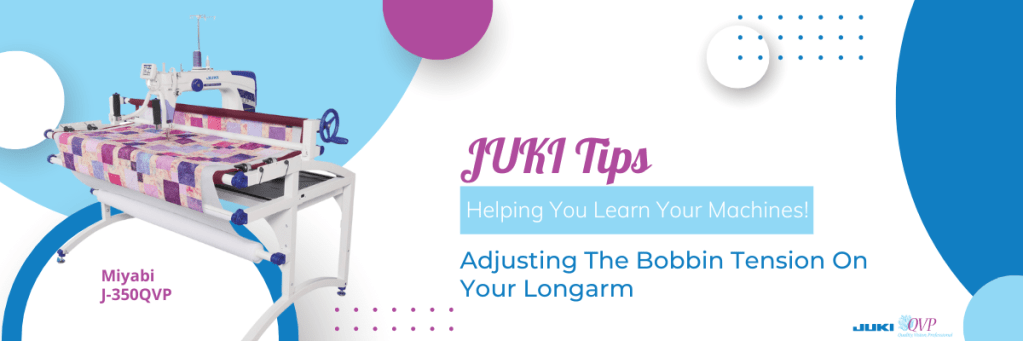
For this month’s JUKI Tip, we’re focusing on adjusting the bobbin tension on your longarm machine like our Miyabi J-350QVP! A common question we hear from sewists and quilters is, “how do I adjust the tension for my bobbin on my longarm?” We’re going to start off today’s JUKI Tip by covering what bobbin tension is, how to get true good tension for your next project, and a tool we think all quilters and sewists can benefit from having in their tool kit!

Follow along below as our JUKI National Account Trainer Alba demonstrates setting the bobbin tension for her Miyabi J-350QVP Longarm machine and how she finds the perfect tension for her project needs.

The first thing we cover is what our bobbin case and bobbin look like. For our JUKI longarm machines, you’ll need an M-Class bobbin and bobbin case. Inside the bobbin case, you’ll find its spring, which prevents backlash as your bobbin turns inside. Always check on your spring when changing bobbins, confirming its blue color to ensure it’s good to go! If you notice the blue haze diminishing, it’s time for your spring to be replaced.

Now it’s important to take care of your bobbin case! Handle with care to ensure that the metal doesn’t receive any bumps or bending from drops. This will affect your tension in the long run and how the bobbin pulls on your thread.

Starting off with a full bobbin, we’ll place the bobbin thread inside the bobbin, ensuring to pull the thread to the right side, before placing the bobbin in the bobbin case and stretching the thread to where the slit is so that it falls right into that tension area. That area is what holds the thread tension when you’re creating. Now the two screws you see on the side can be used to adjust the tension. By turning the screws in 15-minute increments, as opposed to twisting it fully, you’ll be able to adjust your tension slowly to your goal tension number. Remember, lefty loosey and righty tighty!

There are two ways to test your tension. One way to test your tension is by hand. You can do this by setting the bobbin on your palm, making sure to face the bobbin away from you as it normally would in the machine, and then pulling on the thread. You’ll want to make sure you can pull the thread up, slowly lifting it from your palm without the bobbin releasing from the bobbin case. The second way, a technique that offers more precise measurement, is using a tool like the TOWA Guage.

The TOWA Gauge is a tool quilters will love because of the assistance it can offer when you’re trying to get that perfect tension. The goal place our trainer recommends is between 180 and 200. However, her favorite is a little lower at 150. On a longarm, you want your tension to be able to handle multiple layers of batting and fabrics, so you’ll want your top thread and lower thread to meet right in the middle of your batting for good strong tension.

Following along on our youtube video, you’ll notice how inserting the bobbin into the TOWA Gauge is like inserting the bobbin into your longarm machine. Make sure to listen for a click as your setting your bobbin to ensure it’s placed in properly. Next, stretch the thread and run it along the bottom side of the first wheel and up and around to the top; here, you’ll begin to notice the gauge move. As your thread goes into the thread guide and out to the side, pull steadily and even to measure the tension. From here, you’ll be able to decide if you need to adjust the tension number to your preferred goal tension.

Once you’ve finalized your perfect bobbin tension, you can focus on your needle and thread combination. Having the right bobbin, needle, and thread is what will help your projects finish successfully and beautifully, but we’ll cover those combinations soon!

Thank you for joining us in this month’s JUKI Tip, where we focused on how to adjust the bobbin tension on your longarm machine. What JUKI Tip do you want to see next? Let us know in the comments below!

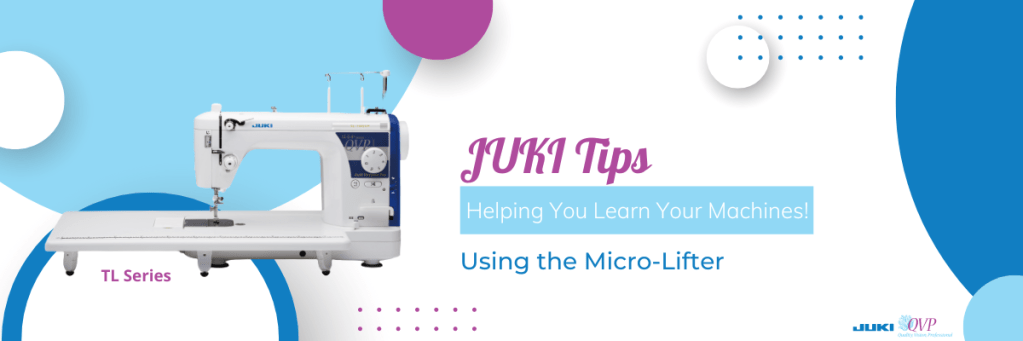
JUKI Tip: Using The Micro-Lift on the TL Series

For this month’s JUKI Tip, we’re focusing on the micro-lifter feature that can be found on your TL series machines! Now, a common question we get is, “what is different about the Micro-lift feature from the presser foot pressure?” To show the difference, we’re going to use the TL-18QVP because it has two different locations for each feature.

Now the presser foot pressure, as it sounds, is the amount of pressure the foot puts on the fabric you’re sewing. For example, if you’re moving your project, the presser foot pressure is what will help you keep that nice straight seam. With the Micro-lift feature, your presser foot pressure will stay the same, but the height of the foot will change. Raised above the feed dogs, your foot will now have space to create using multiple layers of fabric, thick fabrics, complete binding easier, work on handbags, and so much more.

Our favorite part is not needing to adjust the presser foot pressure as often when using the Micro-lift feature, helping your project process become more simple.

As you watch the video, you’ll be able to follow along as our National Account Trainer Alba demonstrates how the Micro-lift feature looks when in use, and how easily the fabric you’re working on will go through. From 8 layers of denim to 15 layers of denim, you’re able to see how the fabric smoothly glides through; the needle easily sewing through the material.

We hope this video encourages you to try your hand at the Micro-lift feature on your machine and that it helps you create beautiful projects with quality style! What JUKI Tip are you hoping to see next? Let us know in the comments below!

Seal It With A Stitch!

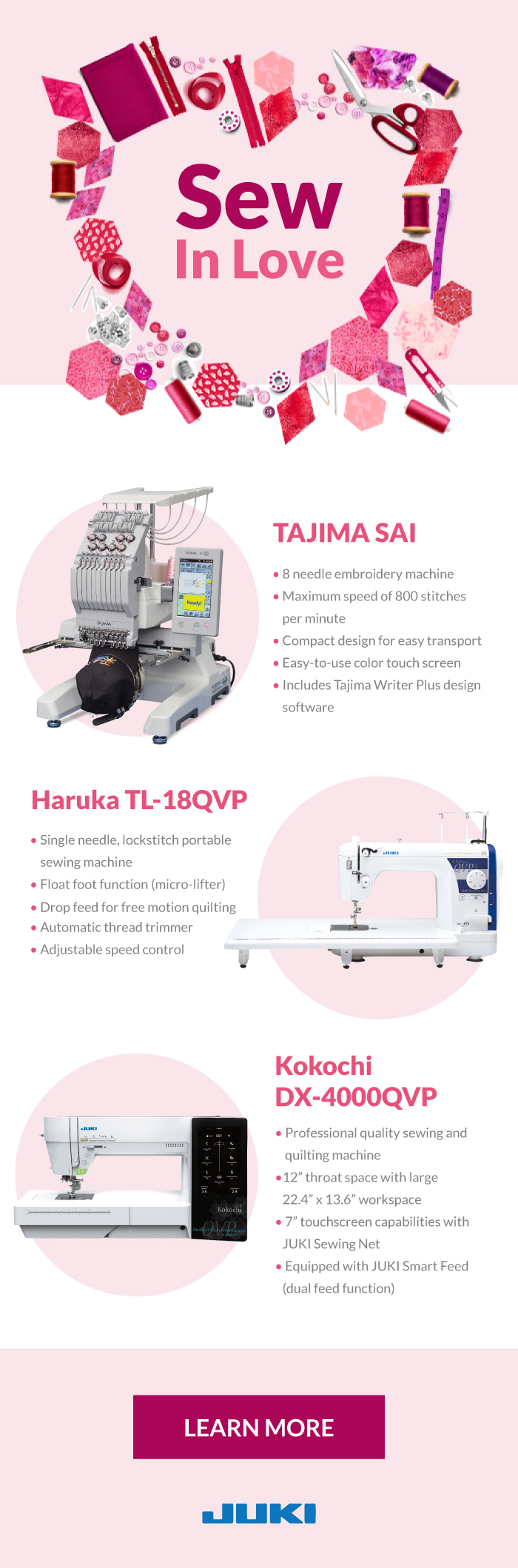
Seal it with a stitch this Valentine’s using your favorite JUKI machines! Create beautiful garments on the DX-4000QVP, personalize your projects on the TAJIMA Sai, or piece your quilts using the TL-18QVP! At JUKI we’re excited to help your love-filled project ideas come to life!

To learn more about our JUKI machine collection. contact your nearest JUKI dealer here.