
Level Up with JUKI Accessories

September is the perfect time to enhance your sewing experience with the right tools and accessories! This month, we’re featuring four JUKI accessories designed to help you achieve professional results while making your projects more enjoyable on your JUKI.

Whether you’re quilting, creating home décor, crafting handbags, or focusing on precise stitching, these accessories are tailored to meet your needs. By adding the right accessories to your sewing space, you can unlock new techniques and take your projects to the next level!

What is a JUKI Free Motion Table?

Let’s start with an accessory any sewist can appreciate, the JUKI Free Motion Table. This flat extension created for the TL series expands your workspace and provides better control over your fabric. It’s especially helpful for creators who need stability and support when working on large quilts or bulky projects. Keeping your fabric level with the machine bed reduces drag and helps maintain even stitching. This table is designed to fit perfectly with your JUKI machine, making free-motion quilting smoother and more enjoyable.

Benefits & Tips

  • Expands your workspace for easier free-motion quilting
  • Reduces fabric drag and shifting for smoother stitches
  • Ideal for large quilts, table runners, and bulky projects
  • Level your table with your sewing surface for the best results

Project to Try: Quilted Table Runner
Create a beautiful quilted table runner to celebrate the season! Using the Free Motion Table, you’ll have the stability to quilt continuous designs without fighting heavy fabric. Choose coordinating fabrics, layer your quilt sandwich, and practice smooth, even movements across the surface. The large workspace helps keep your stitches consistent, resulting in a polished and professional finish. Learn how to create this project here!

What Is a Tractor Foot?
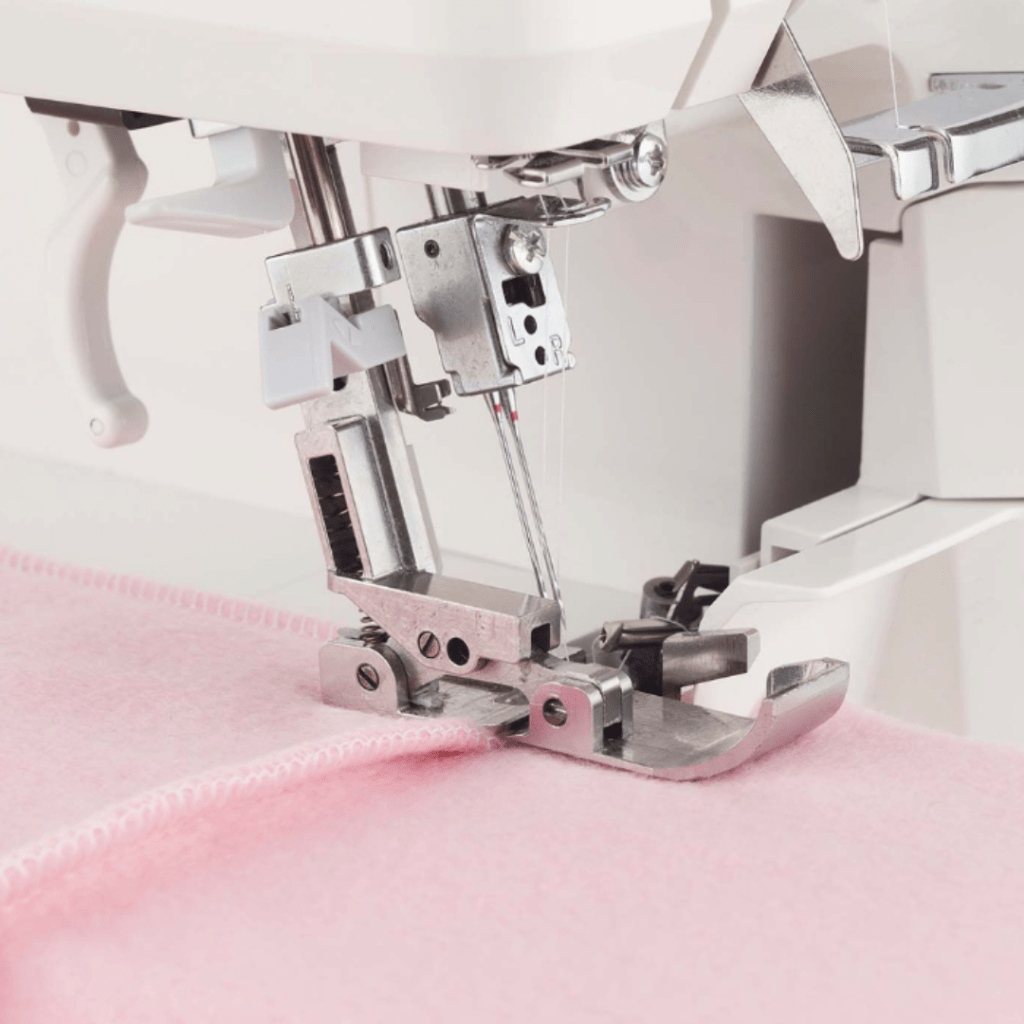
Now, if you’re someone who works on home décor, the Tractor Foot is for you! This foot is designed to help your machine glide over thick seams and uneven layers with ease. It’s perfect for home décor projects like cushions, drapes, or upholstery, where fabrics often overlap or create bulky areas. This foot “climbs” over raised sections smoothly, reducing skipped stitches and needle strain.

If you love making home projects with canvas, denim, or layered fabrics, the Tractor Foot is a must-have!

Benefits & Tips

  • Smoothly stitch over thick seams and uneven layers
  • Prevents skipped stitches on bulky home décor fabrics
  • Ideal for upholstery, drapery, and multi-layered sewing projects
  • Use a heavier needle (90/14 or 100/16) for the best results

Project to Try: Custom Throw Pillow with Piping
Upgrade your living room with a custom pillow that includes a decorative piped edge. The Tractor Foot makes it easy to stitch around corners and over layered seams without breaking needles or losing stitch quality. Cut your pillow pieces, insert piping between the front and back panels, and watch the foot handle the thickness with ease. The result is a stylish, durable pillow that looks professionally made.

What Is a Professional Set?
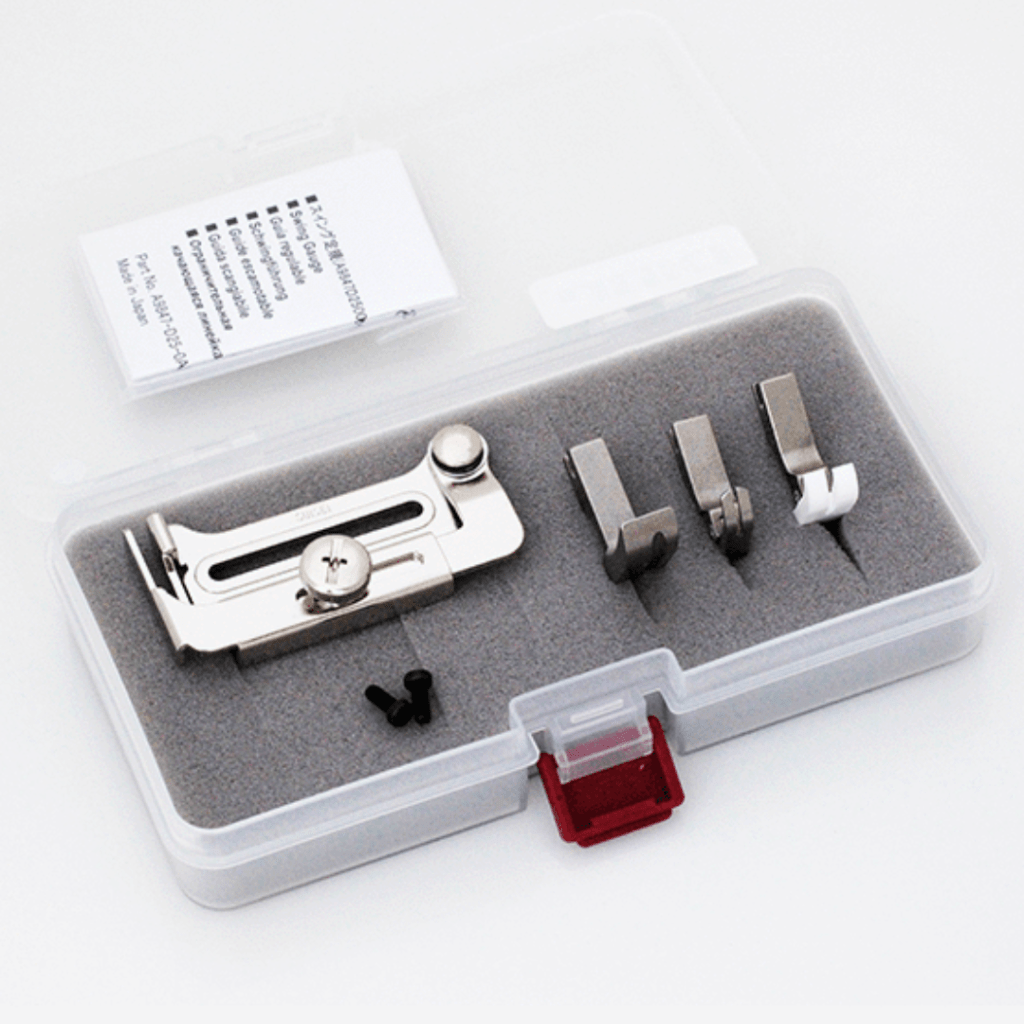
Next, we have the JUKI Professional Set, a collection of presser feet and tools designed for projects like handbags, structured totes, and more!

This set gives you the versatility to handle difficult-to-feed fabrics like leather, zipper installation, edge stitching, and decorative finishes all in one package. Each tool is designed to help you achieve clean, precise results, even on challenging materials like leather or canvas. It’s the perfect accessory kit for makers looking to expand their skills and create professional-quality bags.

Benefits & Tips

  • Provides a variety of feet for topstitching, zippers, and edge finishing
  • Helps tackle layered fabrics, leather, and canvas with ease
  • Ideal for structured accessories and professional-level bag making
  • Match the foot to the task for cleaner, faster results

Project to Try: Quilted Laptop Bag
Create a durable and stylish quilted laptop bag using the Professional Set to guide you through every stage of construction. Start by quilting your fabric layers with the walking foot to ensure smooth, even stitches. Then use the edge guide foot for clean topstitching and the zipper foot to install secure closures or inner compartments. With these tools, you’ll achieve a sturdy, professional-looking bag that keeps your laptop protected while showcasing your creative style. Learn how to create this project here!

What Is a Needle Plate?
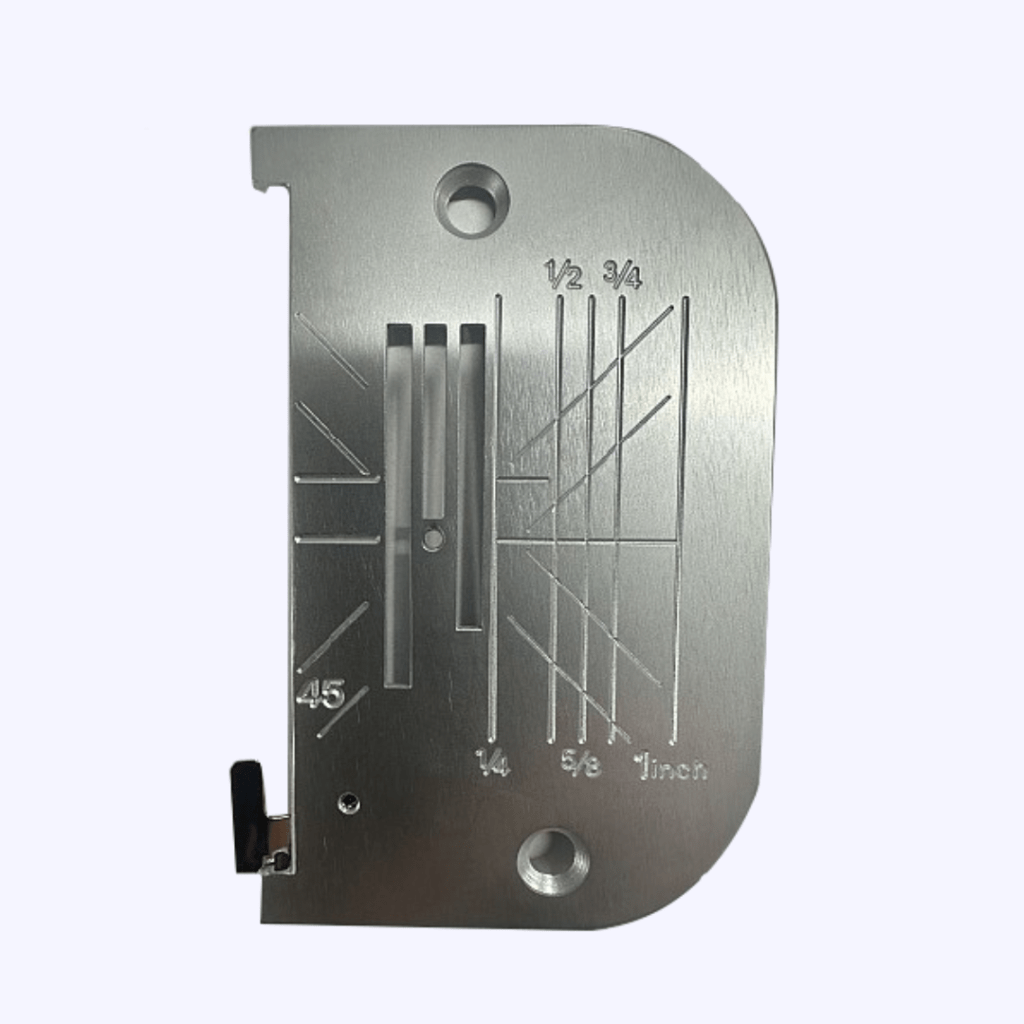
The JUKI Needle Plate is now available in inches! This upgraded plate gives you precise seam markings in inches for easier, more accurate sewing. This is especially helpful for quilters, garment makers, and general sewists who rely on consistent seam allowances. By following the inch markings, you can maintain straight, even stitches without additional guides. It’s a simple upgrade that makes a big difference in accuracy and efficiency.

Benefits & Tips

  • Provides clear inch-based seam guides for precision
  • Helps maintain consistent seam allowances without extra tools
  • Keep fabric aligned with the markings for straighter seams

Project to Try: Quilted Block
Try sewing a traditional 9-patch quilt block using the Needle Plate for perfectly consistent seams. Cut your squares, align your fabric with the ¼” marking, and chain piece your rows together. With precise guides, your finished block will press neatly and assemble smoothly with the rest of your quilt. This small upgrade helps ensure every piece comes together with accuracy!

Upgrade Your Sewing This September!

Adding the right accessories to your sewing kit can completely transform your creative experience. Whether you’re quilting with the Free Motion Table, sewing home décor with the Tractor Foot, creating professional bags with the Professional Set, or improving precision with the Needle Plate in Inches, these tools are made to elevate your projects.

Visit your local JUKI dealer to explore this month’s spotlight accessories and start your next project with confidence!

Designing Your Sewing Space

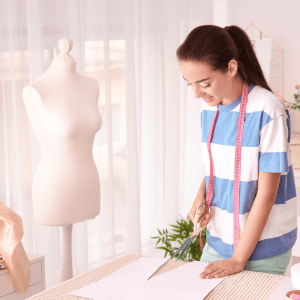
When we’re ready to get creative, we want to sit in a space that encourages our energy and helps us get our project done! That’s why in today’s blog, we’re going to cover some tips and tricks you can start using when setting up your workspace. Whether you’re creating in the studio room or your kitchen island, having the proper organization and setting up your space in a way that flows for you will help improve your project creation experience.

Follow along as we focus on four key aspects of any sewing area design: your space, budget, tools, and storage. Then, let’s set up a space to inspire you to get creative and have fun!

Choosing Your Space

While we may not always have options available, figuring out where to set up shop when we plan to sew can be difficult. If you have trouble deciding where to create, or keep jumping around spaces, view below for some things to consider the next time you’re ready to sew.

Think About Your Space

As long as you and your machine fit, you’ve found space! The good thing about sewing is that as long we can create an area where supplies are nearby and we can sew, we can now create our projects. Focus on organization and storage techniques if you work in a small space.

For example, if your space is limited, think of what you’re essentials are. Machines, tools, fabric, and notions can all be organized, placed, and readied for specific projects. Spend time in your space, decide what pieces you can use to expand your storage, and set up a spot that allows you to create comfortably. Options like wall organization, under-table storage, or allocating closet space can better enable you to have your tools and fabrics on hand.

Next, focus on lighting! When you’re creating, you don’t want to strain your vision to see how your stitching is going; therefore, we recommended to find a spot with natural lighting, using supplemental lighting like overhead, desktop, or portable lamps. Also, keep in mind that some machines include LED lighting, which can be another lighting option when working at night.

Last, let’s focus on how you can organize and keep it clean! While our project spaces can be free for all when sewing, it’s great to have a clean space. Think of what accessories, like baskets, drawers, carts, and more, can be brought into your room that will provide storage and organization to your project area. 

Budgeting

We all know sewing can be costly! This is why, when it’s time to set up your sewing space, it’s a good idea to allocate a budget and decide what you need or want for your area. While furniture and organization sets can be costly, there are ways to set up your space while being budget-friendly.

Upcycling

Have a desk in a spare room? How about a bookshelf rarely used or a closet with some space? These things can easily be added to your sewing space! Using what you have in your home is a great way to begin building your area because while it’s budget-friendly, it allows you to create a designated space for your craft.

It doesn’t stop at furniture, either. These are excellent storage pieces for notions and tools if you have empty cookie tins, unused containers, or storage bags. In addition, baskets can be used for fabric and even be created by you! For example, this basket (including the sewing basket on the JUKIHome website from LuAnn) is great for tossing in those scrap pieces you plan to use again in the future.

DIY

It can be extremely rewarding building furniture! For example, if you have the space allowance, you can create a piece like a custom cutting or ironing table. Or, if you’re working in a tight space, you can create custom organizational furniture that is in tune with your storage and space efficiency needs.

Thankfully, there are thousands of inspirational photos that other sewists and quilters have shared online that new sewists can find inspiration from. Search your favorite media sites like Pinterest and YouTube for tips, or check out your favorite sewist blogs, to gather ideas on what type of space projects you can do that will upgrade your sewing area without breaking the bank.

Furnishing

Finally, if this is within your budget, you can choose to purchase new furniture for your sewing room. We recommend focusing on pieces that offer ample storage space, vertical style furniture, and hanging an item like a pegboard for tools.

When setting up your space, think of the top 3 spots: your cutting area, your sewing machine spot, and your ironing area. These spaces don’t need to be large but comfortable enough for you to create and get the project done! Whether it’s your dining table, Kitchen Island, or a designated studio room, having these three spots will help get your project done.

Tools for Your Space

Think of your budget and what projects you plan to create before deciding what tools your studio needs. While it can be tempting to buy everything we see at the sewing shops, it’s best to start with the basics and build your way up to new tools and accessories. For example, a beginner sewist should create an essential sewing toolkit that includes cutting tools, a marking tool, a clear ruler, pins, needles, measuring tape, a pin cushion, an iron, and a seam ripper.

If you feel like it’s time to upgrade your toolset, pick accessories that can help you elevate your current skills. Items like curved rulers, pattern weights, seam gauges, or presser feet that weren’t included with your machine can help you create more professional-looking finished projects. If you plan to sew for life, you know new accessories and tools will always find their way into your studio space. Remember your budget, projects, and storage when choosing new tools and accessories for your studio.

Organizing Your Space

Whether we’re sewing in a small or large space, the organization is key to a tidy workspace. The fact is, if you’re creating on your kitchen table, you’re going to be packing and unpacking your machine often. Based on your needs, you can create an organization system that stores your equipment well and is within easy reach.

One of the best ways to organize your space is vertical! Using vertical shelving is perfect for all your supplies. Fabric, notions, tools, and accessories can be displayed, so you keep track of what equipment you have, and the shelving will allow you to fix the shelf sizing to your needs. You can also find add-ons like organization boxes that enable you to separate your accessories and tools easily. Other options include baskets for fabrics, hanging racks for tools, or boxes.

Since fabric tends to take over most of our storage space, we recommend folding flat or rolling the bundle to keep space. Stashing your fabric in a basket or clear container is best for viewing your inventory and keeping count of what fabrics you have on hand. Creating a swatch system with fabric descriptions or organizing by color or type is a couple of ways to organize your fabric and keep track.

For patterns, we recommend storing these in boxes or creating a pattern binder to keep track of your collection. If you’re someone who likes to purchase digital PDF patterns and don’t use them upon purchase, we recommend creating a filing system on your computer or laptop as well! Keeping these pieces organized will help you easily set up your next project and allows you to keep in mind what patterns you already have when you’re in the mood to create.

Focus on keeping your equipment clean and ready to use for machines and notions. A cover for your machine will reduce dust buildup and keep your machine safe when not in use. For your tools, a peg board for your wall can be the perfect furniture piece! Add hooks, buckets, and shelves to organize your tools by type and size. Lastly, keep notions organized with clear baskets and jars. Pieces like rolling carts, clear mini drawers, and clear plastic containers are best to easily see what you have when it’s time to create. Focus on making your most commonly used tools, notions, and accessories visible and in easy reach!

Get To Sewing!

Once you’ve planned your sewing space and have everything set up, it’s time to enjoy your new space! Keeping an organized sewing space can be hard when creating and amid the process, but having a designated area for our tools and fabrics can upgrade our creative process with each project! Of course, as you keep creating, you’ll reorganize your studio, and we hope these tips help you plan the space you’re happy to create in!

Are you looking for a new machine for your studio space? Visit your nearest JUKI dealer to learn more about JUKI near you!