JUKI’s Ruler Magic

Let’s discuss the not-so-secret weapon in the quilting world: JUKI rulers! From crafting loops that scream elegance to diving into intricate clamshell designs, these rulers are your ticket to a quilting adventure that’s as fun as it is fab. We will cover the options available from JUKI that you can use the next time you’re quilting. So, grab your favorite fabrics and buckle up as we explore the endless designs these rulers bring to the table and why they’re the most excellent tool in a quilter’s arsenal!

Ruler Base: Expanding Your Canvas

Before you start creating, you must ensure you have a stable place to create! The JUKI Ruler base stabilizes rulers when stitching designs, expanding the machine’s work surface around the needle plate. The set is also removable when unused, offering both convenience and versatility.

¼ Quilting Foot: Precision at Your Fingertips

The next step to a smooth sewing experience with rulers is using the ¼ quilting foot. This foot is a game-changer for quilting with Rulers! With a perfect ¼” distance from the needle entry point to the outer edge, this foot allows sewing with rulers as guides. Its lowered front enhances visibility around the needle area while the adjustable height accommodates various fabric thicknesses.

Rulers For Creating

Loop to Loop Ruler

Creating beautiful 3″ and 4″ loops becomes a breeze with the loop-to-loop ruler! Its 3/16″ thickness is ideal for low-shank sewing machines, ensuring seamless loops on your most cherished projects. This ruler creates looped borders on quilt edges, floral motifs, wave patterns, interlocking designs, and more!
Curved Crescent Moon Rulers

Designed by Ronda K. Meyer, these rulers deliver flawless half-circles! Their 3/16″ thickness is perfect for your low-shank sewing machine and helps quilters infuse elegance effortlessly into their creations.

Some fun design ideas you can complete with the Curved Crescent Moon Rulers are arcs and swirls, petal patterns for your floral motifs, feathers or whimsical spirals, or border elements!

Mini Straight-Line Ruler

Stitching in the ditch is a breeze with this 3/16″ thick acrylic tool! The ruler has indented edges, which helps you maintain accurate placement, and the versatile ends, one round and the other containing a 45-degree angle facilitate creating arcs, scallops, and small crosshatching.

These designs are also great if you want to create geometric patterns, create a grid pattern across your quilt, accent arcs, and scallops, and check out the ruler’s 45-degree angle to incorporate angular elements into your quilt. These angles can create unique designs, like stars, chevrons, or interlocking patterns!

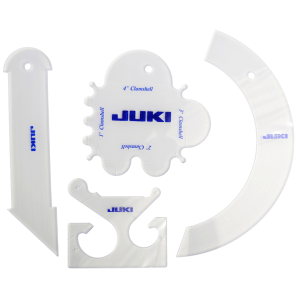
Clamshell Ruler

The clamshell ruler opens doors to crafting 1″, 2″, 3″, and 4″ clamshell designs. With a 3/16″ thickness tailored for low-shank machines, this ruler invites quilters to adorn their projects with classic clamshell quilting!

You can create various patterns with the clamshell designs, integrating nested, alternating, echoing, and graduated clamshells by using your ruler in various positions. Combine these rulers to create fun and intricate designs the next time you’re quilting!
Line Art System ruler 

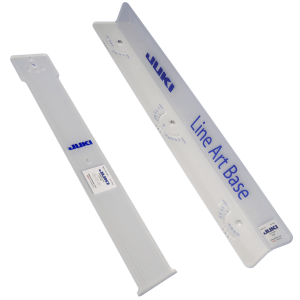
For avid creators seeking precision in straight-line designs like crosshatch, the Line Art System ruler steals the spotlight. It’s tailored perfectly for longarm quilting with a thickness of 1/4″ and measuring 3″ x 18″. It’s not just a ruler; it’s a guide to creating immaculate, geometric designs that add depth and character to your quilts.

Line Art Base 

Regarding the Line Art system ruler, the Line Art Base steps in with larger dimensions, measuring 24″ x 5″. With the same 1/4″ thickness, this ruler caters to longarm quilters looking for more extensive space to create those beautiful straight-line designs!
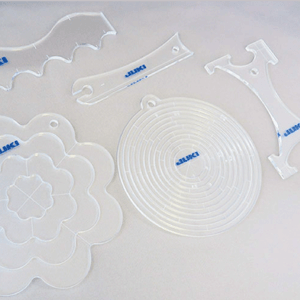
Ruler Set

The Ruler Sets: A Variety Sets Created For Your Needs

Let’s talk about the ruler sets now. Having a ruler set ready for quilting from JUKI is an absolute blast! These rulers aren’t just tools but gateways to endless design possibilities. Each set offers a unique set, whether crafting classic clamshell designs, precise straight lines, or intricate loops and curves. With various options, sets are a great way to create; they allow you to use multiple design ideas quickly and let you add texture and movement to your projects.

First Ruler Set: Crafting Basics

The foundation of quilting lies within the first ruler set! Serving as a template for stitching designs using the quilting ruler foot, this kit enables the formation of various patterns by combining primary lines and shapes. The beauty lies in its versatility; the kit is offered in three sets, allowing endless experimentation and possibilities.

With this set, you can create fun designs: geometric patterns, starburst or radiating designs, or interlocking patterns!

Second Ruler Set: Tears & Tails for Whimsical Elegance
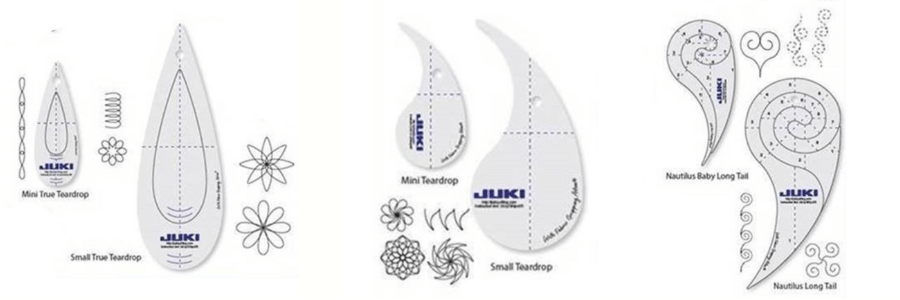
Tears & Tails Set

Enter the realm of whimsy and elegance with the Tears & Tails Ruler Set! One of the latest additions to our Ruler collection offers an array of rulers, including the Mini Teardrop, Small Teardrop, Nautilus Baby Long Tail, Nautilus Long Tail, Mini True Teardrop, and Small True Teardrop. Each ruler is a gateway to crafting fun and exciting patterns that infuse your quilts with personality and charm.

This set is excellent for experimenting with designs! You can test your skills at creating Floral patterns or fluttering butterflies by using the Mini True Teardrop and Small True Teardrop rulers to create symmetrical wings and the long tail rulers for elegant antennae. Or try your hand at animal-inspired designs! Use the teardrops to create feathers for birds or petals for stylized animals and the long tail rulers to form tails, fins, or antlers.

Remember, these rulers are your artistic toolkit; mixing and matching the shapes can lead to countless creative combinations!

Third Ruler Set: Hearts & Wings for Delicate Beauty
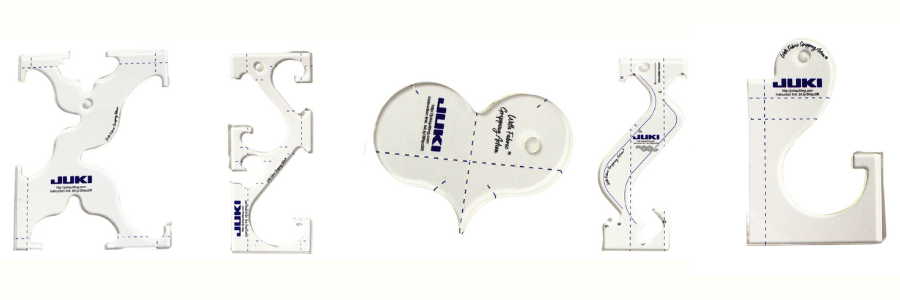
Hearts & Wings Set

Another new addition to our ruler collection is the Hearts & Wings Ruler Set! This set is a testament to delicate beauty in quilting and features rulers like the Cable Tool, Mini Heart, Traditional Hearts, Feathered Hearts, and Bird Bracket Chain. This set invites quilters to create intricate and graceful designs that add a touch of whimsy and sophistication to their projects!

There are so many possibilities with this set! Use the Cable Tool ruler to create sinuous, twisting vines reminiscent of delicate floral tendrils. Combine these vines with small heart-shaped leaves using the Mini Heart ruler, adding a touch of whimsy to your quilt. You can utilize the Traditional Hearts ruler to craft clusters of heart-shaped flowers. Vary their sizes and arrange them to mimic a blossoming garden across your quilt. Or incorporate the Bird Bracket Chain ruler into your design, creating a scene where whimsical birds perch on blooming branches!

Using a JUKI ruler while quilting can be a game-changer for several reasons. These rulers are meticulously crafted tools designed to elevate your quilting experience. Their precision and versatility offer a level of control and accuracy that’s hard to achieve freehand. Whether the Loop to Loop Ruler is for creating uniform loops or the Clamshell Ruler is for classic designs, each ruler serves as a guide, ensuring consistency and perfection in your quilted patterns. Ultimately, using a JUKI ruler is like having a trusted partner in your quilting journey—a tool that empowers you to turn your quilting visions into stunning, professional-looking masterpieces with precision, ease, and a touch of artistic flair!

To learn more about our JUKI Rulers, visit here!

Sew Your Way to Wellness with JUKI

Finding solace and peace can sometimes feel difficult in the whirlwind of modern life. Yet, nestled amidst the threads and fabric, an age-old craft exists that weaves not just fabric but a profound sense of well-being—sewing. Beyond its practical applications, sewing offers therapeutic benefits that can positively impact mental, emotional, and physical health across all ages.

Join us as we delve into the transformative impact of sewing as a form of therapy and discover how it can bring joy, healing, and a sense of fulfillment to our lives during this particular month dedicated to quilting!

Creativity and Self-Expression

Sewing is one of our favorite forms of self-expression at JUKI. From selecting fabrics to envisioning designs, it nurtures creativity in its purest form. The freedom to experiment with colors, textures, and patterns fosters a sense of artistic exploration. As individuals engage in the creative process, they unearth a channel to express their unique personalities and emotions. 

Sewing with JUKI machines isn’t just about stitching fabric together; it’s a canvas for creativity and self-expression. With the array of stitches, presser feet, and precision we offer, JUKI machines empower creators to bring their visions to life. From intricate embroidery that can be done on our TAJIMA Sai machine to tailored garments or personalized accessories, every stitch tells a story and reflects the maker’s individuality.

The next time you’re creating, play with new colors and fabrics, try a new technique or presser foot, and learn from your mistakes as you grow your skills!

Sense of Achievement and Goal Setting

The journey from a plain piece of fabric to a finished creation is one of the most significant accomplishments when we’re creating. Setting out with a vision and witnessing it materialize through dedication and effort significantly boosts self-esteem! Whether small or large, a sense of achievement will always boost our moods. And the moments in sewing when we can break down complex patterns or designs into steps that work out? It’s a feeling of triumph we all love.

Sewing, especially when using a JUKI sewing machine, can significantly contribute to a sense of achievement and goal setting. As you set out to complete a sewing project, establish specific goals—mastering a new technique, completing a certain number of stitches, or finishing a project within a timeframe. Creating goals is an exciting way to keep fostering your skills while enjoying the process and not rushing.

Each step, from choosing the fabric to mastering intricate stitches, presents mini-milestones contributing to the larger goal. Achieving sewing goals leads to increased self-confidence, a sense of competence, and the motivation to set and conquer more ambitious goals in the future. With the precision and features of a JUKI machine, you can transform the process into a fulfilling journey that nurtures both skills and a sense of achievement.

Community and Connection

Beyond the solitary moments spent with needle and thread, sewing creates threads of connection between individuals. Joining sewing classes or communities opens doors to shared experiences and camaraderie. It fosters a sense of belonging as like-minded individuals gather to exchange knowledge, tips, and encouragement. The collaborative spirit within these groups fosters a sense of support and solidarity, forging friendships that often extend beyond the seams of a fabric.

At JUKI, we strive to harness these therapeutic benefits by offering classes at tradeshows, dealer events, and online live projects catering to various skill levels and interests. From beginners eager to start their sewing journey to sewists and quilters looking to refine their craft, our events were created to nurture creativity and foster community! You can visit our page here to stay updated with where JUKI will be next.

Our Projects Page showcases a variety of projects designed to ignite your creativity and provide a platform for self-expression! Each project is crafted to encourage skill development while allowing individuals to immerse themselves in the calming and fulfilling realm of sewing. Please create your own JUKI Project and tag us the next time you’re creating!

Embrace the Healing Stitch

Sewing transcends the mere act of crafting garments or quilts; it stitches together a tapestry of well-being. Its therapeutic benefits extend beyond the finished product, nurturing mental clarity, emotional balance, and a profound sense of fulfillment. It serves as a gentle reminder to pause, breathe, and immerse oneself in the transformative power of creation!

Whether you’re seeking stress relief, an avenue for creative expression, a sense of accomplishment, a project to pass the time, or a community to connect with, sewing, with its soothing needle and healing stitches, is a hobby everyone can enjoy. Embrace the therapeutic moments of sewing and discover a pathway to wellness that intertwines artistry, mindfulness, and community.

Join us here to start your journey today and try your hand at one of our projects! We can’t wait to see what you create.

Note: Dates and availability for events and projects can be found on our website. Get ready to sew your way to wellness!

Crafting Your JUKI Sewing Ritual

Whether you’re an amateur enthusiast or a seasoned seamstress, this new year, JUKI will help you establish a ritual you can follow before diving into your sewing endeavors. These steps can significantly elevate your crafting experience! Crafting a dedicated routine for your JUKI sewing machine ensures a smooth and gratifying sewing journey.

Embrace the Ritual
Before the machine’s hum fills the air with creative promise, embark on a ritual that sets the stage for a seamless sewing session. Here’s a guide to crafting a pre-sewing routine specifically tailored for your JUKI machine:

  1. Needle Check:
    Every project starts with the first stitch. Before commencing your project, inspect the needle for any signs of wear, such as dullness or bends. Ensure it’s securely fastened and aligned correctly. Replace the needle if it shows any signs of damage or has been used for an extended period.

A damaged needle can cause many issues in your project process and creation. Your stitch quality can go down with a broken needle, as this can lead to skipped or uneven stitching. The fabric you’re working on can be damaged and lost due to nonrepairable holes. The needle can break if already chipped and damage your machine or yourself, and lastly, you won’t get the results you’re looking for.

The needles are an important first step to ensuring your machine is ready to create.

  1. Bobbin Space Cleaning:
    A clutter-free bobbin area is vital for smooth stitching. Remove the bobbin case and clean out any lint, dust, or stray threads that might have accumulated. Use a small brush or the machine’s cleaning tools to ensure the area is pristine.

Cleaning your bobbin space will help you prevent any malfunctions while creating like uneven stitches, thread breakage, or skipped stitches. We’re also aiming to avoid those thread jams, maintain consistent tension, and extend the lifespan of your machine.

Lastly, debris in the bobbin area can transfer onto the fabric, causing stains or marks, so keep your projects clean and smooth with a quick sweep of your bobbin area.

  1. Thread Space Maintenance:
    Keeping the upper thread path clean ensures consistent tension and prevents thread snags. Use a lint brush or compressed air to remove debris from the tension discs, thread guides, and around the needle. A clean thread path is crucial for optimal stitching quality.

When you don’t clean your thread space, you might notice inconsistent tension due to dust or lint accumulating, which can interfere with the tension discs or thread guides. You’ll also be able to extend the lifespan of your thread and needle with clean thread space and preserve your fabric from dealing with stains or marks from the debris.

Keeping this area clean is optimal for getting that excellent quality finish you want on your projects!

  1. Stitch Plate Selection:
    Ensure the appropriate stitch plate is installed depending on your project and the type of stitch you’ll be using. Swap to a straight stitch plate for delicate fabrics or a zigzag stitch plate for decorative or stretch stitches.

The right plate will help you achieve quality stitch accuracy, protect your needle from breaking or damage, and reduce puckering in your projects. JUKI also has different options for plate selection on light or heavy-weight fabrics.

  1. Bobbin Thread Compatibility:
    Confirm that the bobbin thread matches the upper thread in weight and type. Consistency in thread choices ensures uniform and balanced stitching.

Having the correct bobbin will also help you with tension control, as mismatched bobbin thread could lead to difficulties in achieving balanced tension. Having the correct tension will also ensure that your fabric doesn’t receive any damage.

And remember, specific sewing projects, such as quilting, may require specific types or weights of bobbin thread for optimal results.

  1. Foot Selection and Attachment:
    Choose the appropriate presser foot for your project. Attach it securely to the machine to guarantee smooth fabric feeding and precise stitching. Different feet cater to various sewing techniques; ensure you have the correct one for your intended stitches.

Having the right foot is an important step to a smooth sailing project. The right presser foot will allow you to maintain excellent stitch quality, and certain feet have markings or guides that assist in maintaining precise seam allowances or stitching lines.

For example, some sewing projects require specialized techniques that can only be achieved with specific presser feet. An edge-stitching foot helps create precise edge stitches. Check out your JUKI options by visiting here!

  1. Test Stitching:
    Before beginning your project, perform a test stitch on a scrap fabric. This allows you to verify the thread tension, stitch length, and stitch quality before starting on your main project.

Testing stitches will help ensure your machine is calibrated correctly, that your tension settings are in order, and that your stitches will finish clean. Taking the time to perform test stitching or practice stitches before beginning your main project is a valuable step.

Crafting a pre-sewing ritual for your JUKI sewing machine establishes a foundation of consistency and attention to detail. By diligently checking the essentials – from needles to thread paths and stitch plates – you pave the way for a hassle-free and enjoyable sewing experience!

Embrace this ritual as a series of steps and a meaningful ceremony that honors your craft. Let your JUKI machine reflect your dedication to precision and commitment to turning every sewing project into a masterpiece. Start your sewing journey on the right foot by embracing the art of preparation with your trusted JUKI machine!

JUKI Tip: How to Get Started with Ruler Work

In this month’s tip, JUKI National Account Trainer Alba teaches us a fun and easy way to use our new JUKI ruler set in the Hearts and Wings collection! Showcased by Alba, check out examples of patterns you can create and an easy trick on how to plan out your designs the next time you’re creating.

Follow along below for a rundown of what Alba covers on today’s JUKI Tip!

Hello, all my JUKI friends my name is Alba and I am the national accounts trainer for JUKI Home Sewing! I’d like to welcome you to my home and today I’m really excited because this is almost like a double video for you. I am not only introducing a new product but I’m going to give you a tip on getting started with that new product. So let’s get right to it and let me show you the new product!

What I’m referring to is the hearts and wings ruler set. This is absolutely beautiful, you’re getting five different rulers that I have spread out on the video and they are clear rulers so I do have them down on white paper to try and make it easy for you to see them. As you could see, they give you five different shapes and really endless possibilities and a lot of people when they get started with rulers and quilting one of the first questions they ask is “so how do I get started?” And that’s exactly my tip for you today!

Now you notice I have no machine set up because really getting started with rulers or any free motion for that fact is on paper or a dry-erase material. So you can work on paper with pen, and I do recommend getting a pen that does not have a click on/off, because that pen will close on you as you are tracing those rulers or templates. You may hear this term, ruler or a template, and they refer to the same thing.

What I am going to do, is at my local Dollar General they have a dry-erase wallpaper and for me, I put this on the back of my cutting mat and it makes it really easy for me to audition and practice with my rulers. So the first thing I am going to do is I will be doing a border with this ruler here, and what I like about the JUKI ruler is, it doesn’t show well on camera, but there are a little dots of grips fabric grips on these rulers so it makes it really easy to start using them.

To start in the video I’ll draw a center line, and what I like about the dry erase is I can just erase if I’ve make a mistake and it makes it really practical on this dry erase material but remember to use a dry erase marker that’s especially made for this. Now with free motion it really doesn’t matter where you start at the beginning or at the end because you have full 360 movements; but for me when I start I like to start at the top of my fabric with the bulk towards me so as I move I’m moving into the machine and that’s exactly what I will be doing here.

I am going to place my ruler down and you will notice on the video all the cross markings, and these are indicator markings to keep you straight, plum and even. So I am going to line up, and when using rulers you want to put some of your fingers on the ruler and some of them off the ruler guiding it and having you keep it from moving or shifting. Now if this were my machine I would be following the edge and at any point stop because that is what will give you a nice beautiful point. Now I am going to move my ruler and line up and make sure that I am staying on those lines.

Now I’m going to turn my ruler around and go to the other side. I could either start from the top or the bottom and always when you’re doing this, pause at that corner. Im going to make sure I am lined up beautifully, and look at what a beautiful design this makes for a border!

As you play with this you could put a medium size one in between and audition but this is what I like about working with a dry erase area paper pen, you’re getting to play with it and really experimenting with the movement and the shape that you will create. Now by using the dry erase, it will be slightly larger because my foot does grip about A4 of an inch from that ruler base but this is a good way to get that general idea of how that ruler will take shape and also to play with it and trying create new and exciting shapes of your own.

I want to thank you for sharing this time with me! If you enjoyed this video and others that you’ve seen make sure to hit subscribe and make sure to leave comments as well on what you’d like to see. Please come back and show me your progress that you’re making with your rulers and again this is the new hearts and wings ruler set that I am playing with a five-piece ruler set so please reach out to your local dealer and get a really nice look at this set!

Sewing Into 2024 with JUKI

Embarking on a sewing journey is akin to unraveling a treasure trove of creativity and skills waiting to be discovered. For beginners eager to delve into the craft with a reliable JUKI sewing machine this new year, here are five delightful and straightforward projects that promise a smooth learning curve!

1. Chic Coin Purse

Crafting a coin purse is an ideal starting point for newbies. When selecting fabrics for this project, consider using lightweight cotton or canvas for the exterior and coordinating cotton or polyester for the lining. These fabrics are easy to handle and come in many colors and patterns.

Using a simple design and thanks to its practicality, this project is functional and rewarding! This project also only consumes a little time, which is excellent motivation when just starting.

Recommended Notions:

  • Zipper: Opt for a standard nylon or polyester zipper in a matching or contrasting color. A zipper attachment is an important skill to learn, as this skill will be used in various projects like bags, garments, and more.
  • Thread: Use a good quality all-purpose thread for exterior and lining fabrics. Using the right thread will help your project have a longer-lasting quality and reduce thread breakage when creating your coin purse.
  • Sewing Foot: A zipper foot is essential for precise stitching when attaching the zipper. Using a zipper foot will help you easily attach the zipper and reduce mistakes in your project!

2. Hair Scrunchies

Creating scrunchies allows beginners to experiment with different textures and stretchy materials. Opt for fabrics like cotton, satin, or velvet. These materials are readily available, accessible to work with, and come in various colors and prints.

The skill of working with different fabrics is essential! As you learn to sew, you’ll learn that some fabrics have more stretch than others, what fabrics can handle constant use, what threads and needles will work best, and more.

Learning how to attach an elastic is also an excellent tool! Attaching elastic is a popular skill in garment creation, and using this project as a stepping stone is a great way to learn how to run the elastic through project pieces or attach them to fabric,

Recommended Notions:

  • Elastic: Choose a narrow, soft elastic that is comfortable to wear. The best thing to do is decide how big you want your scrunchies and then pick the correct width. The typical width of an average scrunchie usually falls within ¼ inches.
  • Thread: Use a matching thread for seamless blending. Remember any scrunchies you may have at home, and study the design and stitching to better understand how your closure should look when you finish your project!
  • Sewing Foot: A basic sewing foot works well for this project, making this perfect for all beginner sewers.

3. Stylish Eye Glass Case

When making an eyeglass case, consider using fabric with a bit of structure, like quilt-weight cotton or denim, for durability. A soft cotton or felt for the lining will help protect the glasses.

This project will teach you how to create projects with a form or shape that requires maintaining structure. These fabrics can be thicker and offer stability to more than just eyeglass cases; even used in tote bags, hats, quilts, and more. You can also learn to use different thread weights and needle sizes, as denim requires a larger needle than chiffon or cotton.

This project will also help you learn the basics of small buttons or snap closures. While zipper closures are a popular option, button closures and snaps are expected in bag creations, home décor, garments, and more. Learning this skill will help you when you step up to creating dresses, skirts, and more!

Recommended Notions:

  • Button or Snap: Opt for a small button or snap closure for easy use. JUKI machines offer button attachment accessories, and we have a selection of machines that offer buttonhole creation. Those tools would help any sewist, beginner or advanced, create quality finished closures for their projects.
  • Thread: Use a sturdy thread to ensure durability. Eyeglass cases receive a lot of use, like your scrunchies, so make sure to use a thread that can handle that form of wear and tear and even a little stretch in case your glasses fit snugly in their new case.
  • Sewing Foot: A walking foot helps when sewing through multiple layers of fabric. With a walking foot, you’ll notice even feeding, reduced slippage as you have layers placed together, and prevention of wrinkles and puckering, giving you that finished quality look you’re aiming for!

4. Quaint Coasters

Coasters are an excellent canvas to showcase your creativity. Choose absorbent fabrics, such as cotton, linen, or a cotton-linen blend, to absorb moisture from glasses effectively. Remember to bring that skill of layering into play! Placing layers in between tour fabrics will help with creating a sturdy project.

The simple and manageable design size will help you build your confidence in project creation while allowing you to experiment with different stitch designs, fabric types, patterns, and more! This will also teach you basic techniques like measuring and cutting fabric accurately, sewing straight seams, turning corners, and finishing edges neatly.

This project is also a low-cost and low-time-consuming idea, giving creators a budget-friendly option that builds their confidence.

Recommended Notions:

  • Batting or Interfacing: Adding a layer of batting or interfacing between the fabrics gives the coasters a sturdy feel, perfect for guests and homebodies.
  • Thread: Use a coordinating thread for neat finishing.
  • Sewing Foot: A walking or quilting foot helps maintain even stitches when working with multiple layers. As we mentioned before, prevent those wrinkles and puckers, and enjoy the finished quality.

5. Nook Carrier for Books

Select durable fabrics like canvas or twill for the exterior to provide adequate protection for a nook carrier or book sleeve. Use soft cotton for the lining to prevent scratches on the nook or book. This book sleeve can be used for travel, so you want to use a fabric that can handle heavy use and possibly different weather conditions.

This project is a great skill builder for beginners because it has a straightforward design that is easily customizable to your needs; you can take the opportunity to learn how to attach straps to a carrier case, an important lesson for garment and bag creation, and beginners can experiment with fabric choices, colors, patterns, and embellishments to add a personal touch to the project.

Recommended Notions:

  • Velcro or Button Closure: Choose a closure option that secures the carrier while offering easy access. Velcro options are popular thanks to how easy they are to install onto projects and their budget-friendly cost. It’s also easy for many users to use as a closure with its easy opening. In some cases, if the Velcro wears out due to heavy use, it’s relatively easy to replace without having to reconstruct the entire project.
  • Thread: Use a strong thread for structural integrity. A Book or Nook carry will be heavily used by a book lover, so keep that in mind when choosing your thread and building your project. Backstitching is a great skill to learn for enforcing the durability of your project and can be done with the press of a button on our JUKI machines.
  • Sewing Foot: A walking foot ensures smooth stitching through different fabric layers. This will help as you attach a lining to the carrier case for solid protection. Remember that these carries will be used for travel, and a good, durable fabric and filler will protect the item.

Pro Tips:

  1. Fabric Preparation: Always pre-wash and iron your fabric before starting any project to prevent shrinkage or distortion after sewing.
  2. Practice Stitches: Familiarize yourself with different stitch options on your JUKI machine before starting the projects to achieve the desired finish. Grab the fabric you plan to create for your project to test how the stitches will work with your fabric and design choice.
  3. Seam Allowances: Pay attention to seam allowances; they ensure accurate sizing and neat finishing. We recommend checking out JUKI’s ¼ Presser Foot for a seamless and measured look.

These beginner-friendly JUKI sewing projects offer an excellent way to learn while creating practical and visually appealing items. With the recommended fabric choices, notions, and sewing accessories, beginners like you can confidently embark on their sewing journey, guided by the reliability and precision of their JUKI sewing machine.

So, gather your materials, unleash your creativity, and let your sewing adventures begin! Visit our project page here for more project ideas that beginners and advanced sewists alike will love creating.