
When creating, you may wonder, what needle should I use on my machine and project? Today we will give you a lesson on needles and what you need to know before you start sewing your next idea. Understanding what needle you need will help you create without the mess of skipped stitches, a thread coming loose, a pucker in your fabric, and so much more. Let’s start from the bottom and work up to picking the right needle.
How do you read the needle size?
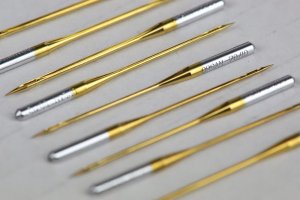
Depending on your fabric, you’ll want to find a needle that can puncture the fabric well but not tear it when you are sewing.
The needle size ranges from small to large, and each sewing machine needle will have two numbers etched onto it. Usually separated by a slash, these numbers determine whether it is a heavy-duty needle. 60/8, for example, is a lightweight needle suitable for cotton. At the same time, 90/14 is a heavyweight needle good for vinyl.
Now what do those numbers mean exactly? The first number is measured in the European/Number Metric (NM)/International system, for example, the 60 in 60/8. The metric number usually increases by 5 or 10 when you need to size up your needle for heavier fabric. Home sewing machine needle’s most common metric size is between 60 and 130.
The second number is measured in the American/U.S./Singer/Imperial system, for example, the 8 in 60/8. For your home sewing machine, the most common imperial size needed is between 8 and 21, and the needle sizes usually increase by 1 or 2.
How do you choose the right needle?
There are a few brand options for sewing machine needles, but today we will discuss Organ needles. When choosing a needle, our best recommendation is to pick the smallest one possible for the fabric you’re working with. Needles will leave holes in your fabrics as it goes, so you want to minimize the view of them.
Now know you’ll need to find the right needle for your fabric, we’ve compiled a list of fabrics and the recommended organ needle size to use when creating.
Fine Fabric: Silk, chiffon, and lace
- Silk 55/7; Microtex 60/8 and 70/10
Lightweight Fabric: Cotton or spandex
- Universal 80/12; Jersey 70/10 or 75/11; Super Stretch 75/11
Medium-Weight Fabric: Linen, fleece, velvet
- Universal 80/12 or 90/14; Jersey 90/14; Super Stretch 90/14
Heavyweight Fabric: Leather, canvas, denim
- Jeans (blue shank) 90/14 and 100/16
Very Heavyweight Fabric: upholstery or heavy denim
- Titanium 90/14; Jeans (blue shank) 110/18
For all needles, including Organ needles, these are things to keep in mind:
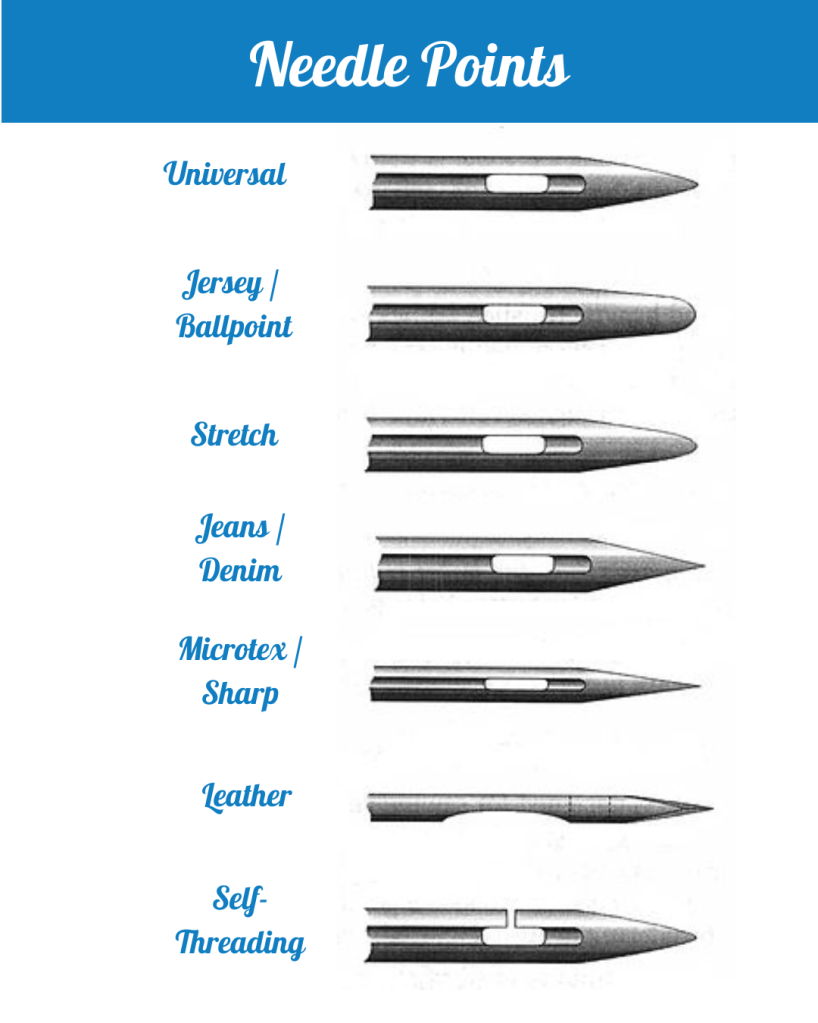
- Universal Needle is the most commonly used needle on a home sewing machine. It can be used on woven fabrics, synthetics, and knit fabrics. A universal needle should use polyester, cotton, or silk threads.
- Ball Point Needle: with a rounded tip on the needle, this is commonly used for rib knits, interlock, cotton knits, fleece, double knit, and most knit fabrics. This is because the ballpoint pushes the fabric fibers apart rather than cutting them, preventing stitch runs.
- Stretch Needle: with a scarf tip, this needle allows the hook to pass by and prevent skipped stitches when working on fabrics like stretch knits, silk jerseys, or spandex.
- Jean Needle: You might have noticed above that Organ recommends a jean needle when working on denim material; this is because the very sharp point on the Jean needle can handle that firm fabric and cleanly pierce through. You can also use this on heavy canvas fabric or home décor linens. This is a perfect moment to study your thread too! If you’re working with threads like 100% polyester or heavier top stitching threads, this needle will help you create easier.
- Sharp Needle: Quilters might know about this one. A sharp needle can penetrate through multiple layers of fabrics, like for quilting creations that involve several layers of cotton and padding. Helpful for preventing skipped stitches and needles breaking, a shark needle is an excellent needle to have no hand.
- Quilting Needle: Quilters can also get the traditional quilter needles created for penetrating several layers of fabrics in projects. You will notice that quilter needles are a little shorter than Sharp needles. Choose the best needle size for your needs!
Remember, the thread you’re using for your sewing project will also determine the type of needle you choose! For example, if you’re creating with a fine thread, you’ll want to use a small needle size to reduce the thread from falling out the eye of the needle. Also, remember that the lighter the fabric, the smaller the needle size, and the heavier the fabric, the larger the needle size.
We hope this helps you create your next project as you use the right needle on your creation! To learn more about Organ needles, visit here.

 sewinwithjuki.com