Catching Up with Rob Appell

You may recognize this month’s spotlight from “Michael Miller Fabrics Making It Fun” or “Man Sewing,” we’re so excited to spotlight our JUKI Ambassador, Rob Appell, during National Sewing and Quilting month! In today’s blog, we get to speak with Rob about his journey in quilting, his passion for the craft, and how he came to be where he is today.

Robs journey in quilting began when he moved back home from college, spending his free time outside and snowboarding. His mother, the manager and eventual owner of the local quilt shop brought Rob into the business, where he started as a clerk. When his mother began bringing in machines to sell, Rob eventually shifted to machine repairs, and here is where he started falling in love with sewing!

Creating fun Hawaiian shirts as his uniform for the quilt shop, he found himself having fun making them and eventually began looking into patchwork quilting. A fun and easy way to pick up quilting, he began testing his skills in free motion quilting his projects. Again, finding himself loving the hobby. The rest, as they say, is history!
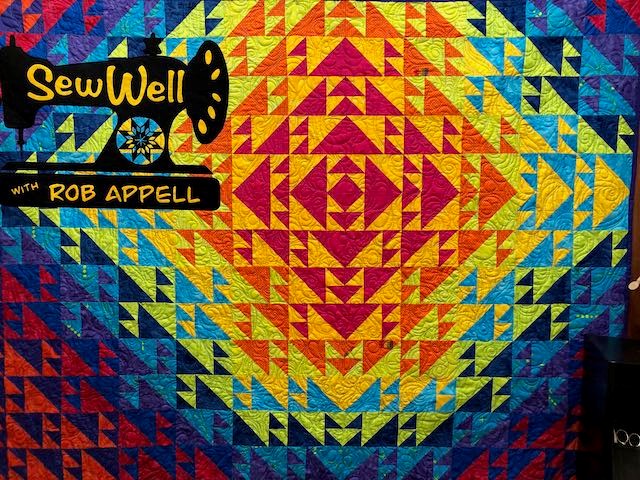
Since he began to quilt, Rob has accomplished a published quilt book, starred in and hosted multiple quilting YouTube shows, created a community for his teachings, and so much more! His videos encourage new quilters to be creative and enjoy their projects! With a focus on basic techniques, his hope when he’s creating for viewers is that they find something they can take away from his lessons and learn how to make their versions.

Recently starring in ‘Michael Miller Fabrics’ Making it Fun,’ you can follow along with his high-energy videos and view the different patterns and free motion quilting techniques Rob uses. While he offers some design patterns and templates for quilters, his work mainly focuses on organic creation. Going with the flow, his work often doesn’t follow design patterns; the finished design patterns he has sold usually come from these organic works he’s completed after the fact!

“The Free Motion Quilting, I prefer to go freestyle, no pattern, sometimes a plan, but usually pretty random and free.”

Quilting didn’t take him away from the outdoors he loved. Combing two of his favorite things, Rob is known for his landscape quilts. These beautiful pieces focus on nature and showcase views in bright colors. In fact, in 2009, Rob created 12 different quilts that featured faces of endangered species. Using the patterns from his work, he was able to fundraise and advocate for these species through sales that went toward endangered species charities.

He also authored a pattern book, “Making Waves … Adventures of a Surf Quilter,” a self-published print book featuring his landscape and seascape quilts. Early in his quilting journey, Rob was known for his scenic creations. Then, using free motion quilting and applique, he would add fun designs like fish, coral, rocks, lighthouses, ships, and more! Then, bringing in his love for surfing, he created a piece that intertwined surf terms with quilting terms, going above the average and setting himself apart.

Now, as someone who’s been quilting and creating those quilting videos we love for years, we asked Rob what keeps him going. “Videos are free and can be viewed over and over again if you’re learning from them. I love to present my passion for quilting.” Rob likes to focus on basic quilting techniques because he’s often reminded of how many new quilters have emerged in the community over the years. Thanks to video cameras and social sites like YouTube, where Rob hosts, he can teach how to construct quilts and the basic skills all quilters want to know. Keeping himself motivated with fun fabrics and the creative process has pushed him to bring that energy into each episode’s studio. Thankful for the following he’s gained on YouTube that keeps him going!
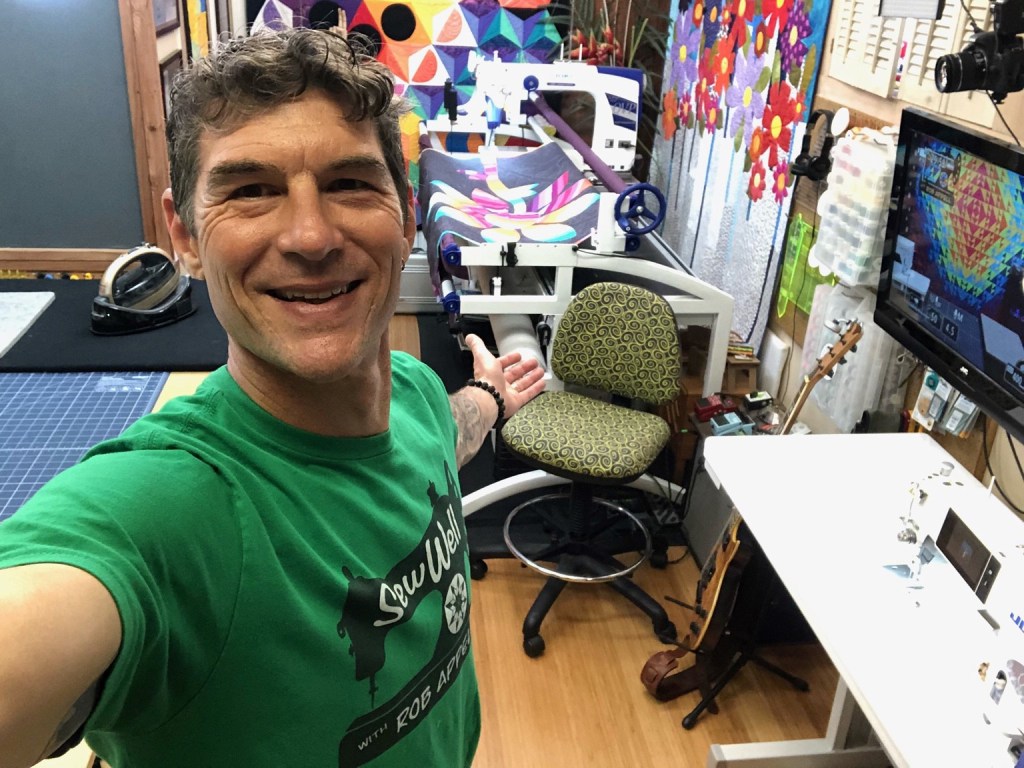
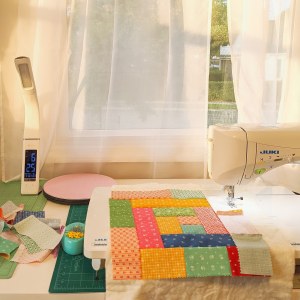
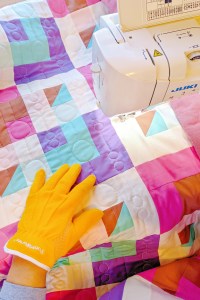
Rob at his studio with the J-350QVP & J-150QVP

He recently created a new quilt, the “Synergy Remix,” designed by Kristie J. Smith in her pattern book, “Splice Magic,” that he loved! Always excited to try out new and different quilting techniques, like he encourages his viewers, Rob locked himself in the quilt shop, Stitchin’ Heaven, his latest collaboration where he’ll be hosting new quilting episodes, and went to work! In one night, he created a quilt and video, maligning the entire project and finishing it. Yet, this project places a smile on his face when he thinks about it.

While Rob has gone on to try other ventures, like his work in textile design with Free Spirit Fabrics, he vouches for his love of quilting. Sharing his love of fabric and free motion quilting, he focuses on his desire to quilt the top to push him through the construction process. Recently, he’s begun focusing on improving his precision in his patchwork! By creating little half-square triangles and trimming them up, he’s found joy in practicing his skills.

Always learning and growing, Rob has begun a new journey in his quilting career with Stitchin’ Heaven! As their new YouTube manager and Content presenter, he’ll be able to create a team of quilt lovers like himself who can share their passion for the craft while teaching others worldwide. Stepping back from handling all processes by himself, he’ll now have quilting friends who will help him create new and exciting projects for viewers like you. We’re excited to see the different techniques and quilting styles that will emerge from this new partnership!

“The thing I love most about the quilting industry is that there is so much for everyone.”

With the quilting community constantly growing as new members find their passion for the hobby, we asked Rob what advice he has for JUKI Quilters. “Get to know your machine, spend 7me learning the nuances, understand what the different feet do and when to use them. Then, remember – this is a hobby, not a race. Please slow down to enjoy the process.” When you enjoy the steps to what you’re creating and take a moment to appreciate each technique you’ve picked up, you’ll truly enjoy the finished project. As Rob mentions, so many people need something positive in their lives. Take the time to find your passion, teach and work with others in your quilting community, and enjoy the process.

We hope you enjoyed learning more about Rob with us, and we hope this inspires you to join him on an online video one day and check out quilting! A hobby for everyone, we hope everyone enjoys National Sewing and Quilting month with a fun new project!

Quilting Basics with JUKI

Today we’ll go over some essential tools and presser feet you’ll need to create a quilt from start to finish. When we start a hobby, we might want to grab every item we see at the shops, so follow along as we share the important ones you should grab first!

Tools to Have in Your Kit

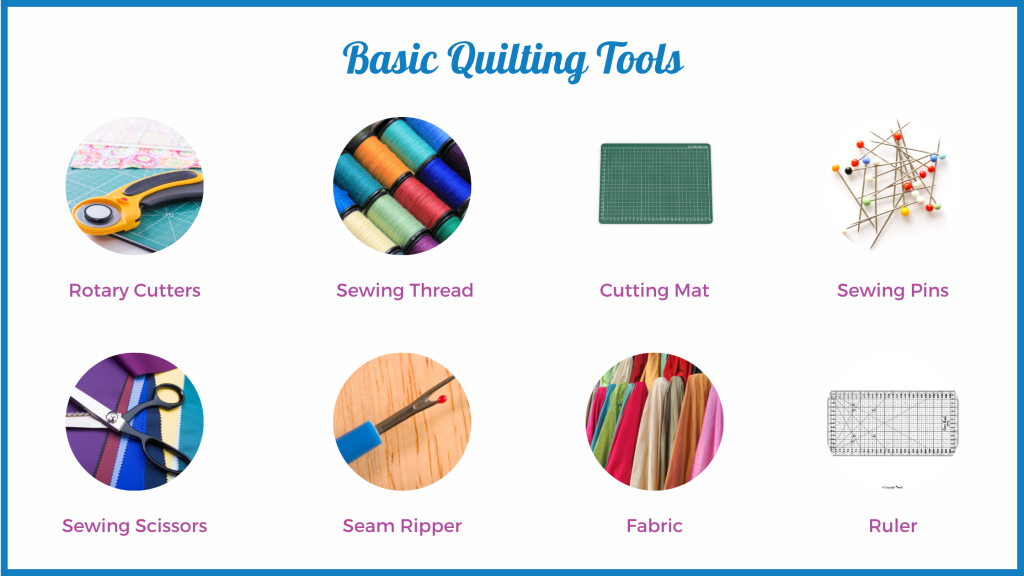
Rotary Cutter: Shaped like a pizza cutter, the rotary cutter is perfect for cutting out your fabric pieces. If you’re using patterns for your work, using a rotary cutter is an easy and quick way to correctly cut the fabric piece to the size and shape you need. These come in different sizes, ranging from small cutters that are great for tight cuts and a large one for big projects! For quilting, we recommend purchasing a medium-sized one.

Scissors: Besides your rotary cutter, ensure scissors are designated for cutting fabric. You want to keep these separate, so they stay sharp for cutting thread and fabric cleanly. So often, when we mix our scissors and cut items like paper, cardboard, or more, this dulls the blade, fraying your material in the long run when you use them.

Seam Ripper: Make sure to keep a seam ripper on hand for those mistakes! Advanced and beginner quilters benefit from this in their tool kits since it is perfect for fixing those little mess-ups.

Self-Healing Cutting Mat: Keep your workspace safe from scratches and find yourself a self-healing cutting mat! This will allow you to use your rotary cutter safely and can be found in many different sizes.

Fabric: Sewing isn’t complete without fabric! There are many options out there for quilters to choose from. You can choose to buy fabric by the yard or purchase bundles! We recommend sticking to 100% cotton. Choose from mini charm packs, jelly rolls, jolly bars, and more, depending on the size of the quilt you want to create and what form of designs you envision.

Thread: Like your fabric, look for a thread that suits your project, like 100% cotton for quilting. Look for options that are durable and not too cheap. Here you’ll want to find a thread that won’t birds nest on you in the creative process while sticking to your budget. For quilters, we recommend Aurifil! Like we use in our JUKI Studio when creating, Aurifil is 100% Egyptian cotton and comes in many colors, perfect for your project needs. We recommend purchasing neutral colors when you begin, like tan, white and black; this way, you can easily bind most of your projects without worrying about the thread color.

Pins and Pattern weights: When you want to keep your fabric in place, using quilting pins and pattern weights is a great solution! Use quilting pins when piecing your quilts to keep the fabric from moving, and use pattern weights when cutting out the fabric with your rotary cutter! These two accessories will make your cutting and sewing experience easy and help you create a professional finished product.

For pins, try and look for longer options, as this will help you hold the fabric better when sewing through those thick pieces, and they are also much easier to grab! You can also purchase safety pins, which come straight and curved for the finishing stages of your quilt process.

Rulers: Clear-gridded rulers are important in quilting because measuring correctly matters! Helping you quickly and accurately cut fabric for your project, rulers come in an array of size options suited for your needs.

Presser Feet for the Average Quilter

While your machines will come with presser feet, let’s go over some basic presser feet you should have on hand when quilting and what they’re for!

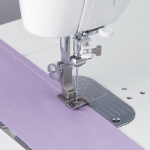
1/4″ Presser Foot

Essential for piecing your quilts together, the 1/4″ Presser Foot allows you accurately piece your quilts together quickly and efficiently. This accessory is perfect for when you’re piecing and don’t have time consistently mind the bottom measurements on your plate.

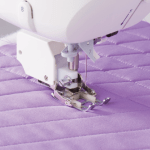
Walking Foot

A Walking Foot is basically used for putting a set of feed dogs on top of the quilt sandwich, working in conjunction with the bottom feed dogs, and evenly helping you pull your quilt through the sewing machine. Quilting with a standard presser foot on thick fabric or hard-to-feed material like the ¼” Presser Foot, for example, could lead to tucks and uneven stitches; this is why we use a Walking Foot!

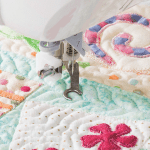
Free Motion Quilting Foot

Want to add designs and texture to your quilts? You’re going to want a Free Motion Quilting Foot! With a Free Motion Quilting Foot, you will drop, or lower, your feed dogs and begin moving your quilt under the foot, free motioning the design yourself! While it takes practice using free motion quilting and controlling the quilt yourself, it can be an enjoyable and rewarding skill to learn!

We recommend checking out an Open Toe Foot when looking for your Free Motion Quilting Foot. With a small space left open on the presser foot, you’ll have a better eye on the needle and be able to easily create your designs!

Get To Quilting!

As you begin your quilting journey, research what tools you’ll need when creating! These listed are perfect for setting up your workspace and machine, so keep these in mind while you’re at the shop. If you’re an experienced quilter, what presser feet and tools do you think quilters should keep on hand? Let us know down below!

JUKI Spotlight: Blossoming with Flower Sew!

From quilting to bag making, Flower Sew has you covered! Today we’re meeting up with Daisi Toegel, Flower Sew’s shop owner. In 2017, Daisi founded Flower Sew only one year after learning how to sew. Flower Sew began as an idea out of curiosity for the sewing world. After watching endless videos of other sewists creating bags and projects on video sites, Daisi found herself wanting a sewing machine to start her journey in the community. A year after seeing these videos, Daisi’s boyfriend surprised her with a sewing machine to begin, and the rest was history.

Daisi went on to practice and practice some more after receiving her gift. Finally, a year after receiving her gift, Daisi began constructing bag patterns, creating and selling them. Since completely self-teaching herself, she sewed and sold bags for three years at her local craft fairs and on her online e-shop, Flower Sew, named after her now husband’s pet name for Daisi, Flower.

After three years of focusing on bag creations and patterns, 2020 changed the course of Daisi’s business. She began creating and selling masks during the pandemic, creating and designing over 2,000 masks. Daisi, later on, realized she wanted to take a step back from sewing masks and find a new craft within the sewing world. So she began venturing into the quilting world, where she taught herself to quilt, and began expanding her knowledge and business along the way.

Taking a step back from her bag-making days, Daisi jumped into the quilting world head-on. Using her social media platforms, she began sharing her progress and work with her followers, re-building her brand along the way. 

Now focused on quilting, Daisi has held six ambassador roles over the years that range from small notions to beautiful fabrics. These programs helped her not only grow her business but allowed her to make connections in the sewing and quilting community.

After discovering her passion for creating quilts, she moved on to pattern designing, a hobby she had picked up in her bag-making days. When she started patterns for her bags, she was inspired to design something different and new. Quilting was no different. She bought a design program and began drawing! Starting small, Daisi began with baby-sized quilts and built herself up through trial and error. Through this practice that she’s been able to create seven patterns; 4 on her own and 3 in collaboration with different craft and sewing magazines. Many of her patterns interwork the ambassador programs she’s involved with by including their notions and fabrics. 

As someone who’s been able to grow her business and obtain credibility from other sewing and quilting brands as an ambassador, we asked Daisi what advice she has for those out there trying to build their brand.

“Forget about money. In the beginning, it’s all about gaining value and confidence before you gain any money. If you need to give your time, work, or product for free, do it. The reward is certain, just know everything has its own time to come. Being an ambassador doesn’t involve anything but receiving products in exchange for your time and work, and it is the most wonderful experience I have had in the quilt world; it’s fun, and I learn a lot. There’s nothing that says that.”

Daisi’s brand continues to grow each day through her social media channels filled with new pattern works, projects, and her quilt progresses. What makes Flower Sew unique is the designs and patterns created by Daisi, inspired by ideas that bring her happiness and not trends. Focusing her attention on bright colors and fun designs, Daisi’s page is filled with bright fabrics and colorful looks. As she continues to grow her skills in quilting, we’re looking forward to seeing more patterns released!

The future of Flower Sew is blossoming beautifully! Daisi’s plans for her small business include more original pattern creations, with the hope for a pattern book soon, and continuing her ambassador programs with new possible positions. Currently, a sketch is in motion for membership for Daisi’s business, but we’ll have to wait and see for that one JUKI lover!

We hope you enjoyed getting to learn more about Flower Sews and its owner Daisi Togel! When you’re building your brand, learning skills like pattern designing or diving into ambassador programs are great ways to get yourself out there and grow your business. We hope reading Daisi’s story in how her business has grown and changed over the years inspires you to begin yours!

To follow along Daisi’s journey, follow along below.

Visit Flower Sew’s shop here!

Follow Daisi’s quilting journey here!

5 Quilting Project Ideas for You!

Celebrate National Quilting Month by bringing out your favorite charm squares, jelly rolls, and sandwiches! Whether you’re creating for friends and family or your small business, we’ve put together a few fun ideas for projects you can quilt next. 

Wall Hanging

Decorating new office spaces or livening up current homes is easy with wall hangings. Projects like these are perfect because you can create smaller designs than quilts and use them for seasonal purposes. With the ability to create on a large or small scale, you can try new techniques like adding embellishments and accents (for example, cording) that you wouldn’t have thought of using before. This project is excellent for when holidays and birthdays come around since it can brighten up any room, from a nursing home to your kid’s college dorm. 

Accessories like the Couching Foot are perfect when creating wall hangings. They allow you to add three-dimensional textures to your projects, bringing in an extra element that will make your design pop. Use decorative threads like yarn and cord or other thicker threads that don’t fit your needle. 

Pillows 

Pillows are great for many reasons:

  1. You can create beautiful personalized décor and treat pillows like a small sample for a quilt idea you have by making that one block you need. A pillow allows you the freedom of creation like a quilt, with less fabric and space required.
  2. You can treat pillows as an add-on to your quilts and create matching or complementary designs.
  3. Creating simple add-ons like pillows is a great way to increase your revenue if you have a small business. 

Look into an accessory like the Glide Foot when creating décor like pillows. This foot can help you glide along with applique, and other three-dimensional textures, allowing you to get creative and add more personalization to your projects. 

Table Top Décor

Have holidays motivated you to create new table runners? Have the seasons changed, and do you want to brighten up your home for spring? Table décor is a great way to bring color to your home! Create pieces like table toppers, table runners, dresser décor, storage covers, and so much more. Perfect for protecting your furniture while bringing in color and a theme to your rooms, these patterns are great for anyone who wants a touch of color in their home. 

If you want to add fun shapes and lines to your designs, look into quilting rulers like our JUKI Ruler Set. You can create different textures from straight lines to circles and waves and bring your designs to life.  

Totes, Pouches, and More!

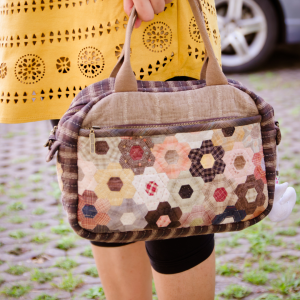
Bring your artwork outside your home by creating beautiful travel gear! Show off your quilting skills by creating pieces that can hold your money, electronics, or clothing. Work in matching sets like wallets and handbags or traveling sets like make-up bags and carrier totes to brighten up your trips. The possibilities are endless when it comes to hitting the road with your creations. 

Tools like Grip and Stitch are great to have one hand when you’re quilting those detailed projects. They make free-motion quilting fun and easy and allow you to easily add on fun designs like spirals, feathers, and more. 

Quilts and More Quilts

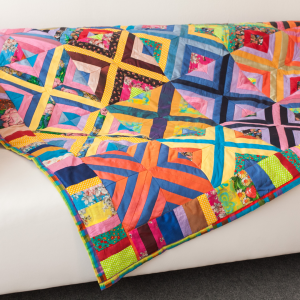
Whether your project was created for comfort and lounging, or décor that can bring in bright colors, quilts will never be out of style. Quilts can be so versatile when we step outside of the box. Decorate your home by placing quilts on racks and ladders, use them to upholster chairs and love seats, toss them on white couches for pops of colors. Whether you’re using them for comfort or because the pattern was just suitable for your aesthetic, you can never go wrong with creating a quilt. 

Look into extension poles when quilting more significant projects for a more effortless and more fun experience! By adding extension poles, you can easily design quilts from twin to king-size on your stand-up quilting machine like the Miyabi J-350QVP.

While quilts may have started off as a necessity in the past, they’ve become their own form of artwork for current generation quilters. So branch out and try your skill in new quilting projects like the ones mentioned above the next time you start on a new project! What are your favorite inventive ways to use your quilts?

Let’s Create A Quilt Pattern

Have you been dreaming of a quilt idea, but you’re not sure how to bring it to life? At JUKI, we want to help you elevate your quilting skills, which comes with learning how to create your own quilt patterns and designs. So we created a base for you to start with different methods to make a pattern and applications that can assist.

Start from the Beginning

Before we can dive into creating a pattern, let’s touch base on the creative process it takes to get there. One of the best things you can do is begin a design journal, where you can jot down notes, attach scraps of fabrics, place photos, and more that will lead you to create the design you’re imagining.

Learn to upload your ideas into a digital surface. You can redraw and clean up your designs from their sketch versions here. Create a library and label it with a title like ‘New Patterns’ to keep up with your ideas. With this digital organization, you can keep a hold on pattern ideas and add touches as inspiration comes until you have a quilt design you’re ready to work with and bring to life.

If this is your first time designing a quilt, and a blank page seems daunting, lean into the power of self-imposed limitations. Create with quilt size in mind, limit yourself to fabrics already in your arsenal, hold yourself to only using 6 fat quarters. When you start off, creating limits on designs creates a constraint on specific variables, allowing those free variables to make you think outside the box and design quilts you wouldn’t have created otherwise.

Breaking Down A Quilt

Let’s begin by breaking up the layout.

Look at your design and find the repeating elements. Here is where we’ll start forming the blocks. Figuring out your blocks is usually an easy process; however, working more towards modern or complicated patterns can be more challenging. When you first start creating your patterns, start with repetition and begin building your blocks for the quilt and pattern from there.

As you design your quilt, figure out the arrangement style you plan to work with. While some block designs need to be in even numbers for the quilt to come out right, other times you can create symmetric blocks that allow you to use either odd or even numbers. Remember that patterns can be built with one size in mind or edited for different size options. If you’re someone who plans to sell their patterns, customers look favorably upon having the option to choose sizes.

Once you’ve determined the design and size of your quilt, you can choose between adding borders or not. Borders are an excellent addition for multiple reasons; cleaner finish, more breathing space when creating, or as an addition to the size of your quilt pattern. Depending on your design, you can widen or tighten the border size and allow those who use your pattern the option to decide what best fits them.

Keep in mind that a quilt block size averages 6″ to 18″. You have the option to create other shapes like triangles, rectangles, and more if you want to venture away from traditional squares.

Guidelines for Pattern Creating

Now that we have a design idea, we can begin writing instructions. As you start creating the instructions and erasing and creating some more, you’ll begin to build an instruction guide that others can follow along with. Here are some things to keep in mind when writing out your pattern instructions.

  • Who is this pattern being marketed to?

Break down your pattern and think about who will be trying to follow along. New quilters will need more instructions than advanced quilters that don’t need much detail. Keep this in mind as you add instructions, tips, and illustrations to your work.

  • Instructions

Patterns don’t usually have instructions on basic techniques, like baste, quilt, and bind. Still, it usually includes instructions for advanced techniques like binding corners and adding curved piecing. To keep patterns from being overfilled with instructions, you can include links to videos and blogs that dive deeper into specific techniques.

  • Keep A Pattern Piece Library

Your first pattern creation might be complex, but once you have a few under your belt, you’ll find that it’s easy to re-use previous patterns when creating new ones. If you keep up with past projects and use them as foundations for new ones, you’ll save time, and your patterns will begin advancing.

  • Be Consistent

If you’re writing patterns to share with others, make sure to be consistent in quilting terms. When it comes time to patent your patterns if you’re choosing to sell, not having the correct terms can cause you to lose the patent. The consistent format also includes focusing on writing your measurements, quilting terminology, and your action and verb tenses. Keep in mind to label your fabric pieces, like Fabric A and Fabric B, so that the instructions are easy to follow.

Breakdown the Quilt Measurements

Now that we’ve moved on to instructions, math is the most crucial factor. Follow along as we go over a quilt example to show you an easy way to calculate your quilt squares and cutting requirements.

Step 1: Quilt block and Cutting instructions

Let’s begin by breaking down the block into its individual components. Our example quilt comprises a 3 x 3 arrangement of components.

Let’s break down these pieces further! Include pieces like HST components here.

You are now at the individual fabric pieces if you’re creating a simple quilt like we’re showing here. However, if your designs are more complex and have more components, keep breaking it down until you’ve hit every piece you need for each block.

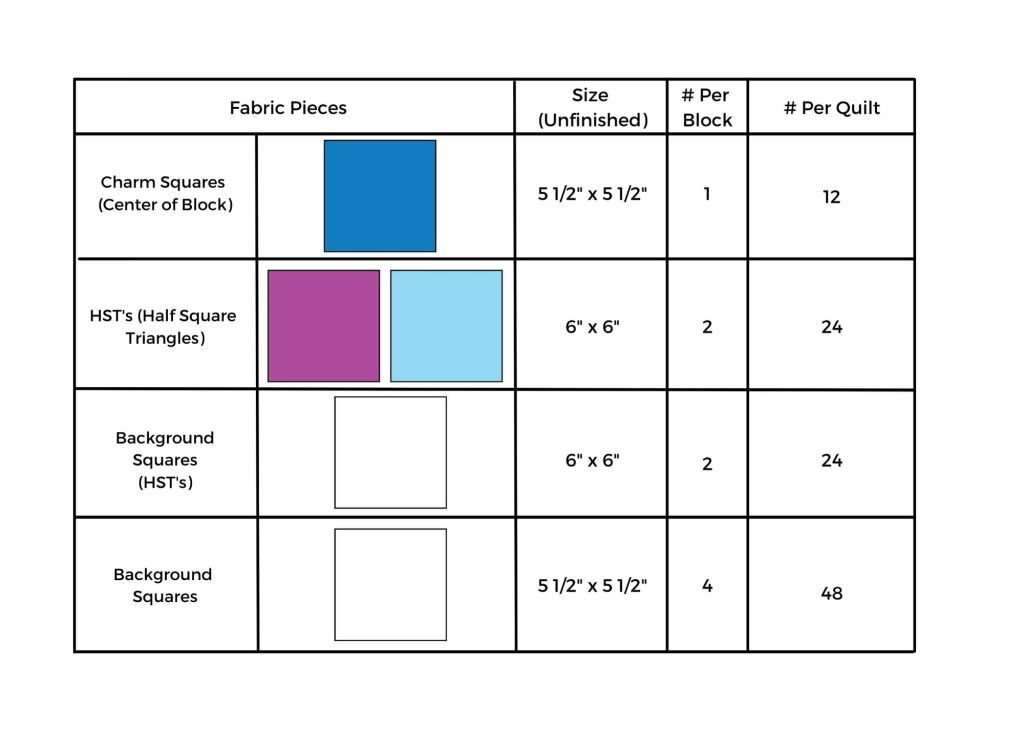
Now that we know the individual pieces needed let’s multiply the fabric pieces per block and place that in its own column. Our example quilt will have 12 blocks in a 3×4 block placement, so we will multiply by 12. Once you’ve calculated how many blocks you’ll need, your last column should showcase how many fabric pieces you’ll need for the project in total.

Now that we have the pieces planned for our quilt, let’s move on to creating cutting instructions.

A. Charm Squares: 24 are used as-is for making the HSTs (6” x 6”) and 12 trimmed for the centers of each block (5 ½” x 5 ½”).

B. Minimum background fabric required:

                1. Figure out how many pieces can be cut from a single width of fabric (WOF) strip for each of the fabric pieces:

Dividing 50” (our assumed WOF) by 5 ½” you get 9.09 so round down to 9. You can get 9 squares 5 ½” x 5 ½” from each 5 ½” x WOF strip.

Dividing 50” by 6” you get 8.333 so round down to 8. You can get 8 squares 6” x 6” from each 6” x WOF strip.

                2. Divide the number of fabric pieces needed by the number of pieces you can get per strip to figure out how many strips are required.

Our example pattern requires 48 background squares (5 ½” x 5 ½”) and you can get 9 squares per strip so 48/9 = 5.333 which rounds out to 5. In this case, to cut 48 squares, you will need 5 strips of 5 ½” x WOF.

Our example pattern also requires 24 squares for the HSTs (6” x 6”) and you can get 8 squares per strip so 24/8 = 3. To cut 24 squares (6” x 6”), you will need 3 strips of 6” x WOF.

Step 2: Let’s Add a Border!

A finished quilt looks great with a border! Let’s go over how to figure out the strips you’ll need for the border.

Here’s how to figure out your yardage for the side borders:

# of blocks x-height of blocks (unfinished) – ½ times [# of blocks -1]

To create the top and bottom borders, use this equation:

Quilt top width + side border thickness + the side border thickness – 1″ (for seam allowances).

Step 3: Find The Yardage For The Quilt Top

To calculate the yardage of background fabric needed, multiply the number of strips times the thickness of the strips for all of the strip sizes you use.

Step 4: Include Binding Fabric Measurements

Calculate the binding fabric (for a straight grain), by adding up the lengths of the 4 sides and adding 10″ of safe space before dividing by the width of fabric.

Step 5: Don’t forget the Backing!

This is a simple measurement; we recommend adding an 8″ overhang, 4″ on each side, to your quilt top width. This is basic for all quilts and what’s usually required by quilters. The best thing to keep in mind is that programs available on your phone and computer can assist with calculating these measurements. For example, Robert Kaufman has a free mobile app to calculate borders, binding, backing, and more.

Let’s Create Our Pattern Sheet

Once you’ve finalized the sizing needed and the designs you’ll create, we can begin putting together a physical pattern. There are programs available to quilters that can help you create patterns. Whether you choose to use programs you might already have, like Microsoft, or invest in higher-tech ones like EQ7 or EQ8, we broke down a few you can look into.

Design and Pattern Layout Programs

Microsoft PowerPoint: This program can be found in most electronics and is universally used. It’s great for the basics when starting off and is very user-friendly. The only setbacks are aligning blocks can be complex, and vector images aren’t accepted.

Electric Quilt (EQ8): This is an excellent program for editing quilts, and it allows you to break down quilt designs so that you can export portions at a time. However, it is challenging to create HST’s and can result in low-quality images in the export process.

Adobe Illustrator: This program is perfect for those that enjoy advanced artwork. You can create vector images and obtain high-resolution photos, and there’s an extensive resource library available for any learning curve. The cons of this program is that it does come with a fee of around $20 per month.

Adobe Indesign: This program is best for pattern layouts and offers the most professional quality. Like Illustrator, it does come with a monthly fee and learning curve.

Corel Draw: Perfect pattern designing and layouts, Corel Draw allows you to create art, export in vector files for high-quality images, and hit a lower cost point.

Images and Graphics to Include

Illustrations:

  1. Cutting: if you have an efficient way to cut, include how in the instructions
  2. Block Piecing: The majority of your illustrations will show the pieces assembled together. We recommend starting from the finished block and breaking down from there.
  3. Quilt Top Assembly: Showcase how the blocks go together into the quilt top.
  4. Optional: Include how the backing is pieced, bonus tips, and templates.

Text:

  1. Introduction/notes: Describe the pattern, inspiration mentions, and more.
  2. Material requirements: List all material requirements, including sizing.
  3. Cutting: Include the calculations and measurements needed for cutting.
  4. Block assembly: Walkthrough creating the blocks and assembling the quilt.
  5. Quilt top assembly: Walk through the instructions of piecing the blocks together and assembling the quilt.
  6. Finishing: Walk through the backing, binding, batting, and more instructions.

When you’ve completed creating a pattern, creating a PDF file is the last step. This file format is the most commonly sold in pattern networks and is the easiest to access across platforms.

Get To Testing!

Lastly, before selling your pattern creations, it’s time to go through some trial testing. Share this pattern with trusted friends and family members who can review your work and provide feedback. Request that they confirm the measurements were correct, that the pattern was readable and that they’re able to follow, and more. Use this as an opportunity to spruce up your creation for potential buyers. Then, build the pattern yourself and see what could be added or removed in your work.

Time to Publish!

Once you’ve triple-checked your pattern and decided it’s time to publish, take time to determine how you’re going to sell and where. Digital PDFs are the easiest to share and sell online, and printed patterns can be sold at markets, shows/events, and local quilt shops. Look into E-shops like Etsy and Craftsy when starting off your online shop, and if you choose to go physical, contact your local artisan markets and quilt shops for possible sale opportunities.