Setting Up Your Quilting Space

Quilting is more than just a craft—it’s a creative escape, a way to bring ideas to life, and a skill that thrives in the right environment! Whether you’re transforming a cozy corner into a sewing nook or dedicating an entire room to quilting, your setup plays a major role in how enjoyable and efficient your experience will be.

The right machine can make all the difference, ensuring you have the space, power, and features needed to bring your projects to life. Some machines are compact enough for small areas, while others require more room. Let’s dive into how to organize your space, pick the best machine for your setup, and start quilting with confidence!
Small Quilting Spaces

Small quilting spaces require creative organization to make the most of a limited area. Whether you’re working from a corner of your home or a small desk, keeping things tidy will help you sew comfortably! Choosing a machine that fits on your work surface without sacrificing power is key. Look for practical storage, and try using shelves, rolling carts, or pegboards to keep tools and materials easily accessible.

Choosing the Right Machine & Setup for a Small Space

When working in a tight area, a smaller machine like the TL Series or HZL-F Series is ideal. The TL measures around 14″ W x 7″ D x 12″ H, while the HZL-F Series is slightly larger at 17″ W x 8″ D x 12″ H. Both machines fit well on a standard 36″ sewing table, making them perfect for tight spaces!

Another fun idea we recommend for a small workspace is using a foldable or wall-mounted sewing table! These tables can provide flexibility, allowing you to tuck it away when not in use. Keeping essential tools nearby in a rolling cart or mounted on the wall ensures everything stays organized without cluttering your workspace.
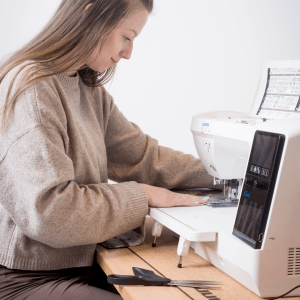
Medium Quilting Spaces

A medium-sized quilting space offers more room to work but is still manageable within a home. Usually, you’ll find this kind of space in a dedicated craft room, home office, or spare bedroom. Having a larger work surface can allow for a more comfortable sewing experience, and gives you enough room for fabric handling, quilting, and storage. Thoughtful organization is key to creating a comfortable sewing space. Create designated areas for sewing, cutting, and pressing and invest in the right machine to ensure that you can tackle a variety of quilting projects without running out of space!

Choosing the Right Machine & Setup for a Medium Space

A machine with more quilting features and space is a great fit for a medium-sized area. Our DX Series measures about 18″ W x 9″ D x 12″ H, while the EE models are slightly larger at 20″ W x 10″ D x 12″ H. These machines work well on a 48″ wide sewing table, giving you more space to maneuver fabric while quilting. With additional workspace, you can set up a small pressing station nearby for quick seam pressing or create an organized storage system for fabric and accessories! Make sure to think about lighting as well; a well-lit craft room with both natural and project lighting ensures a better view of your stitching while working on detailed projects.

Large Quilting Spaces
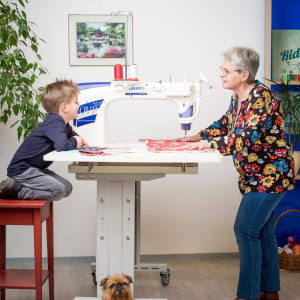
Having a large quilting space means you can work on full-sized projects without worrying about running out of room! A dedicated quilting studio, basement workspace, or extra-large craft room allows for specialized areas for cutting, sewing, pressing, and quilting. With this much space, you can even invest in a stand-up quilting machine and frame, making it easier to work on larger quilts! Organization is still important, so having designated storage for fabric, thread, and tools will keep your space functional and efficient. Keep in mind all your tasks for quilting, and you create the perfect craft room for your needs.

Choosing the Right Machine & Setup for a Large Space

A stand-up quilting machine like the J-350 QVP Miyabi Stand-Up Quilter is perfect for those who want to expand their quilting capabilities! The Miyabi with a compact frame requires at least 5′ x 5′ of space, while a full-length frame setup can take up 5′ x 12′.

When you’re working with these types of large quilting machines, it’s best to opt for a workspace that can reach at least 6 feet wide to allow for easy movement around the frame. Think about your other spaces as well if you’re going to create large projects. A large cutting table is ideal for managing fabric, while deep storage bins and shelving units help keep your tools, fabrics, and accessories organized. A design wall is also a great addition, allowing you to plan quilt layouts before sewing!

Designing your perfect quilting space can be just as exciting as starting a new project! Whether you have a cozy corner or a full craft room, finding the right setup and machine will make quilting more enjoyable and inspire creativity. The key is to create a space that works for you—one that fits your needs, keeps you organized, and allows you to focus on what you love most: sewing. Ready to start creating? Explore our projects on our website and turn your space into the ultimate quilting haven!
What Is Free Motion Quilting?

Imagine taking your quilting skills to the next level by stitching intricate, custom designs with total creative freedom! That’s the magic of free-motion quilting (FMQ). This technique, paired with the right presser feet, gives you the freedom to stitch any pattern you can imagine, making your quilts truly one-of-a-kind.

Whether you’re a beginner or an experienced quilter, FMQ offers limitless possibilities for artistic expression. But how has FMQ become a beloved and popular technique? Let’s take a closer look at its history and why quilters everywhere are embracing its creative potential!

Free motion quilting began gaining popularity in the 1980s and 1990s as quilters looked for ways to break free from traditional stitching constraints. Unlike traditional quilting, where the sewing machine feed dogs (the mechanism that moves fabric) helped control the fabric’s movement, free motion quilting disables those feed dogs, allowing the quilter to move the fabric in any direction. This technique opened up endless design possibilities, from swirls and flowers to geometric patterns! Free motion quilting is perfect for customized, intricate stitching that can’t be achieved with basic straight lines, making it a favorite among quilters.

Benefits and Uses

Allowing you to move the fabric in any direction to create intricate designs without the restrictions of the feed dogs, FMQ opens up endless possibilities for creativity and allows quilters to create unique and one-of-a-kind pieces. With the right quilting foot, you can achieve smooth, even stitches while minimizing puckering.  Its versatility also makes it perfect for a wide range of projects, including quilts, home decor, clothing, and accessories, adding texture and dimension to any fabric-based creation!

Essential JUKI Free Motion Quilting Feet

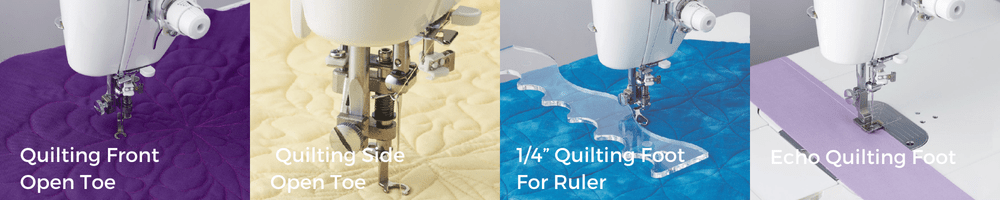
At JUKI we offer multiple feet that will elevate your free-motion quilting, but let’s focus on the 4 below:

  1. Quilting Foot Front Open Toe: Provides excellent visibility, making it easy to see every stitch. Ideal for delicate stippling or small, intricate designs.
  2. Quilting Foot Side Open Toe: Features a side opening for added ease of movement, giving you more space to move the fabric freely, perfect for swirling patterns or feather designs on larger quilted areas!
  3. 1/4” Quilting Foot (For Ruler): Designed to work with quilting rulers, this foot ensures precise 1/4″ seam allowances and perfect straight lines for ruler-based quilting techniques.
  4. Echo Quilting Foot: Creates evenly spaced echo lines around shapes, adding depth and texture to quilt blocks and appliqué designs.

Tips for Quilting and Sewing

  • Start Slow: When you’re new to free-motion quilting, go slow and focus on maintaining a steady rhythm with your fabric movement, the bunny speed is your friend here!
  • Practice Makes Perfect: Try quilting on a small practice sandwich (fabric, batting, and backing) to build muscle memory and refine your technique.
  • Light Grip, Easy Movement: Guide the fabric gently without excessive pulling or pushing to maintain smooth, even stitches.
  • Choose the Right Thread: Cotton provides a matte finish and smooth stitching, while polyester offers strength and elasticity. Most quilting projects use a 40-weight thread, but a 50-weight thread is good for finer, more delicate designs, and a 30-weight thread works well for larger, bolder patterns. Always match the thread weight to the design—finer threads like 50-weight are perfect for small, intricate patterns like stippling, while heavier threads like 30-weight add texture to larger designs. For consistent results, use the same thread type for both the top and bobbin to prevent tension issues and ensure smooth stitching.
  • Keep Your Hands Steady: Move the fabric gently and steadily with both hands—one on the top and one on the bottom—to avoid erratic stitch patterns. There are also tools like paddles or quilting rings that can help make this part smoother.

For more tips on setting up your machine for free motion quilting, check out our step-by-step video guides here.

Creative Ideas for Projects with FMQ

The free-motion quilting feet open up endless possibilities for creative projects, allowing you to add custom designs and intricate stitching to a variety of projects! You can create beautiful quilted wall hangings that have personalized patterns or bold, creative designs for pillow covers that bring flair to your home. This technique also shines when working on custom quilts, whether for special occasions, as gifts, or for everyday use!

Besides quilts and home decor, the free-motion quilting feet options are perfect for adding dimension and personality to accessories like bags, purses, or even clothing! The versatility of the free-motion quilting foot makes it an ideal tool for any project where you want to infuse creative stitching and texture, whether you’re working on large quilts or smaller items that benefit from a bit of extra detail.

Ideas for Downloadable Practice Sheets:

To help you get started with free motion quilting, downloadable practice sheets can provide a structured way to learn new designs. Here are a few we’ve created for beginner quilters!

  • Loopy loops
  • Woodgrains
  • Pebbles
  • City Terrace

Free motion quilting is an exciting way to take your quilting projects to the next level, allowing you to add personal touches, intricate designs, and creative textures with ease. Whether you’re just starting out or looking to refine your skills, using the right free-motion quilting foot and practicing different patterns will help you gain confidence and control. With the right tools, techniques, and practice sheets, you can transform ordinary quilts into stunning works of art!

Ready to get started? Grab your free motion quilting foot, download our practice sheets, and start stitching your way to beautiful, custom quilting designs today!

Quilt Your Way This National Quilting Month!

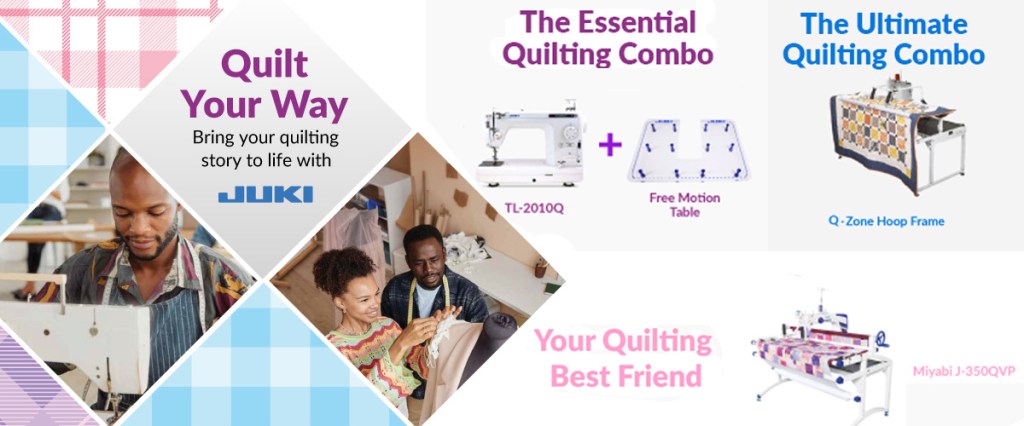
March is National Quilting Month, and there’s no better time to create, stitch, and express yourself through quilting! At JUKI, we understand that every quilter has different needs when it comes to space and setup. Whether you have a small, medium, or large workspace, we have the right quilting machine and frame to help you bring your projects to life.

Find Your Perfect Quilting Setup

Large Spaces – Miyabi J-350QVP Stand-Up Quilting Machine

For those with room to spare, the Miyabi J-350QVP is the ultimate quilting experience! This longarm machine offers smooth, precise stitching and can handle your largest quilting projects with ease. Our Miyabi offers plenty of space with 18 inches of horizontal throat space between the arm of the machine and the needle and a 10-inch height, mounted on a deluxe quilting frame that can range from 5 to 12 feet!

Whether you’re working on king-size quilts or intricate free-motion designs, this setup provides professional-grade results in your home or studio.

Learn more about this machine by clicking here!

Medium Spaces – Q-Zone Hoop Frame

Tight on space but want the flexibility of a quilting frame? The Q-Zone Hoop Frame offers comfort and power without taking up space at 4 1/2 feet wide! This compact yet versatile frame pairs with various JUKI models, allowing you to create larger projects without needing a full-sized frame.

It’s a great middle-ground option for quilters who want the benefits of a stand-up quilting experience in a smaller footprints, and its ergonomic design reduces strain on your body, letting you quilt for longer periods without discomfort.

Learn more about this machine by clicking here!

Small Spaces – TL-2010Q + Free Motion Table Combo

No dedicated quilting room? No problem. The JUKI TL-2010Q + Free Motion Table Combo is designed for quilters who need a compact yet powerful setup. This straight-stitch, semi-industrial machine is built for precision, and when paired with the free-motion table, that’s transparent, making it easy to see under the work surface, it provides a smooth quilting experience even in limited spaces.

Learn more about this machine by clicking here!

Visit your local JUKI Authorized Dealer to find the perfect quilting setup for your space and celebrate National Quilting Month with the tools you need to create something special!