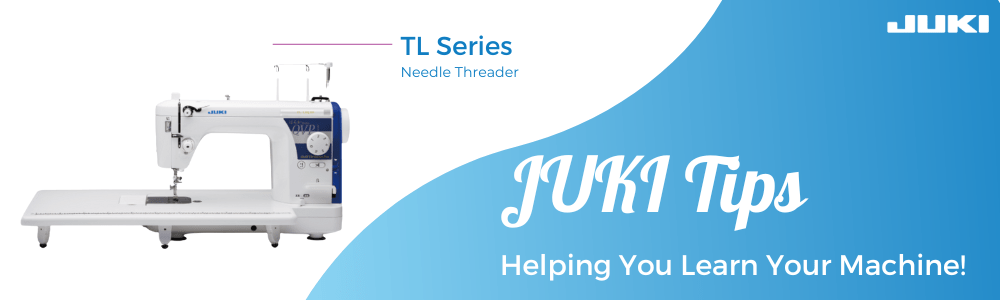
At JUKI we know how important it is to know your machine’s features and how to use them, so starting this year at JUKI we’ll be sharing monthly tips for creating on, and using, your beloved JUKI sewing and quilting machines! This month we’ll be focusing on the TL Series and its Automatic Needle Threader. Showcasing each step, and how the feature works, follow along below to view our Tip Video and breakdown.
Needle Up/Down Feature
The first step is knowing where your Needle Up/Down button is, and when to use it. Now the most important step to using your needle threader is, making sure the foot is in the down position (engaging the tension) and using your Needle Up/Down button to lower and raise the needle.
You’re going to start with having the needle in the highest position, before using your needle threader, so your machine can thread your needle.
Check out time stamp 1:42 to learn where you can find your Needle Up/Down button.
Threading Your Needle
Stopping right before the eye of the needle, we’ll be using our Needle Threader today to get our machine ready to create.
To start, your thread should be at the point right before needle-eye entry.
Next, we’re going to pull our thread off to the side and lower our mechanism all the way down. Now grab your thread and go behind that metal groove on the needle threader, and into the two grooves on the white piece of the mechanism, while holding your thread off to the side. Check out the time stamp 4:00 in our video about for an example of this section.
Now, when we raise the mechanism, you’ll see a loop formed with your thread on your needle. Once you see the loop, pull the thread carefully through the needle and to the right, completing your needle threading!
To learn more about the TL series visit our JUKI Home Sewing YouTube page here, or visit your local JUKI Dealer here.
Have questions about your JUKI machine? Let us know down below! We look forward to creating more JUKI Tips to help you bring your projects to life.
Happy New Year, JUKI Lovers! With another year around the sun, we at JUKI are so excited to introduce our new machines and accessories you can find this year at your local JUKI dealer. From sewing machines to accessories, follow along as we cover our new items and what they do.
New for Sewist
The MO-2800
Have you been looking to upgrade your serger? Check out JUKI’s new MO-2800! New and advanced serger users will love the new features and appreciate the ease of use. With features like our JUKI air threading technology, which allows you to thread your machine with the power of air and the touch of a button, and the automatic needle threader, you’ll enjoy the experience of serging like never before thanks to a quick and easy setup!
Sewists and quilters alike will appreciate the power of this machine and its ability to piece quilts or hem clothing beautifully, no matter the project. You’ll also be able to enjoy a new serger accessory! Our new Curve Foot was created to handle those curved portions of your material smoothly and produce beautifully finished seams, helping you create projects with a quality you’re proud of.
Provided with the patented Tweak with Adjustment (TWA, a JUKI exclusive), it is possible to easily correct excess thread and fabric curling during overcasting. This is just another step in how JUKI is here to help you create easily!
The MO-80CB
Update your sewing studio and skill by trying your hand at serging! With the MO-80CB JUKI overlock serger, advanced and beginner sewists can begin learning how to create. Thanks to its automatic rolled hem, differential feed, and free arm capabilities, garment creators can attach sleeves, hem pants, and more!
Work on building your own closet and updating your current wardrobe by re-creating your closet with the magic of serging! Whether you’re hemming old clothing or building new outfits from scratch using your favorite stretch fabric material, having a serger in your studio is the perfect way to up your sewing game and build your wardrobe.
New For Quilters
The MO-3000QVP
Introducing JUKI’s newest Air Serger, meet the Akane MO-3000QVP! Helping sewists like you sew like a pro, this new serger introduces features we haven’t had before. Features like a chain-off thread cutter, an automatic thread supply, a micro-lifter, and more will help you create with ease and raise our project quality!
Whether your focus is on garments or quilting, this serger will help you create those thicker and larger pieces thanks to the wider throat space! Additional features include a magnet needle tray, LCD screen, and the option to operate your machine by either hand or foot using the knee-lever or foot control.
Taking your serging to new heights, the Akane MO-3000QVP is an excellent addition to your studio space!
The Tabletop Fabric Frame
Now for quilters, JUKI has created its own Tabletop Fabric Frame! This frame is perfect for creators who work in small spaces and want to experience the joy of a long arm without committing to the space needed for a stand-up frame!
Offering quilters the opportunity to free-motion quilt on a frame that lengthens up to 48 inches wide and allows up to a 12″ throat space, you can comfortably create those designs you’ve been dreaming of. Above that, this frame is easy to store away and lightweight making it perfect to quickly get to work or end your project day!
Want stitch regulation? Check out the Sure Stitch Elite add-on! This LCD touchscreen addition to your machine will allow you to easily customize stitch length presets, handle speed adjustment, and give you an edge warning alarm.
JUKI Paddle and Quilting Rings
Whether you’re new to quilting, or an avid quilter looking for an accessory to help you create, our new JUKI quilting paddles and quilting rings are the perfect tools to keep in your studio!
Depending on your preference, these tools are great to keep on hand when it’s time to begin placing designs and free-motion quilting on your creations. Because of the non-slip grip material underneath these tools, they’ll be able to easily drag and move your quilt, helping you seamlessly move your project around your workspace as you free-motion quilt.
Also, due to the paddles’ size and the quilting rings comfort grips, these tools will help keep your hands and arms comfortable while free-motion quilting, helping you create more designs with less hassle and strain.
As we enter the New Year, keep up with JUKI for future new accessories and machines. Working on creating tools for sewists and quilters that you will love; we can’t wait to show you what’s coming up! Have you been dreaming of an accessory or machine feature from JUKI? Let us know in the comments below what future tool you want JUKI to come out with!
Happy New Year JUKI Lovers! Join us this month as we present what’s NEW at JUKI!
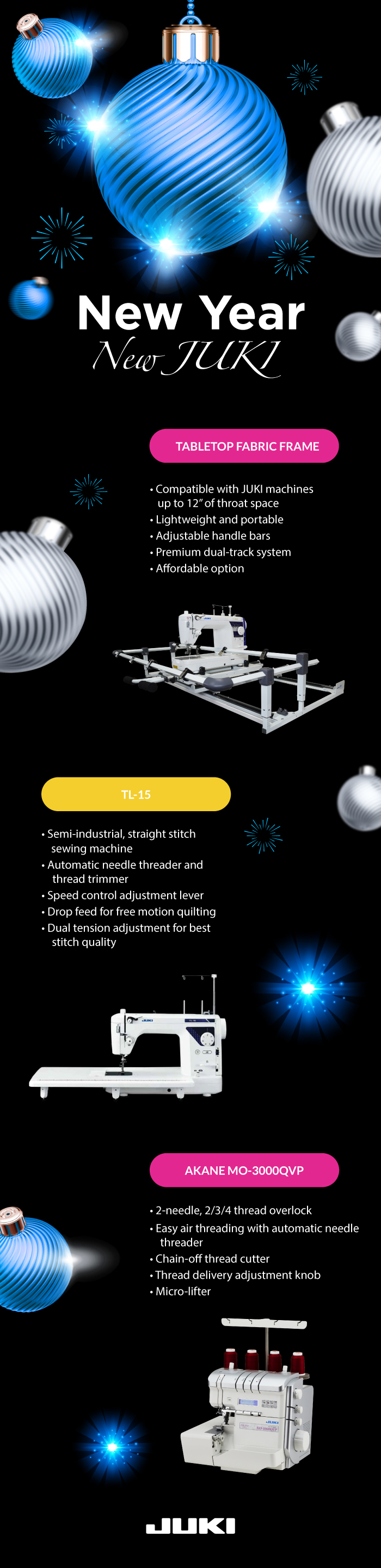
Check out our new Semi-Insurtial sewing machine, the TL-15! Continuing the TL legacy, this new machine is ready to help you start creating those heavy-duty projects, bags of your dreams, and quilts for days.
We’re also introducing a new Serger to our JUKI line, check out the AKANE MO-3000QVP, a unique serger experience that includes features like our Micro-lifter, Chain thread cutter, and so much more!
Lastly, love quilting but don’t have the space for a long-arm quilting machine? We have a solution! Created for the quilter with small space in mind, the Tabletop Fabric Frame from JUKI allows you to quilt with your favorite TL or HZL machine, offering you the chance to create those beautiful projects you’ve been dreaming of with ease.
To find out more about our new JUKI sewing machines, contact your nearest dealer here.
In today’s day and age, almost all shops and businesses use some format of email marketing. From sale promotions and company updates to personalized thank you notes for past shoppers, email marketing can help build your business. This practice has showcased time and time again what a great tool it can be for driving sales, creating a connection to the customer, and getting your business out there.
Today’s blog will cover what email marketing is, how you can create your newsletter, and tools and tips that will help you succeed. While an email can be used for many different purposes, it can upgrade your business!
What is Email Marketing?
Email marketing is a tool used by all business types that builds a connection between you and the customer, like informing business updates, abandoned shipping carts, reward systems, thank you emails, and more.
The benefits of this tool are limitless! With email automation, you can help customers have personalized shopping experiences, improve return rates, promote products, and have the ability to reach a larger audience rather than you sending one email at a time.
Creating Your Newsletter
Let’s plan your newsletter! First, start a conversation using a direct connection to your customer, like their email. Seen as one of the more personal options for sales, thanks to the ability of personalization, buyers will appreciate that you’ve made an effort to connect with them.
Focus on newsletters that offer some form of value. For example, a focus on accessories they’ll like, promotions of products they’re interested in, blogs that align with their interests, and the like offer customers the opportunity to trust your business.
Consider your buyer or viewer when creating your newsletter. For example, if you could obtain an email address from someone considering your shop but didn’t complete a purchase, a newsletter can be a great way to bring them back in! In addition, with add-ons like coupons, promotional pricing, or upcoming sale announcements, you can pull in potential customers on the fence and help them find the product they need.
Another positive about newsletter promotions is the ability to speak to the customer without paid promotion. While we can pay to promote our ads on social media and online, there is no promise it will reach your intended audience each time. On the other hand, an email will directly reach your client and inform them of what’s happening in your business today.
Different Newsletter Goals
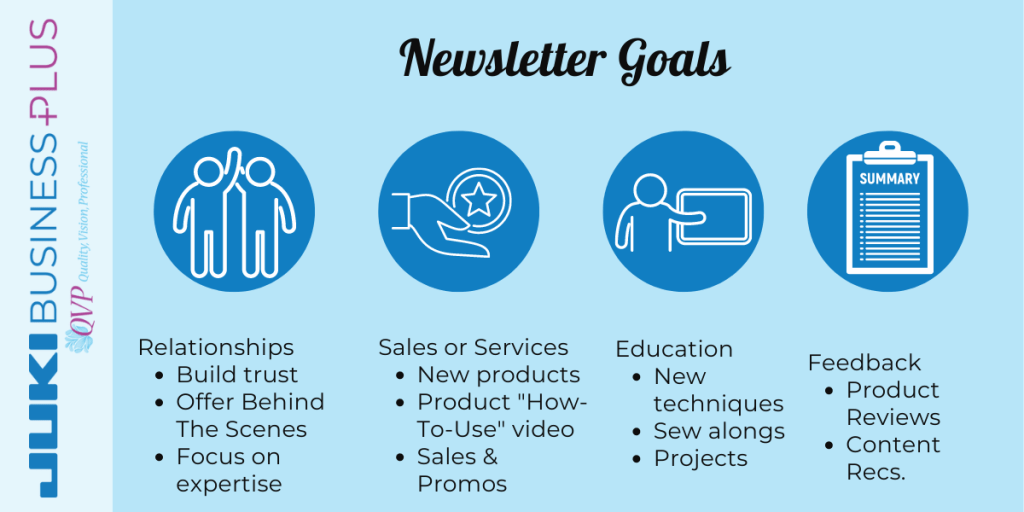
Before diving into your design, let’s plan the content your newsletter will cover. Of course, we have different goals when sending out these emails, so consider what response you want from the audience.
Relationship building: The top reason newsletters have gained popularity is the relationship and trust you begin building with your customer base. If your focus is relationship building, focus on giving them a view of your business and expertise. Add-ons like behind the scene clips or blogs on your projects allow you to build credibility while promoting your shop.
Sales and Services: Create curated newsletters for your customers. Based on their past purchases, you can create an email that will go specifically with their interests. For example, if someone purchased a quilt pattern, you can curate a quilting newsletter that promotes a project and other items for sale. This way, they can see you care about their purchase while encouraging a new sale.
Education: Does your business focus on selling sewing supplies or finished quilts? Create a how-to newsletter to show customers your abilities and allow them the chance to see how they can use your products. Whether it is how to style your new quilt or sew using a tool you sell, the best promotion for some customers is seeing the product in use and imagining how they can do the same.
Customer Feedback and Referrals: Use these newsletters to receive feedback on your business and practices. This way, you can focus on what works and needs to be fixed, allowing customers the chance to place their input, a benefit many appreciate!
Besides your content, focus on your design look. We want to create a layout that is easy to read but catches the viewers’ attention and helps them clarify that it’s your business. For example, focus on what color choices, font, and layout you want your letters to follow.
While most programs offer templates to choose from, make sure to personalize the templates to your company’s brand. Consistency is key when setting up your newsletter so that customers can connect it with your business and feel your brand’s touch.
Finding Your Audience
Before you can send these campaigns out, you need to build your audience! By building a strategy, you can decide whom you’re hoping to reach, what segments you might create (breaking down your audience by interest), and when you’ll send out your campaigns.
First, focus on your audience. Whom are you trying to reach? By deciding this first, you can plan how you’ll gather your emails and what groups you’ll create for newsletters, which will help you get a better idea of the content you need to add to your campaigns.
The best way to segment your audience is by asking for their interest when registering their email with your business. For example, if your business is focused on sewing but sells patterns, fabric, and accessories, you can request your audience pick their interest by choosing quilting, new patterns, and more.
While creating segmentation can be simple once you know your audience, the time-consuming project begins when you need to create separate emails for the segments. Therefore, we recommend that those new to email marketing stick to just one or two segments before attempting new ideas.
As for the topics, focus on products or projects that customers are interested in, products you want to promote, and blogs or vlogs that can benefit customers and encourage sales. Some topics can be consistent with forming a connection and building expectancy. For example, if you have a blog you post on often throughout the month, you can include a blog round-up for viewers to check out on your monthly business update newsletters. This way, in case they missed any or haven’t subscribed to your blog, you can bring in readers and offer them new exciting pieces to discover!
Finally, decide on what locations you will request emails from, online or in person. Email capture can come from your website, blog, social media sites, collaborations, and so much more! Be intentional about where you’re placing this sign-up form so you can receive new emails consistently and safely.
Don’t forget Privacy Regulations and Best practices!
When you begin sending email newsletters and collecting new ones, keep in mind marketing laws. In addition, privacy legislation and anti-spam guides are important to keep in mind when it’s time to start scheduling and sending.
General Data Protection Regulations (GDPR): Implemented in 2018, this European Union (EU) privacy law applies to anyone processing and/or storing the data of people in the EU. Many platforms comply with these laws and help users remain compliant with them.
Know your anti-spam legislation: CAN-SPAM (US) and CASL (Canada) are examples of anti-spam legislation intended to protect consumers from spam and electronic threats.
Subscribers must be obtained honestly: Sending email communication to people who have not opted-in is not GDPR compliant and is widely considered spam. Even customers who provide their email for purchase must choose to opt-in for receiving emails unrelated to their purchase.
Emails must contain an unsubscribe link: Subscribers must be able to opt-out from receiving email communication from you.
Include your business contact information: Make sure to place your business contact information in the footer of your emails to comply with anti-spam legislation.
Finding Your Platform
Each email platform has features and plans curated for different business types and needs. When choosing your package, focus on what you need right now, and remember what features you might like to use in the future once you’re more comfortable.
Below are features any beginner can use and place in their campaigns.
Built-in templates with customization: easily set up beautiful newsletters and customize them to your needs as you learn how to arrange your campaigns.
Personalization: with the ability to include subscriber information, you can choose an option to personalize each email with a user’s first name! This little touch will help customers feel like this email was curated for them.
Segmentation: Keep your audience organized by their interests! This way, quilters, sewists, pattern creators, and more get emails that correlate with their interests and help your email openings stay consistent.
Scheduling: schedule emails to be sent out at the best times for your audience. Whether that be morning before work or weekends for project time, study your subscribers’ habits and change your schedules every once in a while until you find what fits.
Automation: connect your email program to your shop and have emails sent after certain actions! For example, if someone just purchased an item from your shop, they can receive a confirmation email promoting similar products, a space for review, and a space for tracking.
Analytics: Whichever program you choose should have a form of analytics. This way, you can study what campaigns are successful and what you can fix to have consistent openings.
Keep in mind the budget before choosing a program! Focus on programs that are straightforward for beginners and offer packages for small businesses.
Below are three recommendations that beginners can check out!
MailChimp
Mailer Lite
Active Campaign
MailerLite: The easiest program to use, MailerLite offers easy drag-and-drop interfacing that makes it quick and fun to create. With a simple style, anyone can create their first newsletter on this program! The best part is that this program offers a free subscription option for up to 1000 subscribers. After this, the plans begin at $9 per month. This program can also be connected to your online e-shop, like Shopify.
ActiveCampaign: Easy to use and edit, the Active Campaign program integrates into Shopify and vouches for over 500 pre-built automation for your campaigns, allowing you to send welcome notes, sale confirmations, and more. It also offers an SMS option for those who volunteer their number to your business. The best part is you can test this program for 14 days before committing, and its beginning package begins at $9 per month.
MailChimp: Popular and easy for beginners, MailChimp stands out from other programs thanks to its ease of use and clean interface. With the ability to have 500 contacts before purchasing a plan, you can access hundreds of free templates, SMS Marketing, email automation, and quick editing tools. Furthermore, if you purchase a plan, their beginning plan starts at $11, upgrading your audience limit from 500 to 50,000!
Finally, once you’ve finalized your theme, planned content, chosen your platform, and finished planning a schedule, it’s time to send out your first newsletter! Again, stay true to your brand and goals and focus on writing eye-catching subject lines to bring viewers in. Confirm which email you use for responses, and allow subscribers to contact you directly, which will help build that communication line with your customers!
After you’ve sent your first few emails, you can begin learning your analytics and tweaking your strategy. Don’t forget, these newsletters are a window into your business, expertise, and personality, so have fun and create pieces that you and your customers will love!
Stay in the loop with JUKI! Join our newsletter list by visiting us here and scrolling down today!
From her beautiful quilt projects to pattern creations that we love to try our hand at, today we’re spotlighting Kristina Brinkerhoff, owner of Center Street Quilts! If you’re a quilter who loves finding new inspiration for your future projects or a creator looking for new patterns to try your hand at, you’ll love Center Street Quilts’ shop and blog! Follow along as we cover Kristina’s journey in quilting and design patterns creating, what inspired her to become a pattern designer and how her platform grew to where it is today.
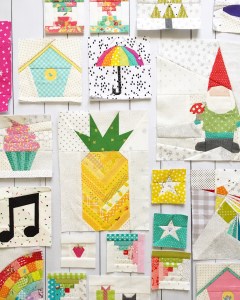
FFP Blocks
Like many of us quilters and sewists, Kristina’s journey starts right home. Surrounded by women who loved being creative, she watched them at work as they designed sewing projects and spent hours crocheting and knitting. Memories of Kristina’s childhood include playing under those big quilt frames, surrounded by tying and hand quilting around her. These little moments led to her interest in the hobby, starting with her first quilt at 13.
During a slow-moving summer, Kristina, at 13, asked her mother to help her make her first quilt. The research wasn’t as easy back then as it is today, so they went to their local quilt shops with a plan in hand! It was here she chose her first quilt fabric, a 30s reproduction fabric and a simple pinwheel block. By the end of summer, she had undergone quilting training. From learning quilt planning to cutting and sewing, she even began creating her own designs. Sewing on and off the years, Kristina was able to focus her time on the hobby regularly after getting married.
Inspired by day-to-day life, she found ideas in nature, art, books, and even tattoos! Kristina loved keeping a sketchbook on hand because of this, ready to draw down a design when the idea made its way into her mind. But, beyond the inspiration she found in life, her other hobbies encouraged her to keep designing and sewing. Crocheting, knitting, paper crafts, and drawing; were all projects that brought out the creativeness in her.
“It can be extremely liberating and ignite ideas by changing things up and working on projects that are different than normal.”
When she does sew, Kristina uses her TL-2000Qi. Purchased back in 2016, she chose this machine, not for its fancy features but because it offered power and reliability in her creative process, becoming her go-to sewing machine! With its accuracy for piecing quilt blocks and the motor strength’s ability to sew through thick seams, this machine has helped create pieces from quilts to her beautiful bags.
Center Street Quilts sewing space
When asked what recommendations she has for quilters purchasing a new machine, Kristina recommends not focusing on the features and whistles but instead on a machine with power and reliability. Below are three other features Kristina recommends for quilters and creators alike.
An ample throat space. (Good for quilting quilts and maneuvering bags.)
The ability to lower the feed dogs. (Needed for free motion quilting.)
The option of stopping the machine with the needle down. (Super valuable for quilting and bag making, so your project doesn’t slip as you adjust your hands.)
Whether you’re choosing your first machine or looking to upgrade, having the space to create and the power to build those quilts can be the ticket to a better sewing experience.
Kristina isn’t always sewing and quilting, though! When she’s not building a new project, you can find her designing her shop’s next pattern. What first was a challenge that involved a whirlwind of decisions, all the different ways to make a quilt block, size options, color variations, and more have now become a game of balance.
“I’ve learned to balance ease of construction with the aesthetic I’m looking for, but it still takes me plenty of samples to decide on the end product.”
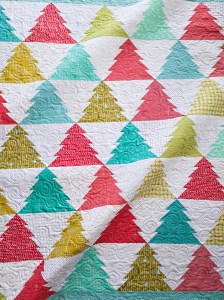
Merry Little Trees Quilt
One thing Kristina loves about pattern creation, no matter the challenges the process comes with, is picking her fabric! Enjoying the opportunity to play with color schemes and choose her favorite fabric patterns, Kristina only wishes there was more time to see all the potential fabric options for quilts and bag making. Don’t we all!
With quilting and pattern creation under her belt, it was only a matter of time before Kristina began moving her hobby into a potential business. During this time, the name ‘Center Street Quilts’ was created! Based on an address from Kristina and her husband’s old family home, the Center Street home witnessed countless hours of sewing and creating to get done.
Center Street Quilts is an online pattern shop where quilters like you can find fun new patterns to try your hand at! When we spoke with Kristina about how she decided what patterns to create and sell, she focused on her love for the hobby and process.
“From the day I started Center Street Quilts, I decided if I was going to succeed as a business, I’d have to LOVE what I was doing.”
While this hasn’t always equated to the best financial decisions, she says, like a request to add products for paper crafting to her shop, the idea of loving what she’s doing has helped her be creative and stay true to herself.
One of the ways so many customers have learned about her shop is through her work on social media platforms. With over 100k followers, Kristina mentions it’s been astonishing and supportive to see how many fellow creators and quilt lovers are interested in her creations. With the quilting and sewing community growing each day, she focuses on how enjoyable it’s been having a small corner of the world where she can share her work with her followers and creators.
If you’re looking to make your own corner online, Kristina reminds us to not underestimate the power of a beautiful photo! Focusing on clear, bright photos that showcase your product well will get you farther than 10 mediocre ones, allowing your work to look its best! She also advises interacting with your community! Reach out to fellow creators, uplift, comment on others’ projects, and get involved in the community and online events. Above showcasing your work, these interactions will help you make lifelong friends in a hobby you love!
Kristina also reminds us to love what we’re doing. With the flows of social media constantly changing, it’s important to find fulfillment and joy in what you’re creating!
“If you find fulfillment and joy in what you’re creating, and that joy is the primary reason you create, then opening an online shop or starting social media pages will be a much more peaceful process.”
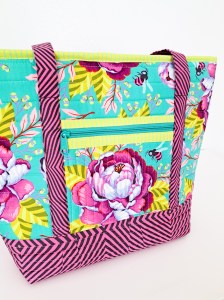
Fleetwood Tote Moon Garden
As for Kristina’s online shop and quilting journey, many hopes and dreams are still to be brought to life! From several bag patterns in the works to a dream of providing online courses for beginner quilters to share her knowledge, we can’t wait to see where ‘Center Street Quilts goes. From her journey in quilting to her advice for content creators, we had a great time getting to know Kristina and her shop Center Street Quilts!
If you’ve enjoyed learning about Kristina and her journey in quilting, follow along and check out her blog, socials, and e-shop below!






 sewinwithjuki.com