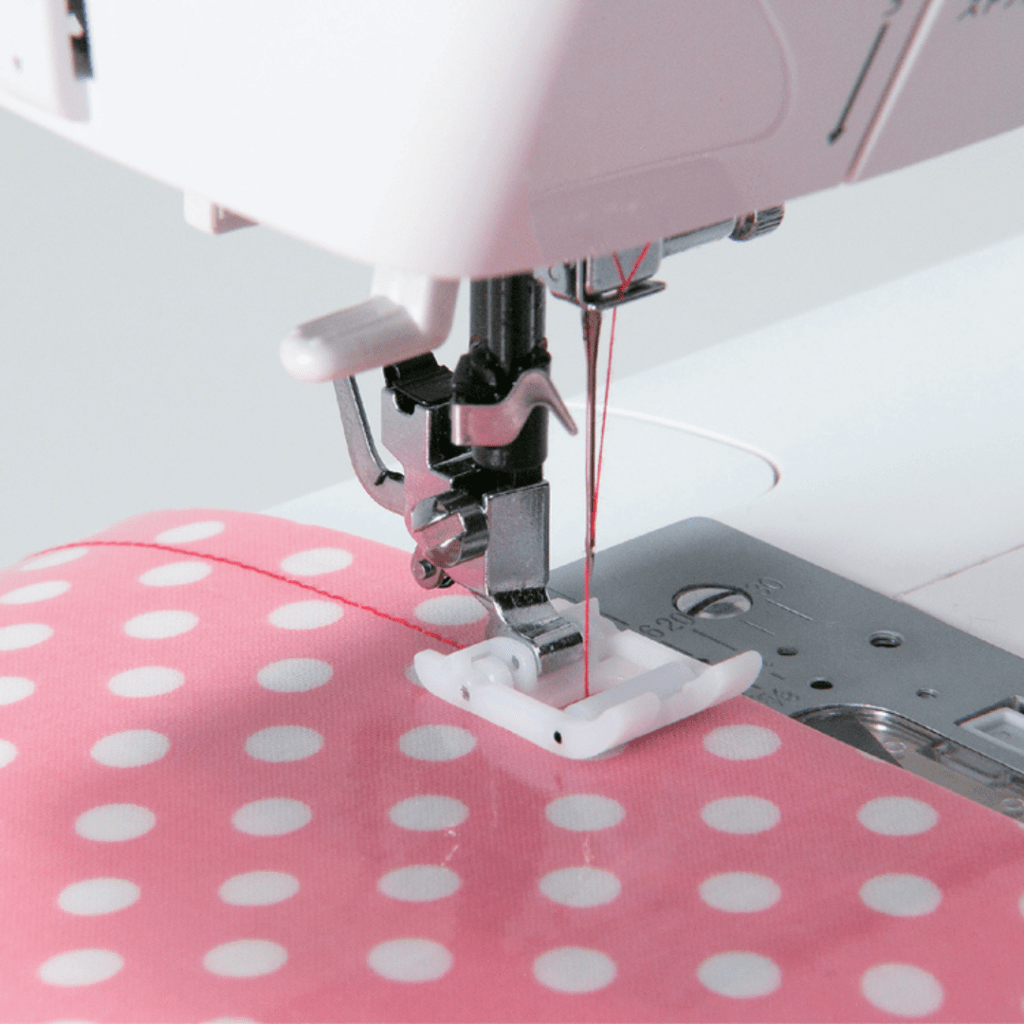
This month, we’re talking about zippers, one of the most useful and versatile closures you can add to your sewing projects, but inserting them neatly can sometimes feel tricky! That’s where the Zipper Foot comes in. This presser foot is specially designed to help you sew close to the zipper teeth or coil without the needle hitting the foot, giving you a clean, professional finish every time.
In this blog, we’ll walk you through the basics of the Zipper Foot, share tips on working with zippers in a variety of projects, and inspire you with creative zipper projects you can try at home!
What Is It?
Let’s start with how we got the Zipper Foot in the first place. This foot was invented to address a challenge in sewing: how to stitch close to the teeth of a zipper without the needle hitting the zipper’s metal or plastic parts. Zippers themselves were first created in the late 19th century, but it wasn’t until the early 20th century that we saw them used widely in garments and accessories. As zippers started to become a common closure method, sewists needed to find a specialized tool that allowed precise stitching along the narrow edge of the zipper tape.
Early zipper feet were simple but effective attachments that could be mounted on most domestic sewing machines, allowing the needle to sew on either side of the zipper. Over time, improvements have led to adjustable feet compatible with different zipper sizes and sewing machine models, making zipper installation more accessible and professional-looking for home sewists and industrial applications alike.
Benefits and Uses
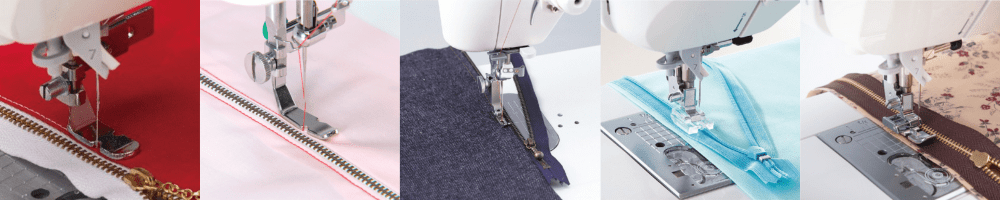
The zipper foot is an essential tool because it allows precise stitching close to the zipper teeth without interference. It also helps prevent needle breakage and skipped stitches, making zipper installation smooth and professional, right from home. Beyond zippers, this versatile foot is also useful for other detailed sewing tasks that require stitching close to bulky edges or trims.
With the Zipper Foot you can:
- Sewing various types of zippers (invisible, separating, metal, and nylon coil)
- Attaching piping or cording for decorative edges
- Topstitch close to bulky trims or seams
- Sewing along the edges of thick fabrics or multiple layers
Using the zipper foot not only improves the accuracy of your stitching but also speeds up the sewing process by allowing you to work confidently close to the zipper teeth. Its versatility makes it a valuable tool beyond zipper installation, helping you achieve professional finishes on a variety of projects.
Tips for Using the Zipper Foot
- Sew slowly and carefully near zipper stops to avoid needle breakage.
- Use pins or basting tape to hold the zipper securely in place before stitching.
- Practice on scrap fabric to get comfortable with needle placement and foot adjustment.
- Backstitch at the start and end of your zipper seam to reinforce.
Zipper Projects to Try
Ready to try your hand at using a zipper foot? Below are five zipper projects featuring video tutorials from our JUKI team!
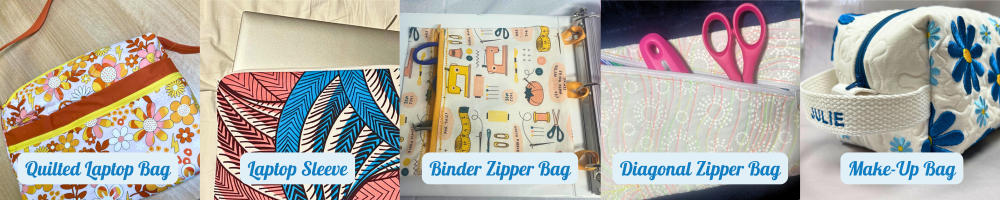
1. Quilted Laptop Bag: Join Alba in this detailed tutorial where you’ll learn to create a quilted laptop bag using the JUKI Haruka TL-18QVP. This project includes quilting tips, adding pockets, zipper installation, and attaching a comfortable strap, perfect for stylish, functional protection on the go.
Follow along here!
2. Laptop Sleeve: Looking for a simple zipper project? This laptop sleeve tutorial guides you through making a slim, personalized cover for your laptop. It’s a great introduction to sewing zippers with style and function!
Follow along here!
3. Binder Zipper Bag: Perfect for back-to-school organization, this project uses a nylon zipper to create a handy pencil and supply holder that fits in a three-ring binder. Created on the Kokochi DX-4000QVP, it’s a practical, beginner-friendly zipper bag with lots of uses.
Follow along here!
4. Diagonal Zipper Bag: This stylish zipper bag is ideal for makeup, tickets, or toiletries and is made using the DX-2000QVP and MO-2800 serger. The tutorial shows how to sew with batting and cotton thread, perfect for an easy, functional accessory!
Follow along here!
5. Make-Up Bag: Here our Brand Ambassador Nicole Moore demonstrates how to sew a travel-friendly make-up bag with the JUKI TL Series machine, personalized with embroidery. This project is suitable for all skill levels and perfect for gifting or personal use.
Follow along here!
Zip Up and Sew with JUKI!
Mastering the zipper foot can open a world of creative possibilities, making zipper installation easier and more precise! Whether you’re sewing bags, garments, or accessories, this simple yet powerful tool can help you achieve clean, professional results every time.
Grab your zipper foot, explore the projects we’ve shared, and take your sewing skills to the next level with confidence! Visit your nearest JUKI dealer here to find the right accessories for your project today.
 sewinwithjuki.com