The Art of Tailoring with JUKI

Tailoring is an art form that transforms your outfits to reflect your style and achieve a perfect fit! Whether modifying a store-bought piece or creating a custom design from scratch, the right tools can be essential for professional results and help you handle various fabrics and techniques. This blog will discuss how JUKI sewing machines and accessories can elevate your tailoring process and help you achieve those professional results!

Tailoring provides an opportunity to express your individuality through unique design elements. It can extend the lifespan of your clothing by revitalizing and adjusting pieces to keep them in excellent condition. Let’s talk about the first step to tailoring on your machine.

JUKI Machines for Tailoring          

Choosing the right sewing machine can be crucial for achieving desired results. JUKI machines are celebrated for their precision and versatility, making them ideal for tailoring projects. This section will highlight how the JUKI TL-2010Q and HZL F Series can enhance your tailoring experience and deliver professional-quality outcomes.
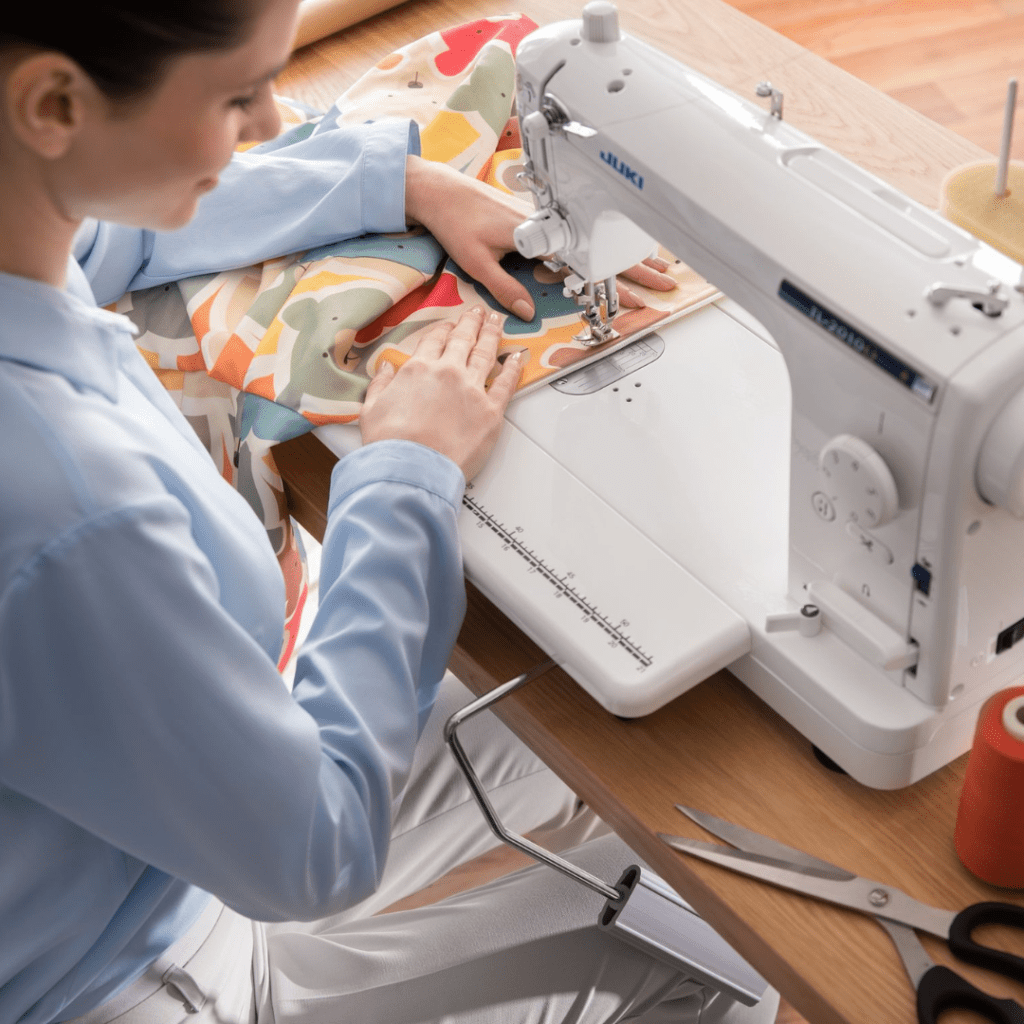
  1. JUKI TL-2010Q: this is a robust and precise sewing machine designed for high-performance tailoring! It features a spacious sewing area accommodating large fabric pieces and detailed work. The automatic needle threader streamlines setup, while the adjustable presser foot pressure ensures optimal fabric handling across different materials and weights. This machine’s accuracy and durability make it ideal for achieving professional results in custom sewing projects.
  2. JUKI HZL F Series (300, 400, 600): This line offers a range of versatile and feature-rich machines suitable for various tailoring needs! The HZL F300 provides essential features and a variety of built-in stitches for basic alterations. The HZL F400 builds on this with additional stitch options and a larger sewing area, making it well-suited for more complex projects. For those seeking advanced functionality, the HZL F600 delivers enhanced features, including a sophisticated feed system and a large LCD screen, providing even greater precision and convenience for intricate tailoring tasks.

Essential Accessories for Tailoring

To achieve the best results in tailoring, having the right accessories can be precisely what you need! These tools not only enhance the functionality of your sewing machine but also help ensure precision and ease in your alterations. From feet that handle multiple fabric layers to guides that maintain consistent seam allowances, each accessory can play a role in perfecting your tailoring projects.
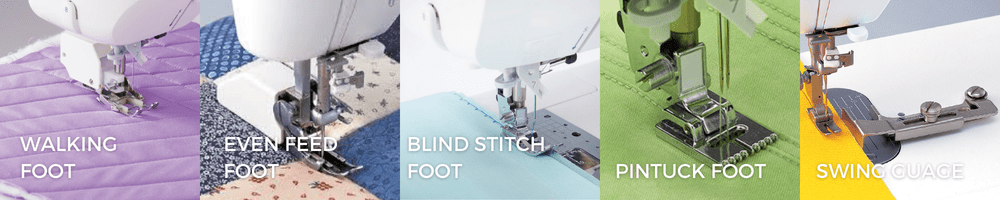
  • JUKI Walking Foot: A walking foot is invaluable for sewing multiple layers of fabric or handling tricky materials like velvet or leather. It evenly feeds the fabric, preventing slipping and shifting.
  • JUKI Even Feed Foot: Similar to the walking foot but with additional precision, the Even Feed Foot is great for aligning and sewing fabrics with different weights.
  • JUKI Blind Stitch Foot: This foot is perfect for creating professional-looking blind hems. It helps you sew nearly invisible blind hems.
  • JUKI Pintuck Foot: This foot helps create evenly spaced, beautiful tucks when adding decorative elements like pintucks to garments.
  • JUKI Swing Guage: A swing gauge ensures consistent seam allowances, which helps tailor and alter garments accurately.

Tips for Perfecting Your Tailoring Technique

Perfecting your tailoring projects requires attention to detail and a few essential techniques to ensure the best results. Below are a few tips you can use to enhance your sewing skills and achieve a flawless finish for every project! From precise measurements to selecting the right thread, each step contributes to the overall quality of your revamp projects. Use these strategies to elevate your sewing and make your tailoring efforts efficient and rewarding!
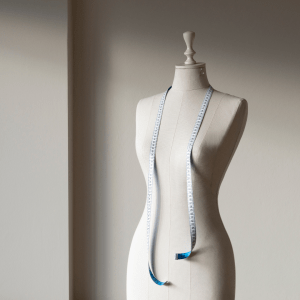
  1. Measure Accurately: Start with precise measurements to ensure a perfect fit. Use a flexible measuring tape to measure your body or the garment you’re altering.
  2. Use Tailoring Techniques: Learn and apply various tailoring techniques such as dart manipulation, adjusting side seams, and adding or removing ease.
  3. Test Fabrics: Always test stitches and settings on scrap fabric before working on your main project. This ensures you get the right tension and stitch length.
  4. Invest in Quality Thread: High-quality thread helps prevent snags and ensures a professional finish.
  5. Practice Patience: Tailoring requires attention to detail and patience. Take your time with each step to achieve the best results!

Mastering the art of tailoring with JUKI machines opens up a world of possibilities for creating personalized garments! Whether you’re making alterations to an existing piece or starting from scratch, the precision and functionality of these JUKI machines will elevate your sewing projects. Embrace the art of tailoring and enjoy the satisfaction of wearing clothes made just for you!

Tag us on social media at JUKIHomeSewing on your next revamp project for a chance to be featured in our story!
JUKI’s Autumn Sewing Guide

As the leaves turn and the air gets crisp, it’s the perfect time to dive into autumn sewing projects! The season invites us to create with warm, rich colors and cozy fabrics that reflect the beauty of fall. Choosing the right fabrics and colors can set the tone for your creations, whether you’re planning to make cozy quilts, stylish scarves, or warm throw pillows.

In this blog, we’ll explore the best fabric choices and color palettes for fall and highlight JUKI sewing machine presser feet accessories that work well with these fabrics to make your sewing experience smooth and enjoyable. Plus, discover free project ideas to inspire your fall sewing. Let’s get started on making the most of this vibrant season!

Embracing Autumn Colors

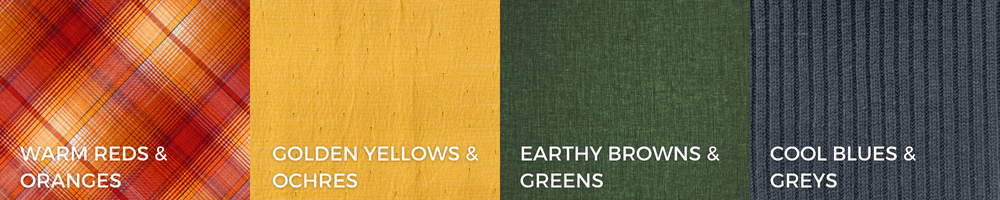
When we think of autumn, we think of rich, earthy tones! Here are some color hue ideas to consider for your upcoming projects:

  • Warm Reds and Oranges: Think of the vibrant hues of autumn leaves. Shades like burnt orange, crimson, and deep red add a warm touch to any project!
  • Golden Yellows and Ochres: These colors speak to the warmth of fall sunshine and can bring a cheerful contrast to the darker tones of fall projects.
  • Earthy Browns and Greens: From deep forest greens to warm browns, these colors provide a grounded, rustic feel perfect for fall, bringing in that feeling of the earth.
  • Cool Blues and Greys: While less typical, muted blues and greys can balance the warmer tones and add sophistication to your designs! Give these colors a chance and mix them with those above for a unique fall look.

Selecting Fabrics and Accessories for Fall

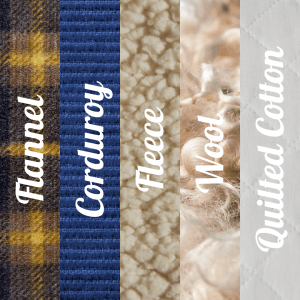
Choosing the right fabric is crucial for achieving that cozy autumn vibe, and pairing them with the right JUKI presser feet accessories can enhance your sewing experience. Here are some fabric options and their ideal accessory companion:

  • Flannel: This soft, warm fabric is ideal for quilts, pajamas, and throw pillows. To sew flannel smoothly, use the JUKI Walking Foot. It helps feed multiple layers of fabric evenly and prevents shifting and puckering.
  • Corduroy: This distinctive texture is great for jackets, skirts, and pants. With the JUKI Zipper Foot, you can sew close to the corduroy’s ridges for precise stitching and add closures with ease.
  • Fleece: Perfect for scarves, blankets, and mittens, fleece provides warmth and comfort. With the JUKI Even Feed Foot or JUKI Walking Foot, you can prevent the fabric from sticking to the presser foot and help manage the bulk.
  • Wool is a traditional choice for fall garments. It’s great for crafting sweaters, hats, and shawls! Using the JUKI Overcasting Presser Foot, you can finish edges and seams neatly and easily.
  • Quilted Cotton: Perfect for your quilted projects, quilted cotton offers both style and functionality! With the JUKI ¼” Foot by your side, you can ensure accurate seam allowances and beautiful quilted designs.

Patterns and Prints

Patterns can add a lot of character to your fall projects. Here are some patterns we recommend checking out at your fabric shops:

  • Plaids and Tartan: These classic patterns are staples in autumn fashion and home decor and work well with everything from skirts to quilt blocks!
  • Leaves and Acorns: Prints or appliques featuring autumn leaves or acorns add a seasonal touch to any project.
  • Stripes: Subtle stripes in fall colors can add visual interest without overwhelming your design if you’re looking for a simpler look.
  • Nature-Inspired Prints: For a charming seasonal look, consider fabrics with motifs like pumpkins, pinecones, or woodland animals. These fabrics are perfect for home décor and quilt blocks.

Consider using the RICOH Ri 100 Direct-to-Garment Printing Machine to create custom fall fabrics. This machine allows you to print your designs directly onto the fabric, giving you the freedom to create unique patterns and prints that perfectly match your vision. Imagine the possibility of adding last year’s Thanksgiving dinner photo to this year’s family t-shirt—an exciting new tradition!

If you want to add texture and dimension to your patterns, check out the JUKI Tajima Sai 8 Needle Embroidery Machine. This machine offers advanced embroidery capabilities that enhance your designs with intricate details and embellishments, like leaves, quotes, cartoons, and more.

Tips for Choosing Fabrics and Colors

Selecting suitable fabrics and colors can significantly improve your sewing projects. Consider how each fabric and color choice will complement your project’s overall design and functionality.

  • Consider the Project: Match the fabric type and color to the purpose of your project. For instance, flannel is great for cozy quilts, while corduroy is perfect for fall apparel.
  • Mix and Match: Feel free to combine different colors and patterns. Balance bold prints with solid colors to avoid overwhelming your design.
  • Swatch First: Before committing to a large amount of fabric, get swatches to see how the colors and patterns appear in person.

With these autumn fabric and color ideas and the right JUKI presser feet accessories, you’re ready to embark on your fall sewing adventure! Whether you’re crafting cozy quilts, stylish garments, or charming home decor, these tips will help you create beautiful, seasonal pieces that capture the essence of autumn.

Are you looking for inspiration? Visit JUKI Quilting Projects for a variety of free project ideas that are perfect for fall. From sweet memory quilts to stylish home decor, these projects offer creative ways to use autumn fabrics and colors.

We also have a new project featuring fall throw pillows! Tune in on our YouTube page at JUKIHomeSewing to create yours today and get fresh ideas and inspiration for incorporating autumn colors and patterns into your home decor.

Embrace the Cozy Season

It’s almost time for Fall JUKI lovers, so let’s indulge in sewing projects that capture the essence of Fall! Whether you’re a sewist or a quilter, Fall offers a beautiful opportunity to create cozy, stylish, and functional items for yourself and your loved ones.

In this blog, we have three projects you can create this autumn and recommendations for JUKI machines, accessories, fabrics, notions, and threads to ensure your creations turn out beautifully! Let’s go ahead and dive into one project we’ll be sharing later this month.

  1. Autumn Throw Pillows

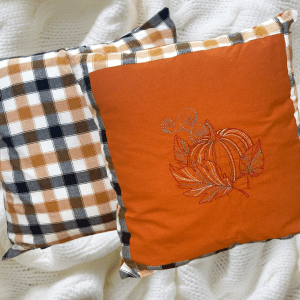
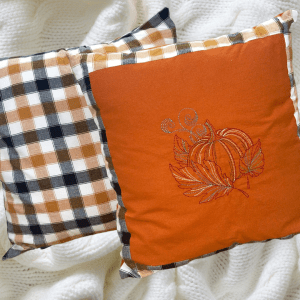
The JUKI TL-18QVP is ideal for creating autumn throw pillows. It offers precision and versatility for piecing and quilting. Its robust build and advanced features, like the automatic needle threader and adjustable presser foot pressure, make it perfect for adding decorative touches to your pillow project.

We recommend using autumn colors like deep oranges, rich browns, and forest greens in fabrics like cotton or linen. These materials are durable, easy to work with, and ideal for home décor. Consider patterns with leaves, pumpkins, or plaid for a seasonal touch!

When it comes to notions, choose a high-quality pillow form for a plush finish, or use the stuffing for a custom shape like a leaf, ensuring it’s filled to your desired firmness. For marking your design, use a fabric marking pen or chalk marker, preferably with disappearing ink for easy removal.

When it comes to thread, select a high-quality polyester in a matching or contrasting color to enhance your pillow’s design. This will provide durability and a smooth finish. A universal 80/12 needle works well for most cotton and linen fabrics, while a 90/14 needle is better suited for heavier materials, such as vinyl, if you’re planning to use it in your projects.

Stay tuned here for our project release!

JUKI Accessories:

  • Walking Foot: This foot is ideal for sewing through multiple layers of fabric, ensuring smooth feeding of the fabric for a professional finish. It’s handy when working with thicker fabrics or multiple layers.
  • Free Motion Foot: Perfect for adding custom quilting designs and free-motion embroidery to your pillow. It allows for greater control over stitching patterns and design elements.

Additional Tips:

  • Pre-Wash Fabric: Pre-wash and iron your fabrics before cutting to prevent shrinkage and ensure smooth sewing.
  • Press Seams: Press seams open or to one side to create a crisp, professional finish.

2. Cozy Beanie

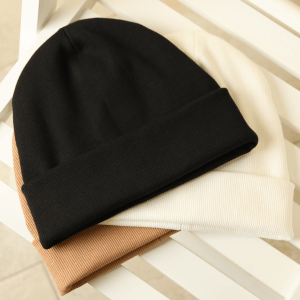
The next project we’d recommend trying your hand at is a cozy beanie! For a cozy beanie, select warm and stretchy fabrics like fleece or jersey in autumn colors or patterns. These materials provide comfort and warmth on chilly days, and those with spandex or elastane offer added stretch.

The JUKI MO-2000QVP serger is a good choice for this project. Our sergers can efficiently handle knit fabrics and sew and finish edges with precision in one step. You can incorporate an elastic band to keep the beanie in place and maintain its shape to ensure a snug fit. Fabric clips can help hold knit fabric layers together without causing snags or distortions.

Remember your thread! Polyester thread offers both stretch and durability to prevent breakage or unraveling with the fabric’s stretch. A ballpoint needle, size 70/10 or 80/12, is ideal for knit fabrics, as its rounded tip helps avoid snags and skipped stitches.

JUKI Accessories:

  • Elastic Foot: Attach elastic bands evenly and securely.
  • Gathering Foot: Create ruffles or gather fabric; it can add decorative elements to your beanie.

Additional Tips:

  • Stretch Stitch Settings: Use the serger’s stretch stitch options or differential feed settings to ensure the fabric maintains its stretch and does not distort.
  • Use Fabric Clips: Instead of pins, use fabric clips to hold knit layers together to avoid snagging and ensure a smooth sewing experience.

3. Quilted Autumn Table Runner

For this project, check out the JUKI Kirei HZL-NX7. Like our other computerized machines, The HZL excels in quilting projects by providing ample space and quilting features perfect for crafting detailed and beautiful autumn table runners. The ample throat space and quilting capabilities make it ideal for handling larger projects.

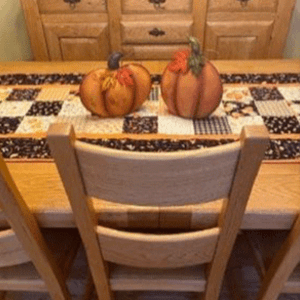
For a quilted autumn table runner, choose cotton quilting fabrics in warm autumn colors and patterns. Fabrics like flannel or cotton with leaf or plaid designs will give your table runner a seasonal touch. Quilting cottons are durable and come in a range of fall-themed prints!

Check out medium-weight batting to provide coziness and structure to your table runner. Cotton or polyester batting works well for quilting projects, too. We recommend keeping your quilt ruler and rotary cutter nearby for precise cutting and piecing of quilt blocks. This helps to ensure accurate measurements and clean edges.

And, of course, thread! We recommend using 100% cotton quilting thread to achieve a smooth, durable finish. This thread can be used for both piecing and quilting since it blends seamlessly with quilting fabrics. The quilting needle, size 75/11 or 80/12, both are suitable for handling multiple layers of fabric and the thickness of batting.

JUKI Accessories:

  • Quilting Foot: This is essential for free-motion quilting. It allows you to maneuver your quilt with ease and helps create intricate quilting designs without getting caught in the fabric.
  • Extension Table: If you need extra space, we recommend this one. It’ll provide extra space for quilting larger projects and help maintain smooth fabric movement. It’s beneficial for managing the bulk of a quilted project.

Additional Tips:

  • Quilt Designs: Experiment with different quilting designs, such as meandering or echo quilting, to add texture and interest to your table runner.

These fall projects are a delightful way to decorate your home and wardrobe with seasonal charm! Creating projects like throw pillows, beanies, and table runners brings a touch of Fall into your daily life and enjoyment in making something beautiful and functional.

Each project offers an opportunity to experiment with seasonal fabrics and patterns, transforming simple materials into cozy, personalized décor and accessories that reflect the theme of Fall.

With the right JUKI machine and accessories, you’ll have the tools to craft these fall projects easily! Whether you’re using a serger, computerized, or semi-industrial sewing machine, these machines’ quality and versatility ensure your projects turn out beautifully. Find the right fabrics, notions, and threads, and you’ll be equipped to produce stunning pieces that celebrate the fall season in style. Happy sewing!

JUKI Star Spotlight: Meet Bill from BILLIAM

BILLIAM, a custom jean company based out in Greenville, South Carolina, was founded by Bill Mitchell in 2009 right out of his family’s basement. Over the years since opening, Bill’s business has flourished and has continued to thrive as fashion lovers all over the world find him. Today we’re going to take you behind the scenes of BILLIAM and their two-man show where they showcase the process of ordering your own custom jeans and the work that goes into the designs we love.

Follow along below for the transcript version of our interview with Bill Mitchell from BILLIAM

Hey guys, my name is Bill Mitchell, from BILLIAM Jeans, we are a custom jean company based in Greenville, South Carolina, and we’ve been making jeans since 2009 for people, and essentially what we do is we take your measurements, we show you different fabrics you can choose, and then we build you anything you want from scratch.

Now the process of buying a pair of jeans from us is you schedule an appointment to come into our store; you come in, and we will take your measurements, and then we’ll show you different fabrics that you can choose, and then we’ll sit down, and we’ll talk about the different style you want.

So if you wanted something that would be skinny, slim, straight, layered, baggy, whatever that is, we can kind of make those creative decisions after we get your measurements. Then it takes about a month to have us produce that pants for you. then we ship it to you, or you can come into the store and pick it up.

If you don’t live in Greenville and you can’t make it into our shop, then we can do all of this over Facetime. So you can set up a time to Facetime with us with a measuring tape, and I will walk you through the entire process as if you’re here in the store but from the comfort of your own home.

What inspired you to start sewing?

So in the seventh grade, I took a home ec class, and that was the first time I learned I could use fabric and a sewing machine to build things from scratch, and it was a really fun, powerful moment where I had built something that I was proud of.

In college, I started tailoring clothes for myself, and I realized I could start tailoring things for other people that they could be proud of. So I needed a product that I could make that I could do that with and scale, so I chose blue jeans, and the service of tailoring clothes to people or making things bespoke to solve people’s problems was a great joy for me. I’ve spent the last 15 years doing that, and it’s a very rewarding process to get to not only make things from scratch but make things that benefit other people’s lives.

What was it like opening your first shop?

So opening my first shop was a really strange experience because I had been jeans at this point in my parent’s basement for a year and a half, and it got to the point where it was strange to have people that I didn’t know coming to my parent’s house, down to their basement fitting them for jeans, and so I knew I needed to find a place that was my own.

It kind of got to the point where I knew I needed to open up a shop. I opened up that first store and it was just a really fun experience to have something that was my own and to create an atmosphere that I could custom-tailor to the experience that I wanted to give people. Now I’ve had three or four different shops over the course of 15 years, but I’ll never forget that first shop and how fun of a time it was to do that.

How has life changed as a small business owner?

Okay, so life as a small business owner is a very strange life because, in so many ways, every day looks different. So you know, for me as an artist and as a business person, I have to stay focused and really choose what I’m going to do each day. To me, really having a concrete process of how I’m going to make things, and the different machines that I’m going to use, allows me to take an order and have a good time making that order so I can actually have a successful day.

To have JUKIs in my room that are all working, and the technology is allowing me to produce this product in a way that’s very easy is a really nice process.

What is in store for BILLIAM Jeans?

So BILLIAM has always been, essentially, a service that we offer to people, and that service through making custom jeans is a very challenging thing to scale, but there’s a different technology that I’m very curious about and am investing in currently that would allow us to make it easier to make custom jeans for people without them having to come to the store.

The future of BILLIAM is adding as much technology as we can to the fitting process so that you could essentially download an app, scan yourself from home, and do everything online. You never need to come in, and it’d be a very easy thing to just have your jeans made without having too much of a stressful experience.

In a world of evolving trends, what is your most and least favorite jeans style?

Okay, so in the world of evolving trends, specifically in jeans, you’ve seen so many things. From low-rise jeans, skinny jeans, really baggy jeans, kind of like the JNCO million pockets kind of thing. For me, I’ve always really enjoyed the people of the ’70s. I really love the flair of it, I love the colors, the style, that you know you just give this sense of freedom to fashion back in the day. So, for me, I think the most fun trend to be a part of is making a flare jean. Right now, doing it custom, you can kind of put the knee at the right place to get the flare to open up at the right proportion for somebody, and that is a lot of fun to do.

I say the least fun thing for me to make would be something that is very low-rise skinny jeans, probably. That would probably be like the very Britney Spears ’90s thing, I don’t know if that’s my thing right now. But ill probably regret saying that in 5 years.

How can a customer find BILLIAM?

So the easiest way to find us and to stay updated with all the different things we love to talk about and share with you would be Instagram. BILLIAMJeans at Instagram is the best place. if you want to see photos of the work we’ve done, you can go to our website, which is BILLIAMJeans.com, but to me, the single primary place that I like to communicate with people is through Instagram at BILLIAMJeans.

To learn more about BILLIAM visit their website or Instagram! Thank you for joining us today in getting to know Bill Mitchell and his shop BILLIAM Jeans. We hope you get a chance to visit the next time you’re in the Greenville area of South Carolina.

Guest Blog: Bag Trends Through the Decades with Kiki Kitty

Joining us on this month’s blog, is Kiki Kitty, JUKI Designer Ambassador, and well-known Fashion Designer. Kiki joins us by giving a view into her thoughts on bag trends through the decades! From the 80s to today, where looks have come and gone, follow along as she shares her thoughts on how bag styles have transformed over time.

Designs by Kiki Kitty

There are certain trends that will always remain classic due to their root of it. When a particular style becomes synonymous with a certain era we will always reminisce about it, so its return is inevitable. Style trends vary from city to city, even from hood to hood. You could tell where someone was from based on their style choices. The artists who create & rock dope style bring the flavor of their neighborhoods onto global platforms, thus influencing the style of those around the world. This is street style. This is culture.

Getting nostalgic about my bag choices through the decades I think about the world around me and what influenced me from a teen in the 80s to today.

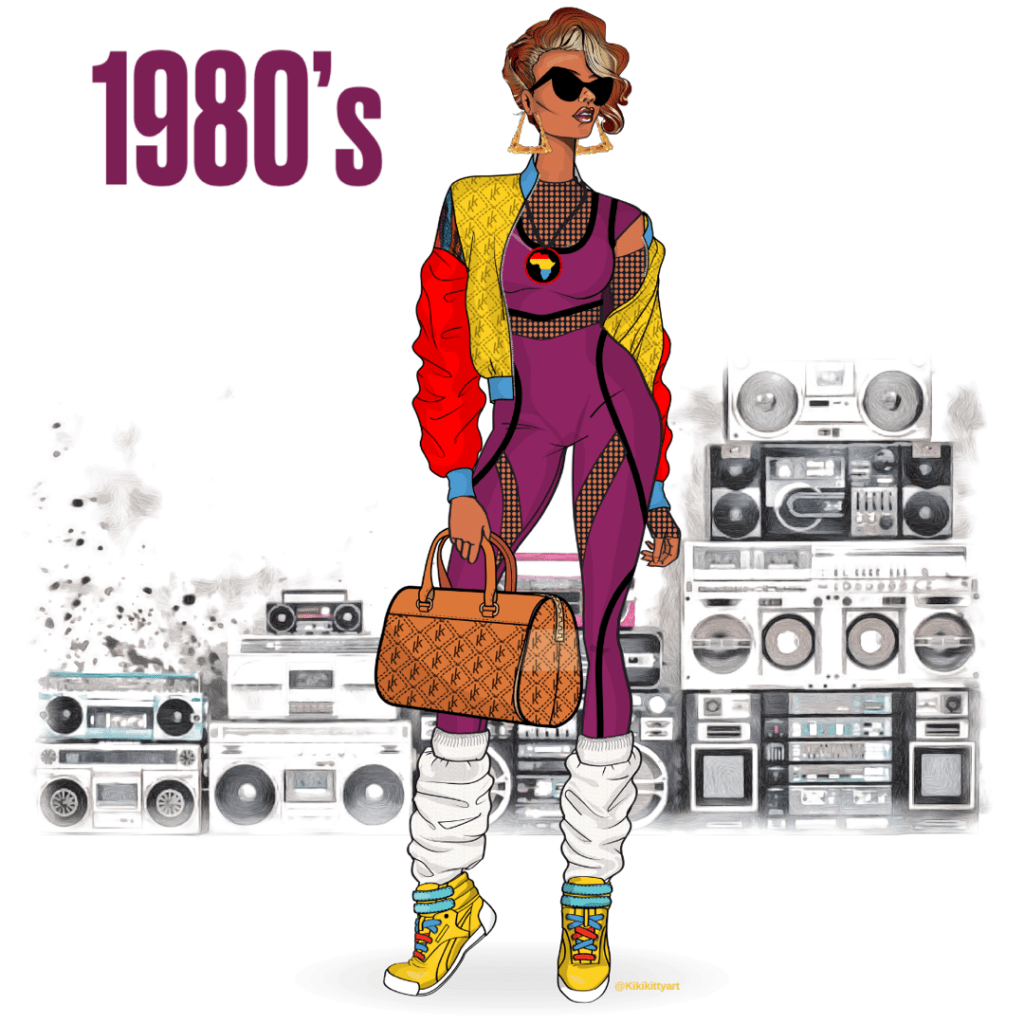
The 80’s

Designs by Kiki Kitty

The 80s were a time in desperate need of artistic exploration and expression. Hip hop was in its infancy and brought about my first opportunity to see the style from city to city every week on Soul Train, Video Soul, Yo MTV Raps.

Dapper Dan gave us Logo Mania by taking materials from bags and creating custom jackets. We began to find new ways of inventing and upcycling. Anything to show off our personality and originality. But whatever you wore, having a giant designer was a must. It was so huge, that it wasn’t an accessory. It was part of the outfit.

The 90’s

Designs by Kiki Kitty

In the 90s, when I left Atlanta to begin my life as an NYC fashion designer. Andre Harrell introduced us to “Ghetto Fabulous”. This movement took ownership of the style trends we created in our everyday life and screamed it from the rooftops. Our favorite rap stars may have been shouting about the brands they wore but be clear, it was the artists themselves, the stylists, the team who altered those garments, added their originality to them and turned them into something entirely new that would influence generations of creators.

This movement brought about the rise of urban fashion. Looks we no longer had to alter to fit our dope style needs. What was once “Dungarees” that were the easiest to rip apart, remix, and put back together was now ripped denim, studded, painted, and patchworked available right from the rack. I remember looking through The Source Magazine and seeing this denim saddle bag. It’s no shock that a bag with those unique curves would be such a huge hit amongst a generation of originators.

The 2000’s

Designs by Kiki Kitty

By 2000 we all had “Carrie Fever” as Jay z rhymed in ’03 Bonnie & Clyde. Patricia Fields whose iconic 8th St shop offered a space for just dope style. Period. It was always less about the designer and more about giving us the vibe and the energy of the city, from the rappers to the club kids and beyond. Luckily for the rest of the world, ‘Sex n the City’ episodes brought the mashup of New York Street Style to everyone’s living rooms. Even if you weren’t a music lover or style hunter you were getting these trends!

The 2000s were all about that Aliyah belly button, that boyfriend style mix with the feminine baby tee, and that pop color pump. The perfect bag had to be small enough to not distract from the belly button ring but large enough for your 2-way pager. It was also the perfect way to add more color to your look, even adding a charm or 2 if you deemed it necessary to make the look more your own.

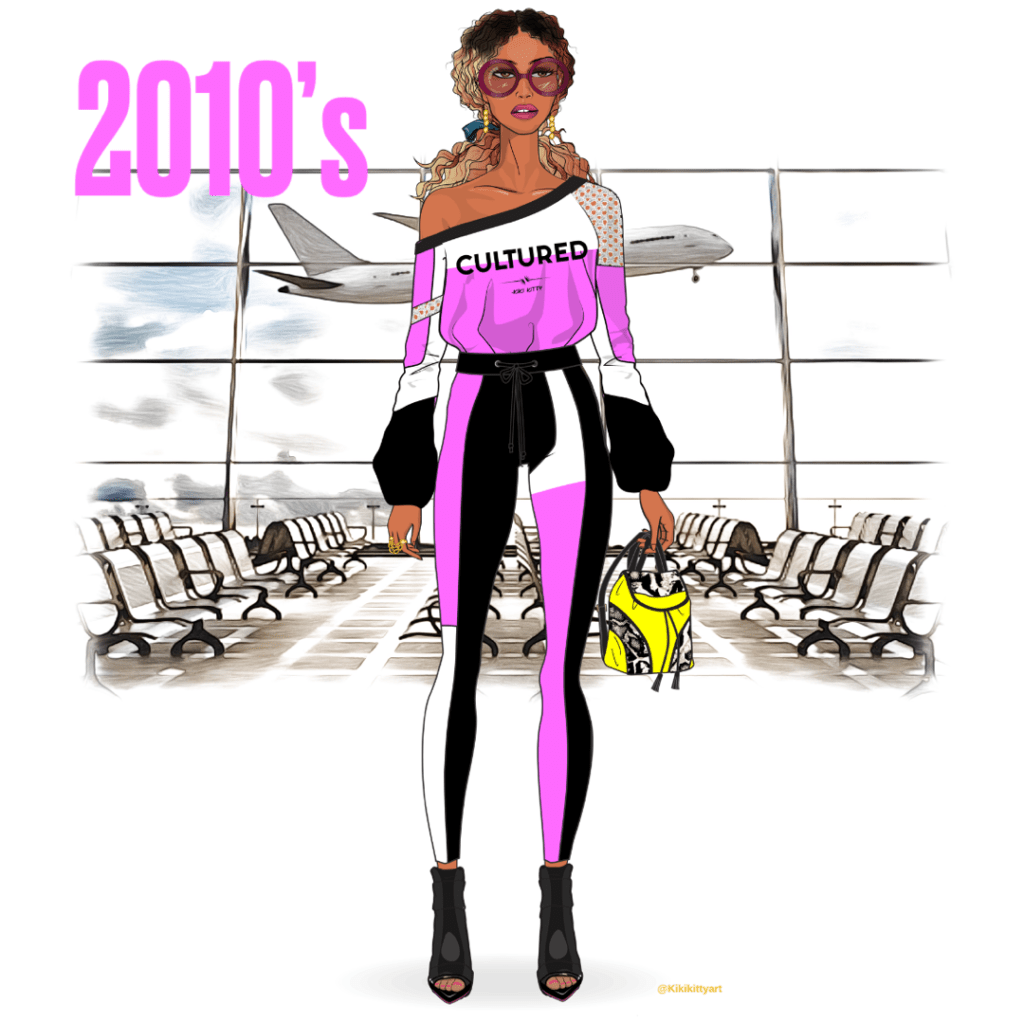
The 2010’s

Designs by Kiki Kitty

Before Insta-minute-to-minute fashion was available we counted on the “Us Weekly’s” to give us weekly updates on what all our favorite celebrities were wearing. Sure, my monthly fashion fix subscriptions remain something to anticipate, but these weekly tabloid mags brought us news of everyday style. Along with this came the rise of celebrity fashion couples and thus began my obsession with Kanye & Amber Rose.

Tracking Amber Rose and other fashionable tastemakers’ everyday styles offered us more bag trends than a typical fashion editorial would offer. So the possibilities became endless!! As a woman on the go, my go-to choice was the mini backpack. I could still get the trendy prints and the femininity of a purse but I could also carry my flats for a long day of running around the fashion district or hold my passport and travel necessities for a flight. The best of both worlds!

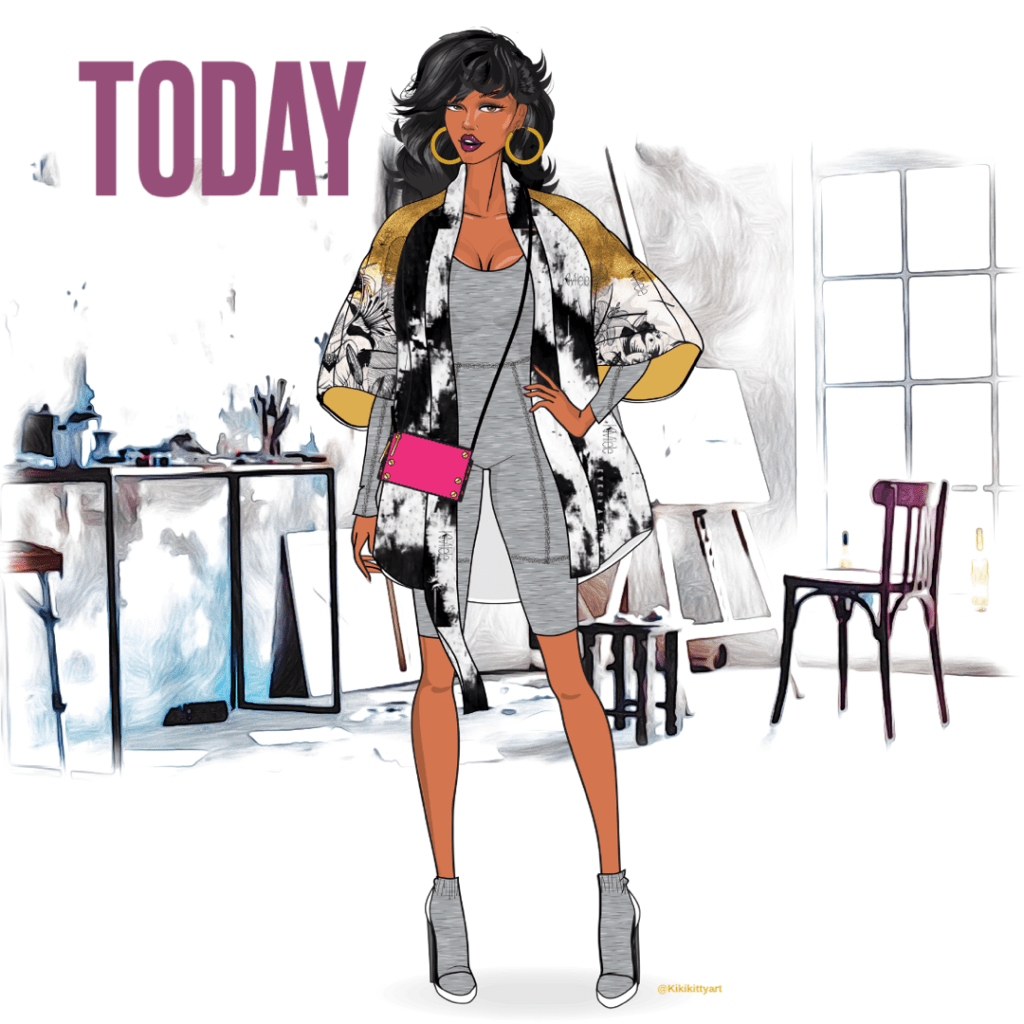
Today

Designs by Kiki Kitty

Girl on the go. 42% of small businesses are owned by Women. That, within itself, is a trend that grows year after year. All 12.3 million of us are busier than ever! With so much to manage all we really need in our bag is our phone and lipstick. The secret to not leaving your bag at that last investor meeting is… lean in, I’ll whisper it to you… cross shoulder bags! Why haven’t we done this all along!!! Even fanny packs are worn across the shoulder. Small is in and just like small business owners, great things come in small packages.

The bags we carry are very personal, it keeps what’s valuable to us safe, and it comes with us to more places than anything else in our wardrobe. Your bag is your shoe’s bestie, the thing that can make or break a whole outfit. When deciding what bag to rock; designer, vintage, or DIY, remember that trends come and go, style is what counts!

Written by: Kiki Kitty, JUKI Designer Ambassador