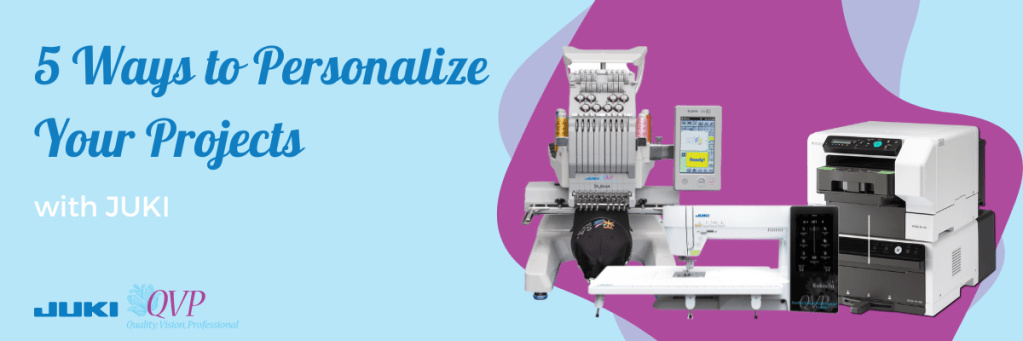
As creators, we love being inspired by other sewist and quilters, but how do we take their inspiration and personalize it? Today we will discuss five ways to personalize your sewing and quilting projects. From adding lettering to printing on designs, there are so many ways we can find a project and turn it into our style. So follow along and check out what machines and accessories we recommend for your personalization touches.
Adding Lettering
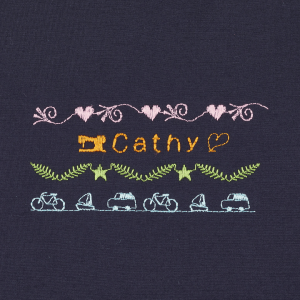
Whether you’re inspired to create a tote bag, or a sweater, adding lettering to your projects can be just the touch of personalization you need! Add your initials with your partners on a sleeve to create the perfect valentines gift, place your child’s name on their new school bag, or gift a quilt with a quote to your loved one using the lettering feature on your creations.
To add this personalization technique, you can use an electric computerized sewing machine that offers lettering, like the Kokochi DX-4000QVP! An electronic computerized sewing machine like the DX-4000QVP offers lettering stitch choices, ranging in different fonts, that will allow you to quickly and easily stitch in your child’s name, favorite quote, or number one sports team name!
Adding lettering is an easy way to personalize your next project and can be done with just a tap of your finger and a stitch!
Adding Embroidery Designs
Using a specialized embroidery machine, you can start adding your designs and bring texture to your projects by adding a touch of your personality! For example, add a cool design to sneakers, pet collars, or even a child’s teddy bear to create a project representing you or the gift receiver.
A machine like the JUKI/Tajima Sai 8 Needle Embroidery Machine is an example of a machine that can offer this feature! With 8 different color options, you can create beautiful flowers, animals, and a scenic view from your last hike. Art is limitless with what you can create on an embroidery machine. Adding embroidery can be an exciting art form when creating personalized projects!
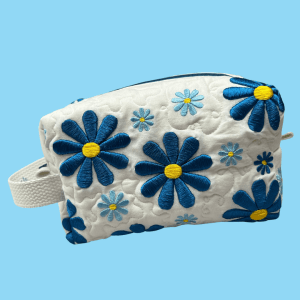
Want to try your hand at embroidering and creating a makeup bag? Learn how to create this makeup bag with our JUKI Ambassador Nicole Moore here!
Designing Your Fabric
Have you found yourself wanting a specific fabric design? Been drawing some designs of your own? Then take the leap and design your own fabric! With a machine like a Direct-To-Garment printer, the options in patterns and designs for your projects are now endless, thanks to the ability to design your own fabrics right from your studio.
The RICOH Ri 100 can help you print your art designs and patterns onto fabric easily and quickly. From canvas fabrics for your tote bags to cotton for your memory quilts, enjoy the freedom of designing and creating anything for your imagination, and enjoy a material that no one else would have!
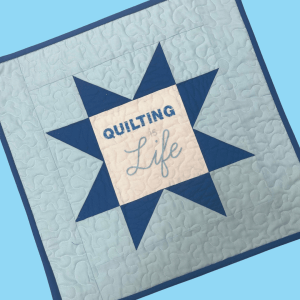
Try your hand at printing your own fabric with this east mini quilt project! Learn how to create your own with our JUKI Ambassador Nicole Moore here!
Adding in Photos
Whether it’s a family photo or a memory from your favorite trip with friends, adding a memory photo to a project like a t-shirt or a quilt is a great way to personalize your projects! Whether you’re embroidering designs with free motion quilting, using a Direct-To-Garment printer, or using an embroidery machine, there are limitless ways you can get to designing and including your photos in your projects.
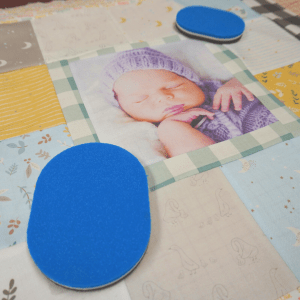
Our favorite projects are memory quilts users create with photos! From sweet newborn gifts to anniversaries and holidays, a quilt created with personalized love is an excellent idea for your next gift project! Using a machine like our Direct-To-Garment printer, the RICOH Ri 100 can easily print and place your photos directly onto the fabric you’re creating, letting you put your focus on your quilt block designs.
Want to create your own memory quilt like the one shown for your loved one? Follow along here to learn more here!
Creating a Set
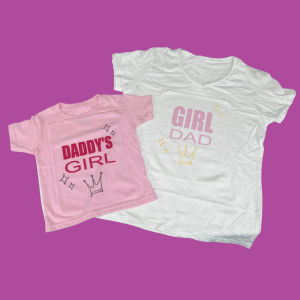
One of the best things about personalization is the freedom to be creative in what we embroider and print on. Personalize your next gift by creating a matching set! Whether it’s a set of make-up bags for traveling, or a matching set of t-shirts for the father and daughter duo, sets can be a fun gift that allows you to try different project ideas.
One of the best ways to create sets is to intermix your work! Print on your fabric, embroider your design and sew it all together to create something unique and different. Whether your project is small, like a glasses case, or large, like a king quilt, adding these touches of personalization will bring the whole idea together!
So the next time you create a project, add your name, embroider a design, or print on a pattern and show your personality when showing off your project!
Want to try your hand at creating a matching set? Check out our Daddy and Daughter duo set project here!
Want to personalize your next project? Then, visit us here today to find your nearest JUKI dealer!
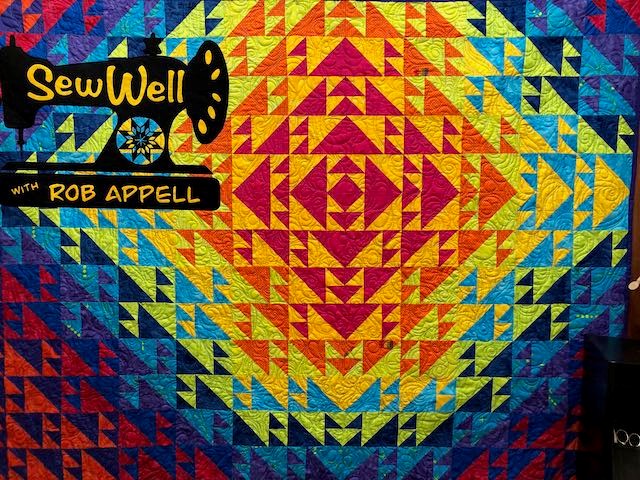
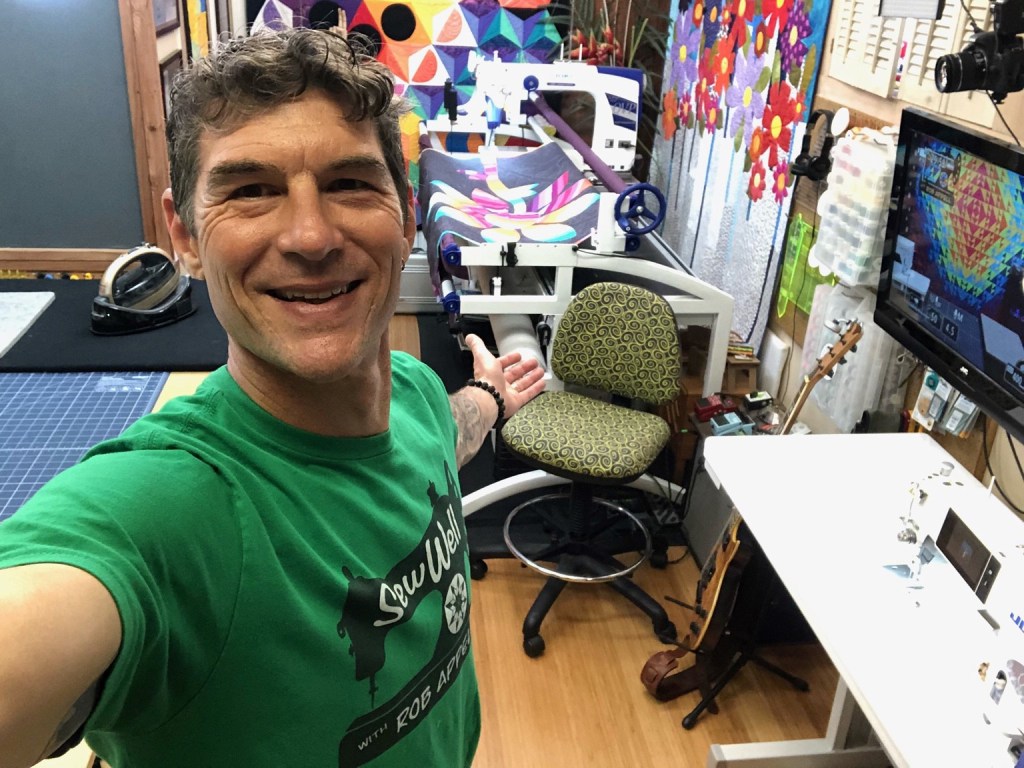
You may recognize this month’s spotlight from “Michael Miller Fabrics Making It Fun” or “Man Sewing,” we’re so excited to spotlight our JUKI Ambassador, Rob Appell, during National Sewing and Quilting month! In today’s blog, we get to speak with Rob about his journey in quilting, his passion for the craft, and how he came to be where he is today.
Robs journey in quilting began when he moved back home from college, spending his free time outside and snowboarding. His mother, the manager and eventual owner of the local quilt shop brought Rob into the business, where he started as a clerk. When his mother began bringing in machines to sell, Rob eventually shifted to machine repairs, and here is where he started falling in love with sewing!
Creating fun Hawaiian shirts as his uniform for the quilt shop, he found himself having fun making them and eventually began looking into patchwork quilting. A fun and easy way to pick up quilting, he began testing his skills in free motion quilting his projects. Again, finding himself loving the hobby. The rest, as they say, is history!
Since he began to quilt, Rob has accomplished a published quilt book, starred in and hosted multiple quilting YouTube shows, created a community for his teachings, and so much more! His videos encourage new quilters to be creative and enjoy their projects! With a focus on basic techniques, his hope when he’s creating for viewers is that they find something they can take away from his lessons and learn how to make their versions.
Recently starring in ‘Michael Miller Fabrics’ Making it Fun,’ you can follow along with his high-energy videos and view the different patterns and free motion quilting techniques Rob uses. While he offers some design patterns and templates for quilters, his work mainly focuses on organic creation. Going with the flow, his work often doesn’t follow design patterns; the finished design patterns he has sold usually come from these organic works he’s completed after the fact!
“The Free Motion Quilting, I prefer to go freestyle, no pattern, sometimes a plan, but usually pretty random and free.”
Quilting didn’t take him away from the outdoors he loved. Combing two of his favorite things, Rob is known for his landscape quilts. These beautiful pieces focus on nature and showcase views in bright colors. In fact, in 2009, Rob created 12 different quilts that featured faces of endangered species. Using the patterns from his work, he was able to fundraise and advocate for these species through sales that went toward endangered species charities.
He also authored a pattern book, “Making Waves … Adventures of a Surf Quilter,” a self-published print book featuring his landscape and seascape quilts. Early in his quilting journey, Rob was known for his scenic creations. Then, using free motion quilting and applique, he would add fun designs like fish, coral, rocks, lighthouses, ships, and more! Then, bringing in his love for surfing, he created a piece that intertwined surf terms with quilting terms, going above the average and setting himself apart.
Now, as someone who’s been quilting and creating those quilting videos we love for years, we asked Rob what keeps him going. “Videos are free and can be viewed over and over again if you’re learning from them. I love to present my passion for quilting.” Rob likes to focus on basic quilting techniques because he’s often reminded of how many new quilters have emerged in the community over the years. Thanks to video cameras and social sites like YouTube, where Rob hosts, he can teach how to construct quilts and the basic skills all quilters want to know. Keeping himself motivated with fun fabrics and the creative process has pushed him to bring that energy into each episode’s studio. Thankful for the following he’s gained on YouTube that keeps him going!
He recently created a new quilt, the “Synergy Remix,” designed by Kristie J. Smith in her pattern book, “Splice Magic,” that he loved! Always excited to try out new and different quilting techniques, like he encourages his viewers, Rob locked himself in the quilt shop, Stitchin’ Heaven, his latest collaboration where he’ll be hosting new quilting episodes, and went to work! In one night, he created a quilt and video, maligning the entire project and finishing it. Yet, this project places a smile on his face when he thinks about it.
While Rob has gone on to try other ventures, like his work in textile design with Free Spirit Fabrics, he vouches for his love of quilting. Sharing his love of fabric and free motion quilting, he focuses on his desire to quilt the top to push him through the construction process. Recently, he’s begun focusing on improving his precision in his patchwork! By creating little half-square triangles and trimming them up, he’s found joy in practicing his skills.
Always learning and growing, Rob has begun a new journey in his quilting career with Stitchin’ Heaven! As their new YouTube manager and Content presenter, he’ll be able to create a team of quilt lovers like himself who can share their passion for the craft while teaching others worldwide. Stepping back from handling all processes by himself, he’ll now have quilting friends who will help him create new and exciting projects for viewers like you. We’re excited to see the different techniques and quilting styles that will emerge from this new partnership!
“The thing I love most about the quilting industry is that there is so much for everyone.”
With the quilting community constantly growing as new members find their passion for the hobby, we asked Rob what advice he has for JUKI Quilters. “Get to know your machine, spend 7me learning the nuances, understand what the different feet do and when to use them. Then, remember – this is a hobby, not a race. Please slow down to enjoy the process.” When you enjoy the steps to what you’re creating and take a moment to appreciate each technique you’ve picked up, you’ll truly enjoy the finished project. As Rob mentions, so many people need something positive in their lives. Take the time to find your passion, teach and work with others in your quilting community, and enjoy the process.
We hope you enjoyed learning more about Rob with us, and we hope this inspires you to join him on an online video one day and check out quilting! A hobby for everyone, we hope everyone enjoys National Sewing and Quilting month with a fun new project!
Today we’ll go over some essential tools and presser feet you’ll need to create a quilt from start to finish. When we start a hobby, we might want to grab every item we see at the shops, so follow along as we share the important ones you should grab first!
Tools to Have in Your Kit
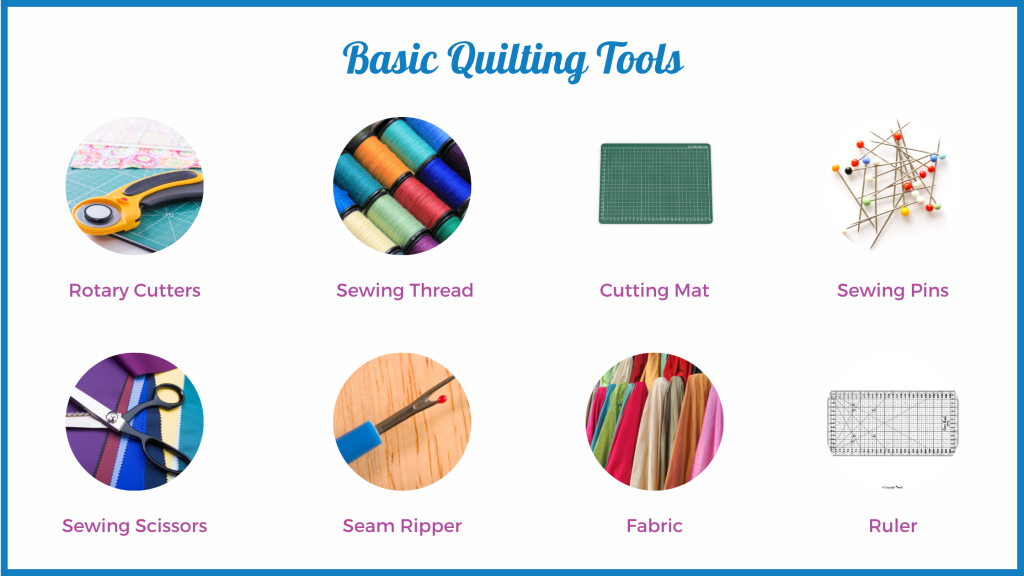
Rotary Cutter: Shaped like a pizza cutter, the rotary cutter is perfect for cutting out your fabric pieces. If you’re using patterns for your work, using a rotary cutter is an easy and quick way to correctly cut the fabric piece to the size and shape you need. These come in different sizes, ranging from small cutters that are great for tight cuts and a large one for big projects! For quilting, we recommend purchasing a medium-sized one.
Scissors: Besides your rotary cutter, ensure scissors are designated for cutting fabric. You want to keep these separate, so they stay sharp for cutting thread and fabric cleanly. So often, when we mix our scissors and cut items like paper, cardboard, or more, this dulls the blade, fraying your material in the long run when you use them.
Seam Ripper: Make sure to keep a seam ripper on hand for those mistakes! Advanced and beginner quilters benefit from this in their tool kits since it is perfect for fixing those little mess-ups.
Self-Healing Cutting Mat: Keep your workspace safe from scratches and find yourself a self-healing cutting mat! This will allow you to use your rotary cutter safely and can be found in many different sizes.
Fabric: Sewing isn’t complete without fabric! There are many options out there for quilters to choose from. You can choose to buy fabric by the yard or purchase bundles! We recommend sticking to 100% cotton. Choose from mini charm packs, jelly rolls, jolly bars, and more, depending on the size of the quilt you want to create and what form of designs you envision.
Thread: Like your fabric, look for a thread that suits your project, like 100% cotton for quilting. Look for options that are durable and not too cheap. Here you’ll want to find a thread that won’t birds nest on you in the creative process while sticking to your budget. For quilters, we recommend Aurifil! Like we use in our JUKI Studio when creating, Aurifil is 100% Egyptian cotton and comes in many colors, perfect for your project needs. We recommend purchasing neutral colors when you begin, like tan, white and black; this way, you can easily bind most of your projects without worrying about the thread color.
Pins and Pattern weights: When you want to keep your fabric in place, using quilting pins and pattern weights is a great solution! Use quilting pins when piecing your quilts to keep the fabric from moving, and use pattern weights when cutting out the fabric with your rotary cutter! These two accessories will make your cutting and sewing experience easy and help you create a professional finished product.
For pins, try and look for longer options, as this will help you hold the fabric better when sewing through those thick pieces, and they are also much easier to grab! You can also purchase safety pins, which come straight and curved for the finishing stages of your quilt process.
Rulers: Clear-gridded rulers are important in quilting because measuring correctly matters! Helping you quickly and accurately cut fabric for your project, rulers come in an array of size options suited for your needs.
Presser Feet for the Average Quilter
While your machines will come with presser feet, let’s go over some basic presser feet you should have on hand when quilting and what they’re for!
1/4″ Presser Foot
Essential for piecing your quilts together, the 1/4″ Presser Foot allows you accurately piece your quilts together quickly and efficiently. This accessory is perfect for when you’re piecing and don’t have time consistently mind the bottom measurements on your plate.
Walking Foot
A Walking Foot is basically used for putting a set of feed dogs on top of the quilt sandwich, working in conjunction with the bottom feed dogs, and evenly helping you pull your quilt through the sewing machine. Quilting with a standard presser foot on thick fabric or hard-to-feed material like the ¼” Presser Foot, for example, could lead to tucks and uneven stitches; this is why we use a Walking Foot!
Free Motion Quilting Foot
Want to add designs and texture to your quilts? You’re going to want a Free Motion Quilting Foot! With a Free Motion Quilting Foot, you will drop, or lower, your feed dogs and begin moving your quilt under the foot, free motioning the design yourself! While it takes practice using free motion quilting and controlling the quilt yourself, it can be an enjoyable and rewarding skill to learn!
We recommend checking out an Open Toe Foot when looking for your Free Motion Quilting Foot. With a small space left open on the presser foot, you’ll have a better eye on the needle and be able to easily create your designs!
Get To Quilting!
As you begin your quilting journey, research what tools you’ll need when creating! These listed are perfect for setting up your workspace and machine, so keep these in mind while you’re at the shop. If you’re an experienced quilter, what presser feet and tools do you think quilters should keep on hand? Let us know down below!
Do friends and family members ask for you to make quilts for them? Is someone asking where you got that pillow that you quilted yourself? Sometimes, when we get good at our craft, we find people who want to buy our work. That’s when a business starts to grow, so where do you start?
Today we’re going to dive into how you can start your own at-home quilting business. Now, a quilting business doesn’t mean you have to create projects endlessly; in fact, there are possibilities in pattern creation, custom requested works, and more. In this post, we’ve pulled together some steps to make your own quilting business and how to start.
Create Your Business Plan
While a business can start with some scribbled plans in your notes app, creating a successful one without a real plan is much more challenging. Businesses, large and small, begin to see success when some serious planning and budgeting is put into play. A business plan is a roadmap you create for your company.
Business plans should include:
Description of your business
How do you plan to manage it
The products and services you plan to sell
Market and competitor research
Budget and finance plans
Marketing and advertising plans
All of these things can be completed by you, but if you decide to build your brand and go legal, look for a professional who focuses on small businesses. They can help you decide on a business structure that’s best for your plan and are more likely to have contacts that can help you in finance and marketing matters when you need it. Need help creating your plans? Keep up with JUKI Business Plus blog posts to help you start your business here.
Getting the Right Equipment
Now that you have your business idea in motion let’s start thinking about the equipment you’ll need for your small business.
The Machines
The best thing about quilting is it doesn’t require a specialty machine. There are two basic types of machine quilting that quilters can access on most sewing machines—straight line and free motion.
Straight-Line
This type is best accomplished by replacing a regular presser foot with a walking foot and even feed foot. A walking foot is a specialized pressure foot that grips the top of the quilt sandwich, advancing it through the machine at the same rate as the quilt’s back, which touches and is moved along by the sewing machine’s feed dogs.
A machine like the TL-2010Q is perfect for basic straight stitches and piecing. However, a free motion quilting machine like the TL-18QVP or Miyabi J-350QVP is required for designs like curves and intricate patterns.
Free Motion Quilting
With free motion quilting, you’re able to create intricate designs as if you had hand-stitched them into the quilt. Learning FMQ takes time, but many resources are available that teach you to create unique designs.
For FMQ, the machine’s feed dogs are lowered, meaning nothing is in place under the quilt sandwich to guide it along. The quilter is in total control of the motion. Now your speed and how fast you run the sewing machine work together to determine stitch length. You have options on sewing feet like a darning foot or a special foot for machine quilting. Remember that special feet resemble a darning foot but have larger openings.
A machine like the Miyabi J-350QVP is perfect for free motion quilting since you have a large workspace and can use the machine bars to move and design intricate pieces.
What to Sell
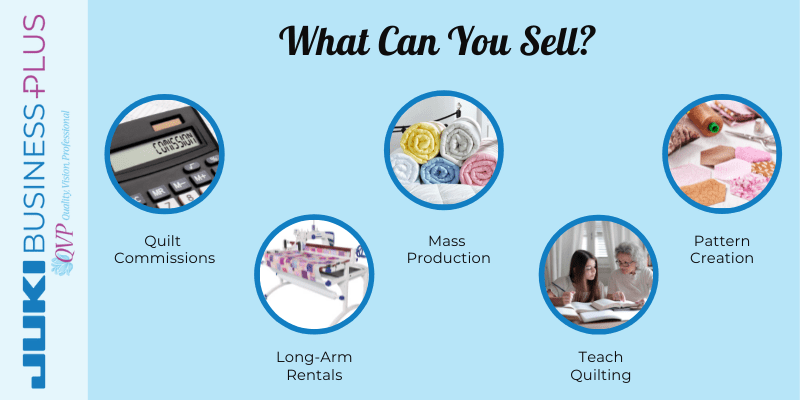
If you’ve thought about opening your quilting business, you probably already have some ideas set aside on what you would sell in your shop. However, there are so many ways to make money with your long-arm or sewing machine, so let’s review some options for what you can do with yours!
Quilts Commissions
Not everyone has the skills for quilting, and that’s where quilters like you come in to help! With so many quilt lovers in the world who don’t have the time and skills to create their ideas, you can offer services for making custom quilts. A venture like this is excellent because of revenue, as shoppers pay well for handcrafted personalized items.
Mass Production
Use that machine! Mass production doesn’t have to mean creating 100’s of quilts, but instead using simple designs and creating multiples of the quilt to sell in marketplaces or e-shops. Also, not every quilt has to be unique, as many homeowners enjoy simple pieces they can add to family rooms and bedrooms.
Patterns
Owning a quilting business doesn’t mean just selling quilts. Many quilters love to try their hand at creating new projects. Create patterns and upload their PDF files onto your site! By selling physical copies to your local quilt shop, you now have a product that people can continually purchase that doesn’t require you to quilt!
Long-Arm Rentals
Do you have a long arm at home? Many quilters work on domestic home machines, meaning they don’t have that large workspace long-arm quilters have. Offer long-arm rentals to local quilters for hourly rates, and enjoy that time to work on other projects. You can also offer your skills for rent and finish quilts for others on your long arm.
Teach Quilting
If you’ve been quilting for years, attended quilting classes yourself, and find yourself teaching friends and family, look into teaching! Contact your local quilt shop’s favorite sewing brands, or start your own social media channel. There are always new quilters in the world looking for instruction, and with technology, you can offer online and in-person education.
How and Where to Sell
Now that you have an idea of what services and products you can offer let’s discuss how you will reach your audience and sell to them. In our day and age, many small businesses begin on social media platforms or e-shops.
Social Media and Sales
The best way to reach your audience is through social media platforms. Easily accessible and free to use, sites like Facebook, Instagram, Tiktok, and more have opened up new sales channels for small businesses. One of the first things you should do when starting a side-hustle is set up a business or company page. Many customers now run to social media sites to see if your company is legit before ordering. In addition, these sites offer customers the opportunity to see what kind of products and services you offer, customer reviews, and so much more.
Social media sites now offer selling points for businesses as well. Facebook marketplace, for example, is perfect for selling home goods. Anyone can post an item for sale, and you can hit niche markets easily by discovering pages and groups for specific topics. Facebook marketplace does hold guidelines that sellers must abide by when selling, and can be found here. (link guidelines)
Instagram offers its version of an e-shop now as well. With Instagram shopping, you’re able to post products for sale directly onto your Instagram account. Think of this as a digital storefront for your shop. You can include graphics, videos, shopping tags, and more to drive sales. It also allows you to place full product descriptions, advertisements, and more. However, unlike Facebook, there is an approval process for selling on Instagram’s shop. To have a shop on Instagram, you need a business page, Instagram shop approval, and a small fee is applied.
Remember that you don’t need to invest money when selling on social media off the bat. Instead, you can focus on organically growing your business by word of mouth, using engaging posts, and attaching hashtags to your descriptions.
E-Shops
If you feel you’ve outgrown selling on social media sites and want to upgrade, the next step we recommend is researching e-shops. Now there are multiple options when it comes to opening an e-shop, so we gathered a few of the top ones below:
eBay: This eCommerce site has been a go-to for sellers since 1995. With the ability to sell any form of product and service, you can sell services like finishing quilts, or you sell your hand-made projects. Their fees include non-refundable product/service listings and fee charges if you’re placing your product in multiple categories for sale. The perks of this site revolve around its popularity. With eBay constantly having high traffic, your items can easily be accessed by customers all over the country.
Etsy: Artisan-focused and highly popular, Etsy is the perfect e-shop location for someone opening their small business. This site allows you to promote and sell your handcrafted products at low fees. Listing fees are $0.20 for each item and will last for four months. This site is great for upgrading their shops but isn’t ready to fully commit to a website.
Shopify: Shopify is an excellent option for those opening their first e-shop. With Shopify, you can create a website to sell your products and customize the site to your aesthetic. This is a significant step when building your credibility as an established business! Everything is now done on this site, from placing products and selling to handling inventory and processing payments. Shopify comes with a monthly fee from a Basic package of $29 to an Advanced package for $299.
In-Person Sales
If you’re someone who enjoys selling in person, research your local farmer’s markets and artisan fairs! You can purchase a shop space and sell to new customers you wouldn’t have reached online by communicating with these event planners. These events do require a larger budget and should be planned accordingly. Keep in mind the furniture you’ll need to showcase your products, how you’ll handle money, and other variables like food, inventory, and more. ‘
Get To Work
Now that you have a basic rundown of what you need to start your new side business, it’s time to sit down and plan! Circling back to the start of our planning, it’s time to create that business plan. Remember to include your product/service plan, marketing plan, budget plan, and finance plan. Starting a business plan is like building a roadmap. Follow the roadmap, and you’ll have a much higher chance of reaching your destination, a thriving business, than trying to jump into this with a few notes written down.
We hope this has been able to help you get a clearer vision for your future quilting business! So if you’re looking to start your own quilting business, join us here to learn more about JUKI Business plus and how we can help you today!
From quilting to bag making, Flower Sew has you covered! Today we’re meeting up with Daisi Toegel, Flower Sew’s shop owner. In 2017, Daisi founded Flower Sew only one year after learning how to sew. Flower Sew began as an idea out of curiosity for the sewing world. After watching endless videos of other sewists creating bags and projects on video sites, Daisi found herself wanting a sewing machine to start her journey in the community. A year after seeing these videos, Daisi’s boyfriend surprised her with a sewing machine to begin, and the rest was history.
Daisi went on to practice and practice some more after receiving her gift. Finally, a year after receiving her gift, Daisi began constructing bag patterns, creating and selling them. Since completely self-teaching herself, she sewed and sold bags for three years at her local craft fairs and on her online e-shop, Flower Sew, named after her now husband’s pet name for Daisi, Flower.
After three years of focusing on bag creations and patterns, 2020 changed the course of Daisi’s business. She began creating and selling masks during the pandemic, creating and designing over 2,000 masks. Daisi, later on, realized she wanted to take a step back from sewing masks and find a new craft within the sewing world. So she began venturing into the quilting world, where she taught herself to quilt, and began expanding her knowledge and business along the way.
Taking a step back from her bag-making days, Daisi jumped into the quilting world head-on. Using her social media platforms, she began sharing her progress and work with her followers, re-building her brand along the way.
Now focused on quilting, Daisi has held six ambassador roles over the years that range from small notions to beautiful fabrics. These programs helped her not only grow her business but allowed her to make connections in the sewing and quilting community.
After discovering her passion for creating quilts, she moved on to pattern designing, a hobby she had picked up in her bag-making days. When she started patterns for her bags, she was inspired to design something different and new. Quilting was no different. She bought a design program and began drawing! Starting small, Daisi began with baby-sized quilts and built herself up through trial and error. Through this practice that she’s been able to create seven patterns; 4 on her own and 3 in collaboration with different craft and sewing magazines. Many of her patterns interwork the ambassador programs she’s involved with by including their notions and fabrics.
As someone who’s been able to grow her business and obtain credibility from other sewing and quilting brands as an ambassador, we asked Daisi what advice she has for those out there trying to build their brand.
“Forget about money. In the beginning, it’s all about gaining value and confidence before you gain any money. If you need to give your time, work, or product for free, do it. The reward is certain, just know everything has its own time to come. Being an ambassador doesn’t involve anything but receiving products in exchange for your time and work, and it is the most wonderful experience I have had in the quilt world; it’s fun, and I learn a lot. There’s nothing that says that.”
Daisi’s brand continues to grow each day through her social media channels filled with new pattern works, projects, and her quilt progresses. What makes Flower Sew unique is the designs and patterns created by Daisi, inspired by ideas that bring her happiness and not trends. Focusing her attention on bright colors and fun designs, Daisi’s page is filled with bright fabrics and colorful looks. As she continues to grow her skills in quilting, we’re looking forward to seeing more patterns released!
The future of Flower Sew is blossoming beautifully! Daisi’s plans for her small business include more original pattern creations, with the hope for a pattern book soon, and continuing her ambassador programs with new possible positions. Currently, a sketch is in motion for membership for Daisi’s business, but we’ll have to wait and see for that one JUKI lover!
We hope you enjoyed getting to learn more about Flower Sews and its owner Daisi Togel! When you’re building your brand, learning skills like pattern designing or diving into ambassador programs are great ways to get yourself out there and grow your business. We hope reading Daisi’s story in how her business has grown and changed over the years inspires you to begin yours!
To follow along Daisi’s journey, follow along below.











 sewinwithjuki.com