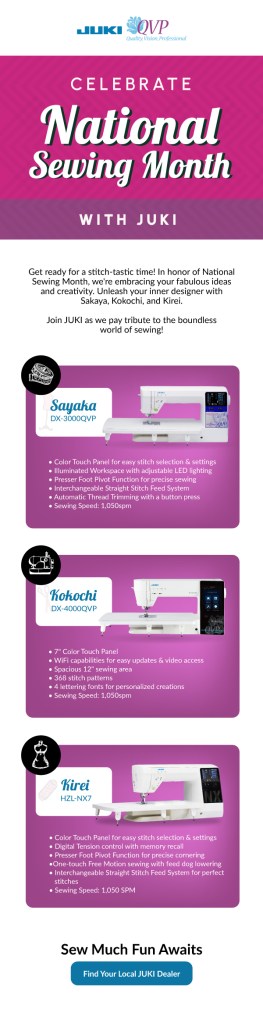
Celebrate National Sewing Month with JUKI!

Get ready to stitch up a storm this National Sewing Month with JUKI! 🧵 Dive into the world of creativity and craftsmanship as we celebrate the art of sewing throughout September. Whether you’re a seasoned seamstress or just starting to thread your needle, JUKI has something special in store for you.

Discover the magic of precision and innovation with our top picks for sewing enthusiasts. Explore the exquisite Sayaka DX-3000QVP, a machine that seamlessly combines technology and tradition, elevating your sewing experience. Take your skills up a notch with the Kokochi DX-4000QVP, designed to empower your creativity with its versatile features and impeccable stitch quality.

For the ultimate sewing journey, meet the HZL-NX7 – a machine that redefines sewing with its cutting-edge capabilities. Unleash your imagination and let your ideas flourish as you experiment with this exceptional machine.

Join us in celebrating National Sewing Month and discover the joy of bringing your visions to life stitch by stitch. Whether you sew for passion, profession, or relaxation, JUKI has the perfect companion for your creative endeavors.

Sew Like a Pro: Your Step-by-Step Guide to Becoming a Fashion Sewist!

Embarking on your first clothing sewing project can be an exciting and fulfilling experience. However, it’s essential to know a few things before diving into the world of garment construction. As a beginner sewist, knowing these key concepts and techniques will set you up for success and promise a smooth sewing journey. In this blog post, we’ll explore five things every beginner should know before creating their first clothing project. Let’s begin your path to becoming a confident and skilled sewist!

As a beginner, choosing sewing patterns matching your skill level is important. Begin with simple designs that have minimal pattern pieces and straightforward construction techniques. Look for patterns labeled as “beginner” or “easy.”

These patterns often include clear instructions and diagrams to guide you through each step. Starting with simpler projects will build your confidence and help you understand the basics of garment construction before moving on to more complex designs. Some options for patterns we recommend for beginner sewists are skirts, shorts, dresses, or even bucket hats!

Beginning with projects that are easier to create will set you up for success! Remember, it’s okay to start small. You don’t have to make a whole outfit for your first project! Check our simple and fun pattern options you can try on our project page here.

Before starting any clothing project, taking accurate body measurements is crucial. Measurements serve as the foundation for choosing the correct pattern size and ensuring a proper fit. Use a flexible measuring tape to measure your bust, waist, hips, and other relevant areas, following the pattern’s measurement guide.

If you’ve never measured yourself before for clothing, refer to online tutorials or sewing books for guidance on how to take accurate measurements. Remember, a well-fitting garment begins with precise measurements! Make sure to have a measuring tape and some fabric chalk to mark your spots when you’re ready.

Another great way to get measurements is by using pieces in your wardrobe that you already love and following their style and sizing.

Choosing the suitable fabric is vital to the success of your clothing project! As a beginner, it’s best to start with fabrics that are easy to handle, like using cotton or linen. These fabrics are stable, have minimal stretch, and are forgiving when it comes to sewing mistakes. Consider the fabric’s weight, drape, and care instructions before creating your project.

Make sure to note down any recommended fabric types mentioned in the pattern instructions. The recommended fabric is because the project’s final look might be for outdoor weather needs, additional stretch, or even more flow! Remember how you want the final outcome to look will influence what fabric you’ll create with.

Additionally, prewash and press your fabric before cutting to avoid shrinkage or distortion after sewing!

Before tackling a clothing project, familiarize yourself with essential sewing techniques! Take some time to practice straight stitching, backstitching, and pivoting at corners on pieces of fabric you plan to create your project with. This way, you can familiarize yourself with the weight of the fabric and the speed you feel comfortable stitching.

Learn how to sew darts, gather fabric, insert zippers, and sew seams with different seam finishes. Knowing these techniques before you start the project will help the process go smoother, allowing you to add embellishes like a dress zipper closure or a button on the cardigan you’ve designed.

Understanding these basic techniques will ensure your garment’s construction is sturdy and professional-looking. Use online tutorials, sewing books, or even take a beginner sewing class at your nearest JUKI dealer for hands-on experience and guidance.

Attention to detail will elevate any project you create as a sewist. Depending on the fabric and your machine’s capabilities, take the time to finish your seams neatly, either through zigzag stitching, serging, or French seams. Press your seams as you go, use a steam iron, and achieve a polished and professional finish. Consider using interfacing on collar or cuff areas for added stability. Remember, the small finishing details significantly impact the overall look and longevity of your new closet piece.

If you’re a beginner sewist venturing into the world of clothing projects, understanding these key concepts will set you up for a journey of joy. Start with those simple patterns, learn and practice taking accurate body measurements, learn how to select appropriate fabrics, master those basic sewing techniques, and take the time to add those finishing details.

With these things in your pocket, you’ll be well on your way to creating beautiful, well-fitting clothing pieces you’ll love. Enjoy the process, embrace the learning curve, and don’t be afraid to make mistakes. Happy sewing, and may your first clothing project be the start of a rewarding sewing journey!
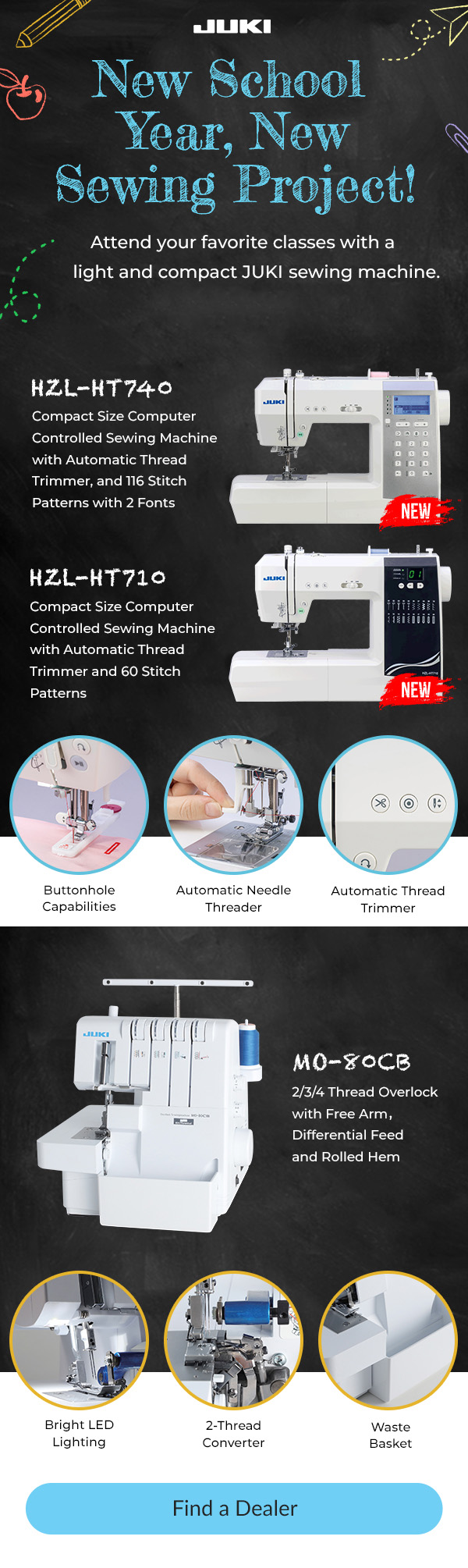
New School Year, New Sewing Project!

Get ready for the new school year with JUKI this August! We are thrilled to introduce our latest additions to the JUKI family: the HZL-HT740 and HZL-HT710 computerized sewing machines. We also can’t forget a great class serger, the sleek and efficient MO-80CB.

Attend your favorite classes with the perfect companions – these light and compact machines are ready to make sewing a breeze. The HZL-HT740 and HZL-HT710 offer cutting-edge technology, ease of use, and a wide range of stitching options to unleash your creativity. Pair them with the MO-80CB serger to achieve flawless finishes and professional-quality results on all your sewing projects. Don’t miss out on this fantastic opportunity to upgrade your sewing experience – seize the chance to enjoy the new year and embark on your sewing journey with confidence!

Know Your Needles with JUKI

When creating, you may wonder, what needle should I use on my machine and project? Today we will give you a lesson on needles and what you need to know before you start sewing your next idea. Understanding what needle you need will help you create without the mess of skipped stitches, a thread coming loose, a pucker in your fabric, and so much more. Let’s start from the bottom and work up to picking the right needle.

How do you read the needle size?

Depending on your fabric, you’ll want to find a needle that can puncture the fabric well but not tear it when you are sewing.

The needle size ranges from small to large, and each sewing machine needle will have two numbers etched onto it. Usually separated by a slash, these numbers determine whether it is a heavy-duty needle. 60/8, for example, is a lightweight needle suitable for cotton. At the same time, 90/14 is a heavyweight needle good for vinyl. 

Now what do those numbers mean exactly? The first number is measured in the European/Number Metric (NM)/International system, for example, the 60 in 60/8. The metric number usually increases by 5 or 10 when you need to size up your needle for heavier fabric. Home sewing machine needle’s most common metric size is between 60 and 130.

The second number is measured in the American/U.S./Singer/Imperial system, for example, the 8 in 60/8. For your home sewing machine, the most common imperial size needed is between 8 and 21, and the needle sizes usually increase by 1 or 2.

How do you choose the right needle?

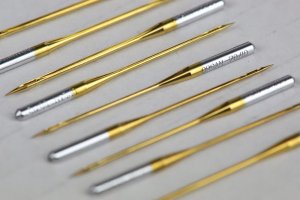
There are a few brand options for sewing machine needles, but today we will discuss Organ needles. When choosing a needle, our best recommendation is to pick the smallest one possible for the fabric you’re working with. Needles will leave holes in your fabrics as it goes, so you want to minimize the view of them.

Now know you’ll need to find the right needle for your fabric, we’ve compiled a list of fabrics and the recommended organ needle size to use when creating.

Fine Fabric: Silk, chiffon, and lace

  • Silk 55/7; Microtex 60/8 and 70/10

Lightweight Fabric: Cotton or spandex

  • Universal 80/12; Jersey 70/10 or 75/11; Super Stretch 75/11

Medium-Weight Fabric: Linen, fleece, velvet

  • Universal 80/12 or 90/14; Jersey 90/14; Super Stretch 90/14

Heavyweight Fabric: Leather, canvas, denim

  • Jeans (blue shank) 90/14 and 100/16

Very Heavyweight Fabric: upholstery or heavy denim

  • Titanium 90/14; Jeans (blue shank) 110/18

For all needles, including Organ needles, these are things to keep in mind:

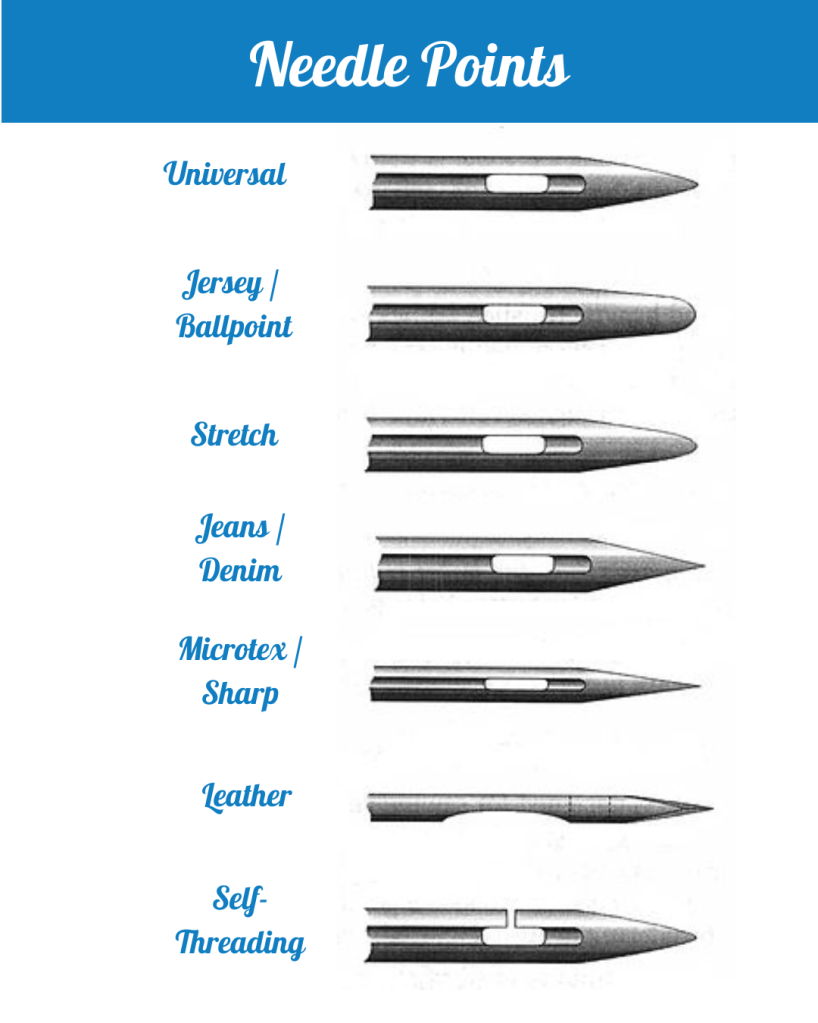
  • Universal Needle is the most commonly used needle on a home sewing machine. It can be used on woven fabrics, synthetics, and knit fabrics. A universal needle should use polyester, cotton, or silk threads.
  • Ball Point Needle: with a rounded tip on the needle, this is commonly used for rib knits, interlock, cotton knits, fleece, double knit, and most knit fabrics. This is because the ballpoint pushes the fabric fibers apart rather than cutting them, preventing stitch runs.
  • Stretch Needle: with a scarf tip, this needle allows the hook to pass by and prevent skipped stitches when working on fabrics like stretch knits, silk jerseys, or spandex.
  • Jean Needle: You might have noticed above that Organ recommends a jean needle when working on denim material; this is because the very sharp point on the Jean needle can handle that firm fabric and cleanly pierce through. You can also use this on heavy canvas fabric or home décor linens. This is a perfect moment to study your thread too! If you’re working with threads like 100% polyester or heavier top stitching threads, this needle will help you create easier.  
  • Sharp Needle: Quilters might know about this one. A sharp needle can penetrate through multiple layers of fabrics, like for quilting creations that involve several layers of cotton and padding. Helpful for preventing skipped stitches and needles breaking, a shark needle is an excellent needle to have no hand.
  • Quilting Needle: Quilters can also get the traditional quilter needles created for penetrating several layers of fabrics in projects. You will notice that quilter needles are a little shorter than Sharp needles. Choose the best needle size for your needs!

Remember, the thread you’re using for your sewing project will also determine the type of needle you choose! For example, if you’re creating with a fine thread, you’ll want to use a small needle size to reduce the thread from falling out the eye of the needle. Also, remember that the lighter the fabric, the smaller the needle size, and the heavier the fabric, the larger the needle size.

We hope this helps you create your next project as you use the right needle on your creation! To learn more about Organ needles, visit here.