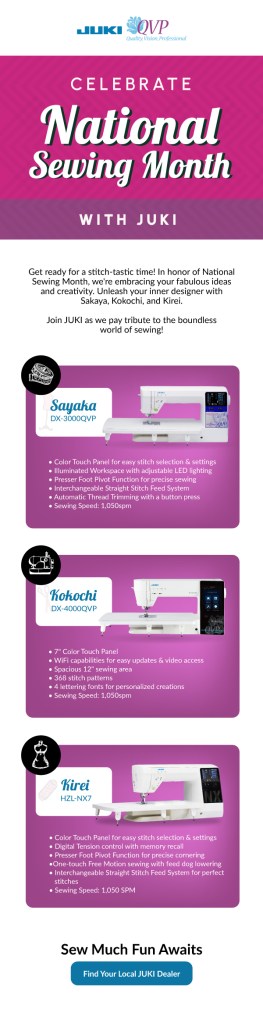
Celebrate National Sewing Month with JUKI!

Get ready to stitch up a storm this National Sewing Month with JUKI! 🧵 Dive into the world of creativity and craftsmanship as we celebrate the art of sewing throughout September. Whether you’re a seasoned seamstress or just starting to thread your needle, JUKI has something special in store for you.

Discover the magic of precision and innovation with our top picks for sewing enthusiasts. Explore the exquisite Sayaka DX-3000QVP, a machine that seamlessly combines technology and tradition, elevating your sewing experience. Take your skills up a notch with the Kokochi DX-4000QVP, designed to empower your creativity with its versatile features and impeccable stitch quality.

For the ultimate sewing journey, meet the HZL-NX7 – a machine that redefines sewing with its cutting-edge capabilities. Unleash your imagination and let your ideas flourish as you experiment with this exceptional machine.

Join us in celebrating National Sewing Month and discover the joy of bringing your visions to life stitch by stitch. Whether you sew for passion, profession, or relaxation, JUKI has the perfect companion for your creative endeavors.

Sew Like a Pro: Your Step-by-Step Guide to Becoming a Fashion Sewist!

Embarking on your first clothing sewing project can be an exciting and fulfilling experience. However, it’s essential to know a few things before diving into the world of garment construction. As a beginner sewist, knowing these key concepts and techniques will set you up for success and promise a smooth sewing journey. In this blog post, we’ll explore five things every beginner should know before creating their first clothing project. Let’s begin your path to becoming a confident and skilled sewist!

As a beginner, choosing sewing patterns matching your skill level is important. Begin with simple designs that have minimal pattern pieces and straightforward construction techniques. Look for patterns labeled as “beginner” or “easy.”

These patterns often include clear instructions and diagrams to guide you through each step. Starting with simpler projects will build your confidence and help you understand the basics of garment construction before moving on to more complex designs. Some options for patterns we recommend for beginner sewists are skirts, shorts, dresses, or even bucket hats!

Beginning with projects that are easier to create will set you up for success! Remember, it’s okay to start small. You don’t have to make a whole outfit for your first project! Check our simple and fun pattern options you can try on our project page here.

Before starting any clothing project, taking accurate body measurements is crucial. Measurements serve as the foundation for choosing the correct pattern size and ensuring a proper fit. Use a flexible measuring tape to measure your bust, waist, hips, and other relevant areas, following the pattern’s measurement guide.

If you’ve never measured yourself before for clothing, refer to online tutorials or sewing books for guidance on how to take accurate measurements. Remember, a well-fitting garment begins with precise measurements! Make sure to have a measuring tape and some fabric chalk to mark your spots when you’re ready.

Another great way to get measurements is by using pieces in your wardrobe that you already love and following their style and sizing.

Choosing the suitable fabric is vital to the success of your clothing project! As a beginner, it’s best to start with fabrics that are easy to handle, like using cotton or linen. These fabrics are stable, have minimal stretch, and are forgiving when it comes to sewing mistakes. Consider the fabric’s weight, drape, and care instructions before creating your project.

Make sure to note down any recommended fabric types mentioned in the pattern instructions. The recommended fabric is because the project’s final look might be for outdoor weather needs, additional stretch, or even more flow! Remember how you want the final outcome to look will influence what fabric you’ll create with.

Additionally, prewash and press your fabric before cutting to avoid shrinkage or distortion after sewing!

Before tackling a clothing project, familiarize yourself with essential sewing techniques! Take some time to practice straight stitching, backstitching, and pivoting at corners on pieces of fabric you plan to create your project with. This way, you can familiarize yourself with the weight of the fabric and the speed you feel comfortable stitching.

Learn how to sew darts, gather fabric, insert zippers, and sew seams with different seam finishes. Knowing these techniques before you start the project will help the process go smoother, allowing you to add embellishes like a dress zipper closure or a button on the cardigan you’ve designed.

Understanding these basic techniques will ensure your garment’s construction is sturdy and professional-looking. Use online tutorials, sewing books, or even take a beginner sewing class at your nearest JUKI dealer for hands-on experience and guidance.

Attention to detail will elevate any project you create as a sewist. Depending on the fabric and your machine’s capabilities, take the time to finish your seams neatly, either through zigzag stitching, serging, or French seams. Press your seams as you go, use a steam iron, and achieve a polished and professional finish. Consider using interfacing on collar or cuff areas for added stability. Remember, the small finishing details significantly impact the overall look and longevity of your new closet piece.

If you’re a beginner sewist venturing into the world of clothing projects, understanding these key concepts will set you up for a journey of joy. Start with those simple patterns, learn and practice taking accurate body measurements, learn how to select appropriate fabrics, master those basic sewing techniques, and take the time to add those finishing details.

With these things in your pocket, you’ll be well on your way to creating beautiful, well-fitting clothing pieces you’ll love. Enjoy the process, embrace the learning curve, and don’t be afraid to make mistakes. Happy sewing, and may your first clothing project be the start of a rewarding sewing journey!
National Account Spotlight: Creating with Grome’s Sewing Center

Join us in meeting Hannah, daughter of Cyndi Grome, one of the operators of Grome’s Sewing Center located in Austin, Texas!

Keeping San Antonio in Stitches Since 1950 Grome’s Sewing Center is so passionate about helping sewists like you create their dream projects! At Grome’s Sewing Center, they want their customers to come in and feel welcomed to find the right machine for their needs, browse their machine accessories, choose your notions, and pick the perfect fabric for your designs. Follow along below as Hannah shares everything you should know before visiting!

Follow along below for the transcript version of our interview with Hanna from Grome’s Sewing Center.

Hi everyone I’m Hannah from Grome’s Sewing Machine Company in both San Antonio and Universal City Texas. Welcome!

Grome’s Sewing Machine Company is a family-owned and operated business that’s been running since 1950. My great great grandfather, Isador Grome, started Grome’s Sewing Machine Company with his son Lou Grome and then Lou brought in Richard my grandfather, and then my grandfather brought in my mom and my mom took over the business, brought in her sister Irma, and now I’m the fifth generation here at Grome’s Sewing Machine Company working here alongside my mother Cindy Grome.

What JUKI machines can a customer find at Grome’s Sewing Machine Company?

You can find a lot of great JUKI machines and accessories here at Grome’s Sewing Machine Company. We have your favorite quilting machines, like your J350, we even have the infamous TL series, which is great for bag makers and Quilters alike. We have the J150, the DX4000, DX3000 F600, so if there’s any JUKI machine that you need for your sewing needs you can come to Grome’s and you’ll know that you’ll be able to find exactly what you need. And our sales staff can help you fit into just the perfect machine for you.

We have a wide array of JUKI accessories like the JUKI quilting rulers, as well as all of the JUKI feet, and we have the extension tables, we have the thread stands, so whatever accessory that you’re looking for Grome’s has it.

What are the benefits of being a Grome’s customer?

Purchasing from Grome’s has a great amount of benefits. Not only do we service your JUKI machines here in our store with certified technicians, and technicians who’ve gone to many dealer trainings and technician trainings to know how to work your machine inside and out; we also do in-person classes. So when you purchase your machine from us we can sit down with you, make sure you know how to thread your machine, wind a bobbin, and we have classes where you can learn how to use all the decorative functions of your machine as well. It’s a really great deal!

What can customers expect to find while shopping at Grome’s?

As you can see behind me we have a beautiful selection of fabrics in-house. We also have all of your quilting, sewing, and embroidery notions. We have everything that you need to finish your products. We have all of the amazing threads that you’re going to want, we have quilting threads, embroidery threads, general sewing threads, stretch cover lock threads, serger threads, everything you can think of.

We have kits that we make here in-house as well for all of your fun projects. If you want like a three-yard fabric project we got it. If you want patterns, we got it. You want books? We got it. You want anything special order? Shoot! Give us a call, we can find it for you and try to order it. So Grome’s, we got so much and we’ve been doing this like I said for 73 years so if you’re talking about something you can rest assured we know what you’re looking for and we can help you find it.

What makes Grome’s unique?

One of the best and most unique things about Grome’s Sewing Machine Company is that we are a family business that has been passed down generation through generation. We know the ins and outs of sewing machines all the way back from when my great grandfather brought the first zigzag sewing machine to the San Antonio area from Europe. So when it comes to knowledge base we’ve got my mom, I don’t know how she does it, but she can just pull up parts out of her head like a crazy person! But she’s amazing and we have the family support and knowledge base to help you figure out if you’re having issues with your machine, we can walk you through it, we can help you solve problems, we have techniques that we’ve known because we all work together here. You know I may be the fifth generation, the youngest here, but I always bring a fun and new modern twist to maybe some of the more contemporary things that my mom brings to our table. So we’re a fun family here that has a knowledge base that just kind of blends together and helps to help you create all your beautiful projects on your JUKI machines.

Does Grome’s have a message for future customers?

Grome’s is a great place in our community to come together and sew with each other, create projects, find all of the items that you need to create your amazing beautiful designs and ideas. We are always having great classes, with great instructors and we have events all throughout the year that we just keep scheduling and scheduling and scheduling and it’s a lot of fun. We do our best to try to get the entire community involved with the multiple events that we have throughout the year. We’re always running you know sales and having just a fun time together. I mean that’s what the sewing industry is about, it’s an art, we like to have fun and create.

We would be so honored if you would come to visit us here at Grome’s or even shop with us online. We are doing so much to grow our business here in the next few years and we would love for you to join our journey and we hope to see you soon. On our social media pages we have our Facebook at Grome’s Sewing Machine or Instagram at Grome’s Sewing. We have our YouTube at Grome’s Sewing and we’re always just trying to do our best to put out so much content for you because this is what it’s all about, is serving you all and creating your JUKI projects with your JUKI machines and helping you to create even more beautiful designs, ideas, quilts, and project garments and all of such. So we look forward to seeing you soon visiting us at Grome’s Sewing Machine Company, thank you!

To learn more about Grome’s Sewing Center, visit their website here! Thank you for joining us today in getting to know Hannah from Grome’s Sewing Center. We hope you get a chance to visit the next time you’re in the area!

Facebookhttps://www.facebook.com/GromesSewingMachine

Instagramhttps://www.instagram.com/gromessewing/

YouTube:https://www.youtube.com/@gromessewing

Websitehttps://www.gromes.com/

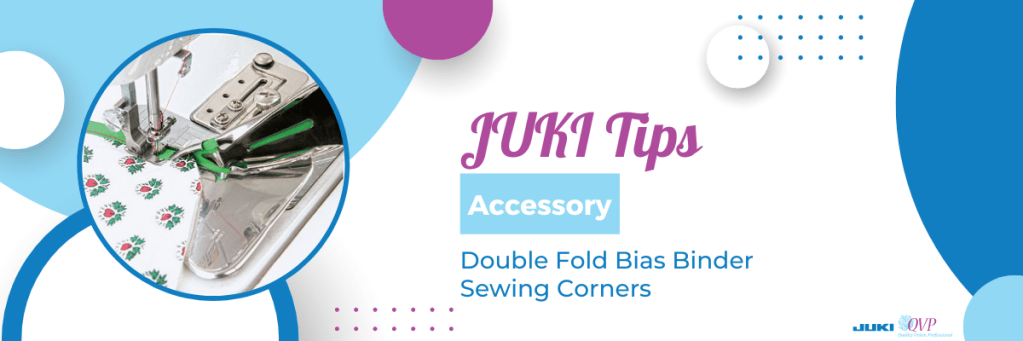
JUKI Tip: Double Fold Bias – Sewing Corners

On this JUKI tip, we use the Double Fold Bias Binder and show you how to sew corners with this accessory and create a fun sewing experience!

Follow along below for a rundown of what Alba covers on today’s JUKI Tip!

Hello all my JUKI friends, my name is Alba and welcome to another tips and tricks with JUKI! Today I am talking about the double-fold bias binder and I have one in front of me, and I wanted to show you the components of this. I did another video previously on how to load the fabric and just tips with getting it to run smoothly, but today I’m going to be showing you how to use it with quilts and doing those mitered corners.

I wanted to show you the binder itself so that you could get a little bit familiar with this tool. First, it comes with the foot that’s very short allowing you to really get a nice top stitch onto that, and also two thumb screws. Now this pivots and opens up and this section here with that wide opening is where you would put your thumb screws, to screw it right into the bed of the machine.

Now there’s also a set of screws right by where you feed your bias, and this allows you to move closer and further away from your foot, depending on the machine, depending on the material that you’re using, and likewise, that big screw allows you to move left and right to get this positioned perfectly.

Now with this I feed my bias in, and I just pushed that fabric that I got it all the way into there, and I have it being held by my needle right now. So as I am sewing this I want to make sure that I’m holding my quilt right into that corner and as I’m coming to a stop I want my needle to be right at the edge of the fabric. You will see where my needle is, and where my fabric is, I went right to the edge; and I am touching my scissor button and what I will be doing is releasing enough of that bias and I want to give that a little finger press. I am going to move this fabric closer to me and you want to make sure that you have enough to be able to work with. What I am going to be doing, again with that finger press, I am going to open this up and kind of force that bias.

This will allow me to pull that tape back through, and a long silk pin would come in really handy for just holding that in place. In fact, I am going to put a pin into that corner to hold it; I have that nice miter, and I’m going to put my pin right in there and I am going to bring that fabric all the way towards me.

I am going to position this right underneath the foot so that my needle catches that very corner. Now with my stiletto, I’m using tweezers here, I’m making sure that my fabric is tucked all the way in, and I am going to sew. You would do this on all four of your Corners.

Now you can see that beautiful corner that I’ve just completed, and I want you to see how beautifully that is top stitched right at the edge and it catches the front and the back beautifully, and I’m just gonna allow you to get a really close look at that.

Now at that corner, I did add a PIN to secure, you could also add some fusible web tape, that quarter-inch fusible web tape, and press that first inch and force that miter in place. But, with the bias binder, that double-fold bias binder, gives you the ability not only to do curves but to do those beautifully mitered corners.

How beautiful is that for your quilts, your crafting projects, everything that you could imagine. I really like to do this when I’m sewing garments and I am not lining like a jacket. I would do this on my inside seams and those are called Hong Kong scenes and it just gives a beautiful professional look to that garment.

Thank you for coming and sharing your time with me, what do you want to see next on JUKI tips? Lets us know down below!

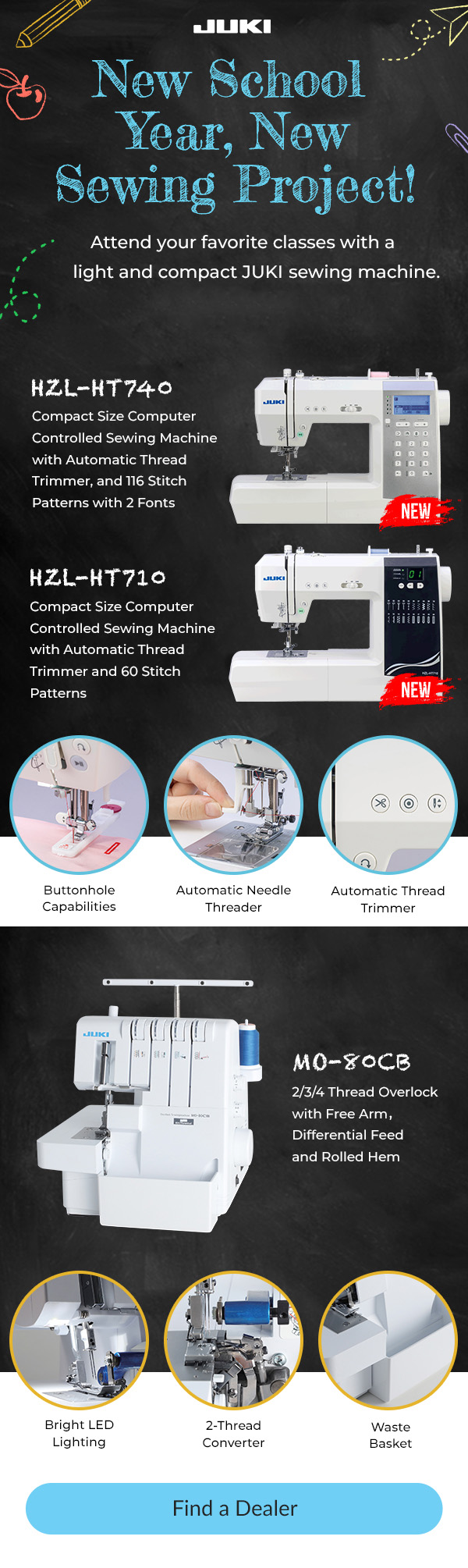
New School Year, New Sewing Project!

Get ready for the new school year with JUKI this August! We are thrilled to introduce our latest additions to the JUKI family: the HZL-HT740 and HZL-HT710 computerized sewing machines. We also can’t forget a great class serger, the sleek and efficient MO-80CB.

Attend your favorite classes with the perfect companions – these light and compact machines are ready to make sewing a breeze. The HZL-HT740 and HZL-HT710 offer cutting-edge technology, ease of use, and a wide range of stitching options to unleash your creativity. Pair them with the MO-80CB serger to achieve flawless finishes and professional-quality results on all your sewing projects. Don’t miss out on this fantastic opportunity to upgrade your sewing experience – seize the chance to enjoy the new year and embark on your sewing journey with confidence!