Starting Your Direct-To-Garment Business with JUKI & RICOH

Opening a small business is a fun and exciting venture, whether as a hobby to gain extra income or hopes for a new career. There are many reasons to look into starting a direct-to-garment (DTG) business. Maybe you’re someone who has a head full of great ideas, has friends who are always looking for custom t-shirts for their company events, or perhaps you’re someone who loves to design. Regardless of why, today, we’re going to discuss how to start your DTG business from including markets to sell to, tools to start, and how to sell your products.

Who’s Your Niche?

Before jumping into a DTG business, it’s crucial to think about whom you’re going to sell to, as this will set the basis for what you create and where you sell. So first, create a customer profile based on the following criteria: age, gender, lifestyle, location, profession, and occasion. You can also ask yourself what problem is this product solving for this customer? Examples of different customer profiles are listed below.

The Hobbyist

Have you ever found yourself looking for a t-shirt that captures your love for quilting? Nowadays, you can find a t-shirt for almost every interest due to small business artists who focus on creating products for these specific customers. So whether it’s sewists, car enthusiasts, or even cat owners, there’s a t-shirt for that. You can enter this segment by looking at the competitors’ designs and identifying what you can offer that is different. For example, the pet industry is a huge industry dominated by big brands. The competition is currently creating t-shirts with generic pet faces on them. You can differentiate your brand and create a unique segment of personalized, one-off t-shirts with customers’ pet’s faces on them. By targeting the right niche, you can create appealing products that bring revenue. 

Charity and Corporate Events

If you’re someone who’s attended a local charity or corporate event, you’ve probably received a t-shirt with a design related to that event. So whether it’s charity sports events, Christmas parties, or retreats, these events are a perfect niche to enter since there is a high volume of events and product quantity. 

Fashion

If you’re someone who leans towards creating and personalizing clothing, look into your own branded looks. With the ability to print onto canvas totes, sweaters, t-shirts, and more using a direct-to-garment printer, you can create your own branded line using the designs and patterns you’ve designed. There are always people looking to express themselves in unique and fun ways.
What Do You Need To Start?

Once you have your business plan that includes a niche and product line, it’s time to start looking at equipment. These are some basics you’ll need to think about:

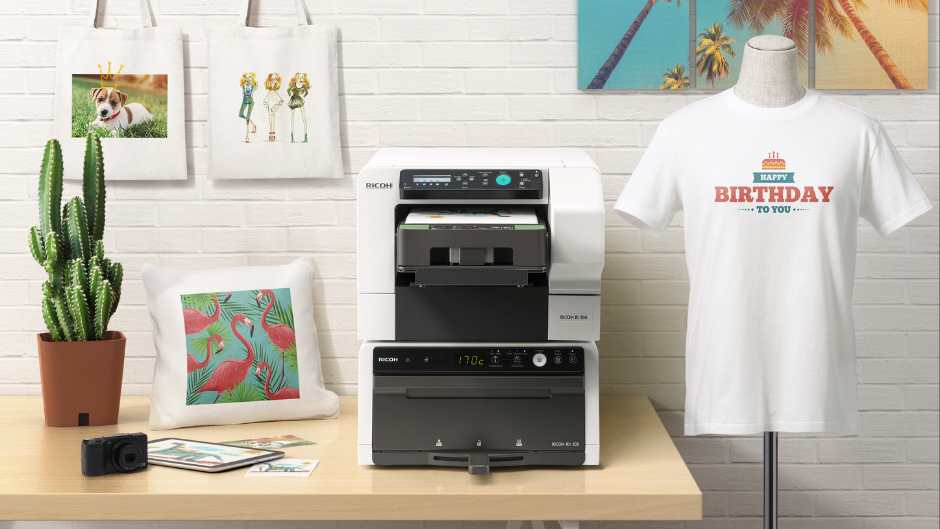
  • A DTG Printer like the RICOH Ri 100
  • A Finisher or Heat Press like the RICOH Rh 100
  • Replacement Ink Cartridges 
  • Software and Computer
  • Materials

DTG Printer & Finisher

DTG Printing is a groundbreaking technology that surfaced in the ’90s. Like your home printers, a DTG will directly print onto an array of products like t-shirts, canvas bags, fabrics, and more using inkjet technology. Over the years, the fashion industry has seen a rise in those who want to wear personalized or unique garments. As a result, DTG is a growing industry, which is why it’s an excellent option for someone looking to begin their own small business.

A DTG printer like JUKI’s RICOH Ri 100 is an all-in-one DTG printer that can print images onto light-colored cotton or polyester* garments using state-of-the-art DTG technology with the lowest initial investment. In addition, there are various bundles available that offer the printer and finisher together or individually for your budget. We recommend contacting a local JUKI Business Plus Dealer for recommendations and pricing on bundles. Whether you purchase just the printer or the combo of printer and finisher, the turnaround when printing and heat pressing a t-shirt is about 3 to 10 minutes, creating a fast, low-cost turnaround.

Software & Drivers

There are two software’s you need to know about when starting your DTG business. The software you’re going to use to make the products, and the software you’re going to use to design the products.

For example, the RICOH Ri 100 offers easy-to-operate design software that lets you import and edit images before printing, with no specialized knowledge or skills required. In addition, the software comes with built-in designs and fonts. With the ability to print photos, designs, and more, this is a great option that removes a high learning curve.

In addition to the software that comes included with the printer, other affordable design software is available. For example, Paint.net, Paintshop pro, InkScape, and Gimp, are free or lost cost software that allows you to create art for your projects without breaking the bank. For a step up, look into the Adobe programs Illustrator or Photoshop. While these work on a monthly subscription, they’re both commonly used programs with many free and easy to follow guides you can use when starting.

The Supplies

Your customers will want to get a bang for their buck, so consider this when deciding on fabrics and product choices. Today, affordable, lightweight, heavyweight, 100% cotton, 100% polyester, and blended fabrics and blank products can be found on wholesale sites. Some examples of popular wholesale brands are Hanes and Anvil. When it’s to purchase, buying in large quantities reduces the cost of materials.

In addition, you can expand your business (like the personalized pet t-shirt we mentioned earlier) by introducing other products like pillowcases, tote bags, infant onesies, towels, and more. By branching from the t-shirt business, you can enter new markets and increase revenue.

Where to Sell

Once you’ve finalized your merchandise and have your products ready to go, look into your options for selling. Many options include online shops, in-person events like conventions and farmer’s markets, and brick-and-mortar stores. 

First, let’s discuss online shops. From creating your website to signing up for handmade marketplaces, there are various options. Before you are ready to commit, some platforms allow you to do a limited trial. The trial will enable you to test and research if this is right for your product. If you are comfortable creating a personalized website with a custom URL and have an established audience, we recommend website building and hosting companies like Squarespace and Wix. If you are looking for an all-in-one solution with high traffic volume but sacrificing a bit of branding, we recommend marketplaces like Amazon Handmade and Etsy. Whether you go for your website or an established e-commerce platform, each option requires sellers to pay either for a custom URL, listings, transaction, or payment processing fees.

Are you someone that loves to interact with others? Then, another great option is in-person events! Research local events in your area where you can have a tent or a booth. Are you selling custom cat t-shirts? Attend a local pet convention. Events like your local weekend farmer market or a yearly convention are great places to start. The great thing about JUKI’s RICOH Ri 100 is how portable it is, meaning you can take it with you! The RICOH Ri 100 can fit into a space as small as 15.7″ wide x 27.5″ deep, making it one of the smallest DTG printers. In addition, the printer and its finisher can be stacked to maximize functionality without sacrificing space so that you can create custom pieces on site. 

**Some states or cities will require a business license, so keep this in mind when applying for your stand.

How to Sell

Once you’ve finalized who, what and where it’s time to start thinking about how you will market your products. One of the best ways to get your products and brand out there is by utilizing social media. The best thing about social media is that it is free! Some platforms do offer paid advertisement options for your posts. Below are some things to keep in mind:

  1. Look into creating multiple social media channels for your shop (Facebook, Instagram, Pinterest, Tiktok, and so on.)
  2. Think of your niche and what platforms they use for marketing on
  3. Define your marketing goals (build brand awareness, generate sales, or engage with customers)
  4. Post content daily when possible
  5. Interact with your followers

Social media is used by millions of people every day, making it a great tool to attract customers. Take advantage and put your brand out there!

Now that you know the basics of where to start, we hope you have a clearer vision of where you want your business to go. Direct to garment is a growing business where creativity and being different is a great thing! So what more do you want to know about the DTG business? Let us know down below!


Planning and Creating Your Wardrobe

Scrolling through social media and seeing crafts created by talented creators inspires us to create new projects! As a result, extravagant dresses, costumes, and more have made their way onto our timelines. Today, we’re going to talk about planning and designing your day-to-day wardrobe with special occasion pieces.

As we approach the holidays and the new year, it’s always a fun time to work on yourself. Starting with your wardrobe is a great way to boost your confidence and sewing skills! The significant part of keeping in mind is that re-working your wardrobe doesn’t mean starting from scratch, but using sustainable plans like working with what you have now and creating those pieces that will make it more you.

The first step in creating your closet is planning what clothes you need and what outfits to keep. A mistake some make is finding a pattern or design that they love but wouldn’t see themselves wearing it. Keep your style in mind when it’s time to start re-working your current closet and finding new patterns.

Identify what’s in the closet and what’s missing.

Many times we’ll find ourselves getting ready and thinking, “I have nothing to wear!” It’s so frustrating. Start with going through your closet and reviewing what pieces you love and which you would toss. Next, figure out why those pieces are not enjoyable. Is it the fabric? The style? Keep these thoughts in mind and write them down. Once you start refreshing your closet, you’ll remember what pieces didn’t make the cut. In addition, some well-loved clothing items may be getting tossed because they have a hole or don’t fit. Can you fix it? If there’s a piece you love that may need hemming or fixing, set these aside and use them as projects to think about later.

Once you’ve evaluated what you have, think about what’s missing! For example, are you full-on tops and can’t find bottoms that match? Do you have more staying home clothes than going out clothes? Seeing what’s missing is the first step in deciding what gaps need to be filled.

Planning the Wardrobe

Start with your style! Think of what fits make you feel your best and what colors bring out your happiness. Keep in mind fabric and what fabrics might bring you discomfort compared to those that feel like a perfect fit. It’s great to get out of your comfort zone, but make sure you’ll love and wear what you create. Once you find your color pallet and style, we recommend creating a board, like on Pinterest, with inspiration for what you would like to make. Using your board as a resource is a great tool when you start shopping for fabric and patterns. It’s a reminder of what you’re looking for and a great referral tool when designing. Be true to yourself, and keep in mind what patterns will truly fit your body well and make you feel confident!

We highly recommend organizing and going through your current patterns before purchasing new ones. Read through past choices and see which styles were your favorite. Figure out why some patterns didn’t make the cut, and keep that in mind when choosing your next one. A ring binder is a great way to organize your patterns and is simple to browse through. Organizing these is also a great way to plan what patterns you’ll need and allow you to plan your projects.

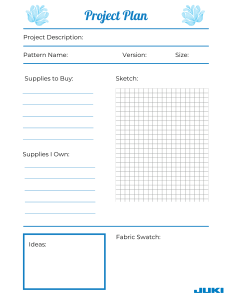
Planning your closet can seem overwhelming, which is why we recommend making a list! Decide what projects you want to create and write them down in the order you want them done. This will be a great base once you begin on the re-design of your wardrobe. We know planning is an important step, so a great resource we recommend is a planning sheet! Attached here, you can use this project planning sheet to prepare your projects properly. Think of it as a tool when creating, allowing you to plan supplies, pattern choice, fabric choice, and design. This will set the base for your project and help you keep track of the project with ease.

Buying what you need

With our inboxes filled with sales on fabrics, notions, and more, it may seem easy to impulse buy. But, sometimes we’ll see a piece of beautiful fabric and can’t wait to purchase it, only not to know what to create with it! Keep your inspiration reference nearby when you start buying so that you stay on track for fabrics and designs you’ll enjoy wearing on a day-to-day basis.

Grab your inspiration board and find those pieces that make sense! It’s best to start with a pattern, and from there buying the notions and fabric you’ll need. The best thing to know is that patterns will include supplies for the project and is a great reference. Keep in mind to create a closet that suits you and purchase fabrics that go with your color pallet and fabric material that is comfortable.

When finding patterns, think of your body shape and what cuts the best work. While patterns can be edited to tailor you, it’s best to start with one that already suits your look best.

We hope that this inspires you to create your wardrobe one day! We hope this encourages you to think about what to make, get some inspiration boards made, and then go out and stock up on those patterns and fabrics! Building your wardrobe is a fantastic journey in building your skills and confidence, and we can’t wait to see what you create! So what is your next wardrobe project going to be?

JUKI Designer Ambassador: Adolfo Sanchez

Introducing Adolfo Sanchez, designer, and owner of the Adolfo Sanchez brand. Based in Los Angeles and focused on creating luxury designs, he founded his brand in June 2015. His fashion and style take you on a journey to a world of freedom where women dare to be strong and different. Understanding how saturated the fashion world has become, he shows people that there are still unique options available and his creations are one of them. 

Adolfo’s career started in 2006, where he began to grow his business into a brand that offers custom, ready-to-wear, accessories, bridal, and couture. His gowns are different from those commonly found in the Los Angeles area, focusing on luxury wear. Focusing on the intricacy and hand-beaded designs that need unique craftsmanship when creating his pieces, his gowns are bold and unique, perfect for those wishing to be different.

“I would have never thought that I would have ended up in this industry, but it just feels so right that I know it was meant to be,”

Getting to his current position in the fashion industry by taking risks and learning new techniques, Adolfo is constantly pushing his brand to the next level. By staying true to his passions and fighting for his final vision when creating, he’s able to present pieces he’s proud of. Thankful to his team, including seamstresses, pattern makers, and factory workers, he wouldn’t be where he is today without the support he received along the way and his motivation to create awe-inspiring pieces.

“I’m inspired by everything – people, places, music, and there is so much more to do that I sometimes wonder if I have become obsessed with this industry.”

We are so excited to have Adolfo on board. Follow along with our social media as we continue to update you on Adolfo and our other ambassadors! Learn more about Adolfo and our Ambassador team here https://jukiquilting.com/ambassadors today.

Sewing Tips with JUKI!

As new sewists continue to join us, we recognize many are self-taught! Learning on your own is no small feat, but having the right tools can make any project easier. So today, we wanted to share our top 5 tips!

Slow and Steady Wins the Sewing Race

When it comes to creating your projects, it’s best to have a light foot than a lead foot. When you’re starting, we recommend finding a steady speed your hands can keep up. You can test this out by slowly increasing the speed and seeing how the machine feeds the fabric while your hands are moving along. For example, we recommend putting the speed at about 30% and increasing from there with free motion quilting.

It’s Easier with the right Presser Feet!

When you’re creating projects, learn about the presser feet options available with your sewing machine model. Check to see which feet come with your machine or are available in a specialty sewing shop near you. For example, some feet will help you conceal a zipper with ease, give you the perfect edging, and create a rolled hem. You can get familiar with different presser foot applications by reading the instructions provided with the feet or watching videos.

Trust in Patterns

There’s nothing worse than spending hours on a project and the result not fitting. However, sewists from different skill levels can find the benefit in using patterns on their projects. First, look for designs that fit your current project at your skill level. Many patterns come with expertise levels marked as beginner, intermediate, and expert. As you get more confident in your work, upgrading pattern levels is a great way to learn how to create a project from scratch and make your pattern one day!

Keep an Eye on those Needles!

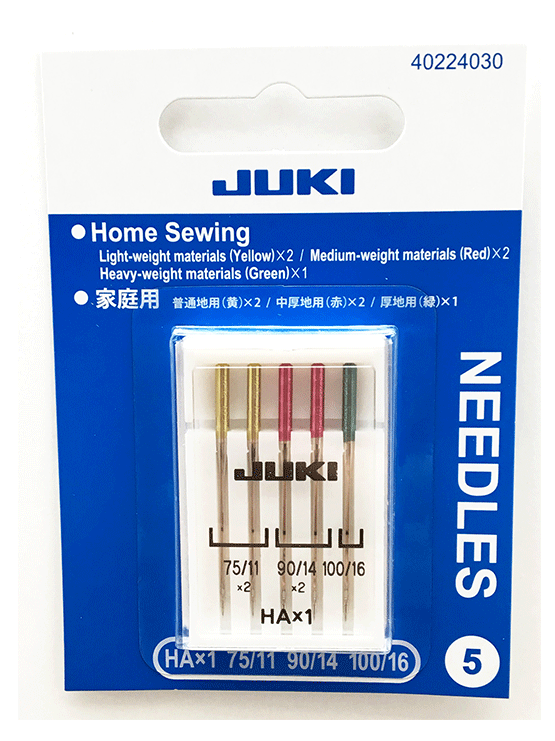
Using the wrong needle when working on a project can cause stress! While many sewists recommend having a universal needle on hand, these needles can still struggle on heavy fabric choices like leather and can be too sharp for stretchy fabric material. Make sure to research which needle you need on your project to prevent any mishaps. Click here to view a helpful guide that matches your fabric to the appropriate needle. Also, remember to replace your needle every project or 8 hours of usage. One of the causes of tension issues can be a lousy needle, so it’s best to replace it frequently.

Try New Things

The best piece of advice we have is to get creative! Many sewists have something they don’t like to sew or are scared of trying. Take the time to learn new techniques like attaching buttons, zippers, pockets, and more. However, keep in mind your skill level. One mistake beginners make is choosing a project that someone with experience would say no. It’s best to start small and build your confidence than to go big and go home because of disappointment or frustration. Trying new things can boost your confidence creating the best experience in sewing!

Whether you’re a beginner or an expert, these tips are great to keep in mind on your sewing journey. So what advice would you give beginners? Let us know in the comments down below!