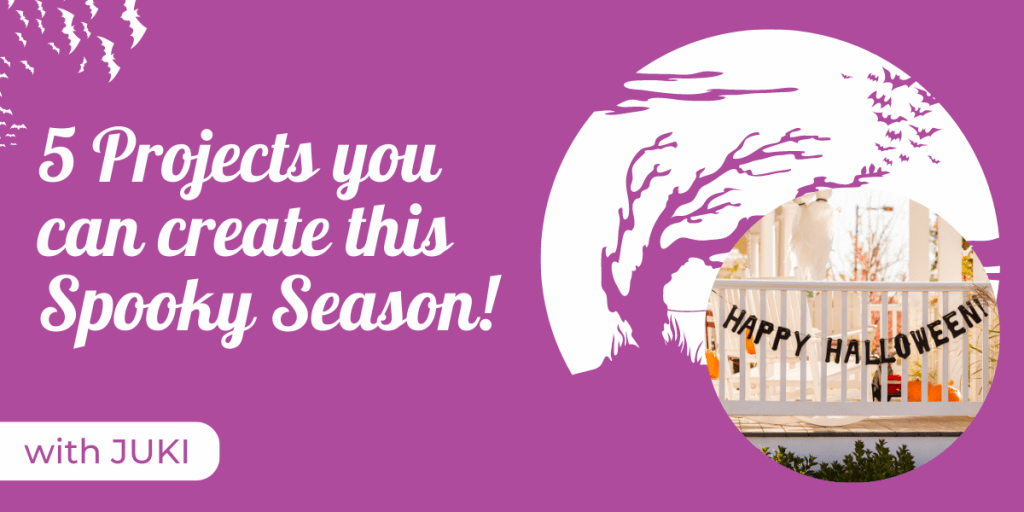
It’s almost time for spooks and candy JUKI Lovers! For today’s blog, we will share our top 5 favorite Halloween projects you can begin creating this weekend. So whether you’re going trick-or-treating, or staying at home, follow along below for ideas you can start today!
Halloween Patchwork Quilt
Stay warm this fall and create a Halloween patchwork quilt! Using a variety of Halloween fabric pieces, think witches, pumpkins, and ghosts, you can begin making your very own patchwork quilt. Quilts are the perfect accessory to any home, used and loved by everyone.
We recommend checking out your local quilt shop for holiday quilt bundles. Great options when you want to create a patchwork quilt, and don’t have the scraps, are browsing charm bundles, jelly rolls, and mini-charms! Also, don’t forget to grab batting for your quilts and have fun by bringing texture to the surface using free-motion quilting techniques.
The perfect addition to so many costumes, a cape can be used for various characters ranging from royals to superheroes. To use this cape multiple times, create your piece using basic colors like white, red, or black so you can enjoy this project through the years.
For creating a cape, we recommend having fabrics like stretch velvet, fleece, or wool! Usually, you’ll use about 2 yards of fabric for an adult cape and 1 yard for a child’s cape. This is an excellent apparel project for a beginner to try their hand at. For more advanced sewers, you can add features like trims and a hood for a more finished and professional look.
We recommend having aCording Foot on hand if you plan to attach a string inside for the cape hood. Also, use a Decorative Stitch Presser Foot to add designs on your cape’s ends for extra personalization!
Spooky Placemats and Table Runner
Decorate your home with a spooky table runner and matching placemats! A fun and easy home project, you can accessorize and personalize your kitchen and dining table with fun fabric designs and colors.
When creating placemats and table runners, we recommend having some tools on hand. Inside your placemats and table runner, you’re going to place a fleece or batting; this will stabilize your project. Spray glue is an excellent adhesive for this! Once you’ve pieced together your mat, you can choose to leave it as is or add designs with free motion quilting.
For yardage, we recommend 2-3 yards of fabric. With one yard, you can create up to 8 basic-sized placemats, and with your other yards, you can create your table runner depending on your table length! Keep a ¼ presser foot on hand when you’re ready to complete your project, so you can quickly finish the edging.
Halloween Garland
Decorate your archways and doorways with a fun garland! Easily created with less than a yard of fabric for the hanging pieces and string, this décor piece is the perfect touch. For the hanging details, we recommend using backing fabric for stabilization.
For this project, keep your ¼” presser foot nearby! Perfect for creating a clean edging on each hanging piece and the edging on the hanging string, this accessory can be the only foot you need for the project.
Trick–or–Treat Bag
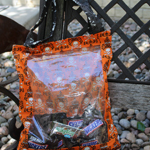
Lastly, don’t forget to have your trick-or-treat bag ready! Wishing you a happy spooky season, download our free instructions for our see-through trick-or-treat bag here. With a finished size of 14″ x 16″, this bag will carry all those treats home!
Join us today as we go behind the collection with JUKI Design Ambassador Mah-Jing Wong! Inspired by Marvel and Anime, we get to see his studio and discuss his designs and looks.
Follow below for a transcribed version of our look behind the collection with Mah-Jing Wong.
JUKI: What inspired you to create a collection based on the anime ‘Sailor Moon?
Mah-Jing Wong: Alright, so this time around it wasn’t just Sailor Moon that inspired the collection. I did a little bit of Sailor Moon and Marvel X-Men. I blended the two together and created my own cartoon which is GALAXIA X and she is the powerful superhero from the sailorverse. So this time around I kind of created my own thing, you know?
JUKI: How did you decide what style and cut to create the fashion pieces?
Mah-Jing Wong: Well, this time around I wanted to keep the same silhouette and just kind of build on there. Because it’s our fall collection it’s a little more coverage, it’s a little colder outside we have jackets, skirts, some joggers, and oversized tops. We still have our sheer dresses, but they have a little more coverage within them.
JUKI: What was your favorite outfit to design and create for this collection?
Mah-Jing Wong: Now my favorite outfit, that is so hard to choose! Kinda like picking your favorite child is hard to do! I guess, maybe our GALAXIA dress which is the color block dress with the green patch over the breast. Awe man that one was super sick and it was very sexy to you know?
JUKI: Let’s talk about the modeling! How do the models bring your work to life? What vision did you see when creating this collection?
Well this time around our house model, which is my wife Stacy, she’s just absolutely amazing. We really want to channel LAness pose, high fashion pose. So we did bleached brows on some of the photos, really sleek and wet hair. She did some really out-of-this-world-like poses, I mean I’m not her so I can’t go do poses, but she’s absolutely amazing, and she really helps to bring the clothes to life.
She is GALAXIA X you know?
JUKI: What future plans do you have in store for the Anime collection?
Mah-Jing Wong: Well, just to continue to push to the masses and get some really cool placement and you know, drop our own cartoon which is something I really want to work on. Maybe a comic book. I mean the sky is the limit with fashion and Mah-jing Wong because the good thing about us is we’re so multi-fashionst, and multi-talented, that I really want to touch all areas especially when it comes to animation.
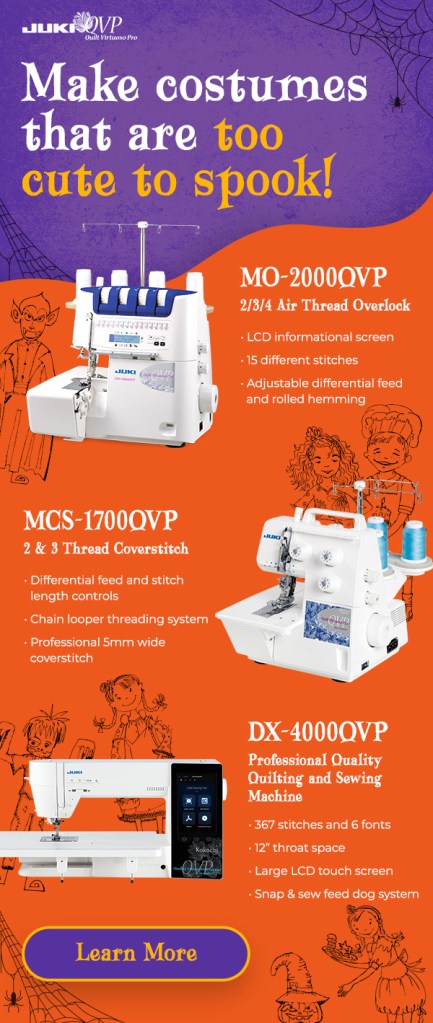
Are you ready for Halloween this year? Check out our JUKI Machines this Fall and find the right machine to create your spooky Halloween costumes this season!
To check out our collection of sergers and sewing machines today, visit a JUKI dealer near you and locate them on our website here.
Marketing and promotion can build or break your business. The good thing is that there are countless ways to promote your business! From paid advertising to alternative tactics, you can increase your business and product awareness in different ways to get your brand out there.
While many might recommend looking into paid advertisements on your favorite sites like Facebook, Instagram, or Youtube, you shouldn’t place all your marketing eggs in one basket. Creating different marketing channels is the key to success when it comes to getting your business out there.
Follow along as we stray away from those paid advertisements and offer other options for your brand and how to implement them in your marketing plan today.
Guest Post on Relevant blogs
Opening a new website can be challenging to get traffic to without advertising. One of the ways you can link back to your site and drive up traffic is guest posting on blogs relevant to your niche and product. It can take time to see progress on this end, but it can boost your audience size.
You would also be applying backlinks in these posts that go back to your website, assisting you in raising your SEO (Search Engine Optimization) and increasing your chances of being discovered on search engines.
Connect with bloggers in your industry to create a guest blog post with a relevant post to your business and theirs. Creating relevant content for your business will drive readers to your site and eventually become new leads and sales for you.
Request Product Reviews
Product reviews are one of the best ways to push sales in your business. Many shoppers will check shop and product ratings on eCommerce sites like Etsy before checking out the items in their cart. Customers check reviews because we trust word-of-mouth recommendations from friends and family.
Reach out to bloggers or influencers in your niche and industry and offer to ship them a free sample of your product in exchange for an honest review. If you have a great product, they’ll love it and rave while encouraging others to purchase from your shop.
You can also have an automated message that requests product reviews after delivery, encouraging shoppers to post on your website or shop page.
Research Affiliate Marketing
Have you ever tried affiliate marketing? Think of it as product reviews but one step farther.
By creating an affiliate program, you’re incentivizing other people to drive traffic to your business by offering a commission on every sale, similar to referral programs.
Finding and choosing an affiliate might not be easy at first if you’re still establishing your business, so we recommend researching outreach campaigns and creating one to recruit your first affiliate members. Keep in mind to choose those who have an engaged audience and are also in your niche or industry group.
Look for Press Coverage
You don’t need a PR team to get PR coverage! If your brand has created something exciting or a product that you think people would love to know about, take the PR work into your own hands and start contacting bloggers and news outlets in your area or industry.
Getting placed in news outlets can bring you forward to a whole different audience off the internet and social media. For example, look into promoting your business in a newspaper. Journalists are always looking for a new and exciting story.
Focus on your industry and what outlets and sites you can contact. Stay away from contacting outlets that aren’t in your niche. For example, don’t contact a tech blogger about your fashion products.
Opening a new business is exciting, and your community and others would love to know about it! So whether you’re creating a new product, opening up a shop, or even a few months in, keep this in mind when you think it’s time to upgrade your marketing game.
Learn about Social Media tactics
There are many tactics you can bring into your marketing plan for your company. From the content you’re posting to the comments you’re writing, all this can be used to your advantage when it’s time to market your business. When creating your marketing schedule, let’s go over some marketing tactics you should keep in mind.
Consistent posting
One of the things so many will lack when opening their marketing pages is the scheduling of their posting. Keep in mind the phrase “out of sight, out of mind” when you’re creating your marketing schedule.
It’s recommended to post often, and this doesn’t have to be the same form of content. Create pieces like photos, videos, reels, TikTok’s, blogs, and more. Audiences will react differently to posting schedules, so take the time to study your audience and figure out the best times and days to post to get that traffic you want to see.
Know Your Hashtags
Knowing your hashtags and what’s trending in your industry will get you in the right spots when people start discussing your niche. Hashtags have become one of the easiest ways to organize social media platforms, allowing us to find relevant posts to our interest with just one sign, the ‘#.’
Study similar posts from others in your niche and industry and see what garners the most attention. Also, keep in mind what kind of posts are being created with these hashtags. By following along with trending hashtags, you can have a higher chance of your post landing in front of the right audience and increasing your sales or traffic.
It’s recommended to have 15 to 30 well-curated hashtags per post to reach your max audience. We recommend using applications like ‘Hashtag Expert’ if you can’t decide what hashtags to place on your post.
Market Locally
With the recent changes in our society, small and local businesses are coming back into their communities. More people prefer to support those in their community when it comes to shopping, and if you’re a small business, you should be taking advantage of this opportunity!
Here are a couple of ways you can promote yourself locally and get your name out there:
Google – My Business
An easy-to-use program, you can get your business out there on Google’s search and maps. A free way to promote yourself on the search engine, this offers you a chance to market your business on Google with a simple description of your shop and who you are.
With Google’s popularity, many will go here first when learning about your company to see if it’s legitimate. Take the time to create your profile, add products or location photos if you’re able to, and include relevant links. Using Google’s business is a great way to introduce your business and can lead to more trust from the customer.
Research Your Local Events
Does your community host events? Research what Artisan markets, craft shows, trade shows, and festivals are happening around you that you could attend to showcase your shop and market your business.
While online e-shops and sales have seen a rise in popularity, in-person events are coming back, and it’s a good idea not to overlook them. As people step out of their homes, they want to attend these community events and see what’s new. Use this as an opportunity to make real connections with buyers in your niche, and enjoy the chance to meet with them one-on-one.
Keep in mind what you can do for others as well! Being skilled at creating something can be a teachable moment. Take into consideration what classes and workshops you can offer to your community to raise awareness for your brand, build credibility and create new leads and sales.
Market
Whether you choose to go organic or non-organic, and whatever channels you choose, don’t forget the importance of marketing for your business’s success. We know that paying for advertising can take a toll on a business’s budget, which is why alternative marketing is a great idea! Look into what you can accomplish with low to no cost through these marketing tactics and more.
Start with one tactic and keep going as you find comfort in what you can handle and what channels work best for your industry and niche. We hope this helps you plan your marketing budget and find new ways to bring attention to your business. What would you recommend for someone looking to get attention to their business?
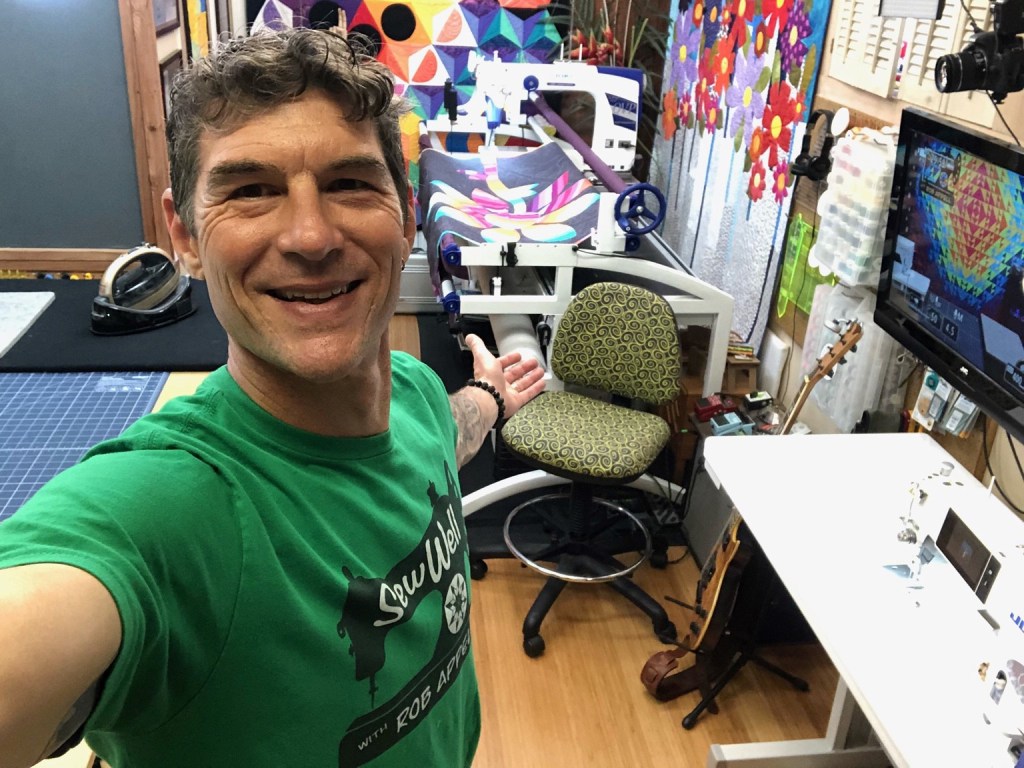
You may recognize this month’s spotlight from “Michael Miller Fabrics Making It Fun” or “Man Sewing,” we’re so excited to spotlight our JUKI Ambassador, Rob Appell, during National Sewing and Quilting month! In today’s blog, we get to speak with Rob about his journey in quilting, his passion for the craft, and how he came to be where he is today.
Robs journey in quilting began when he moved back home from college, spending his free time outside and snowboarding. His mother, the manager and eventual owner of the local quilt shop brought Rob into the business, where he started as a clerk. When his mother began bringing in machines to sell, Rob eventually shifted to machine repairs, and here is where he started falling in love with sewing!
Creating fun Hawaiian shirts as his uniform for the quilt shop, he found himself having fun making them and eventually began looking into patchwork quilting. A fun and easy way to pick up quilting, he began testing his skills in free motion quilting his projects. Again, finding himself loving the hobby. The rest, as they say, is history!
Since he began to quilt, Rob has accomplished a published quilt book, starred in and hosted multiple quilting YouTube shows, created a community for his teachings, and so much more! His videos encourage new quilters to be creative and enjoy their projects! With a focus on basic techniques, his hope when he’s creating for viewers is that they find something they can take away from his lessons and learn how to make their versions.
Recently starring in ‘Michael Miller Fabrics’ Making it Fun,’ you can follow along with his high-energy videos and view the different patterns and free motion quilting techniques Rob uses. While he offers some design patterns and templates for quilters, his work mainly focuses on organic creation. Going with the flow, his work often doesn’t follow design patterns; the finished design patterns he has sold usually come from these organic works he’s completed after the fact!
“The Free Motion Quilting, I prefer to go freestyle, no pattern, sometimes a plan, but usually pretty random and free.”
Quilting didn’t take him away from the outdoors he loved. Combing two of his favorite things, Rob is known for his landscape quilts. These beautiful pieces focus on nature and showcase views in bright colors. In fact, in 2009, Rob created 12 different quilts that featured faces of endangered species. Using the patterns from his work, he was able to fundraise and advocate for these species through sales that went toward endangered species charities.
He also authored a pattern book, “Making Waves … Adventures of a Surf Quilter,” a self-published print book featuring his landscape and seascape quilts. Early in his quilting journey, Rob was known for his scenic creations. Then, using free motion quilting and applique, he would add fun designs like fish, coral, rocks, lighthouses, ships, and more! Then, bringing in his love for surfing, he created a piece that intertwined surf terms with quilting terms, going above the average and setting himself apart.
Now, as someone who’s been quilting and creating those quilting videos we love for years, we asked Rob what keeps him going. “Videos are free and can be viewed over and over again if you’re learning from them. I love to present my passion for quilting.” Rob likes to focus on basic quilting techniques because he’s often reminded of how many new quilters have emerged in the community over the years. Thanks to video cameras and social sites like YouTube, where Rob hosts, he can teach how to construct quilts and the basic skills all quilters want to know. Keeping himself motivated with fun fabrics and the creative process has pushed him to bring that energy into each episode’s studio. Thankful for the following he’s gained on YouTube that keeps him going!
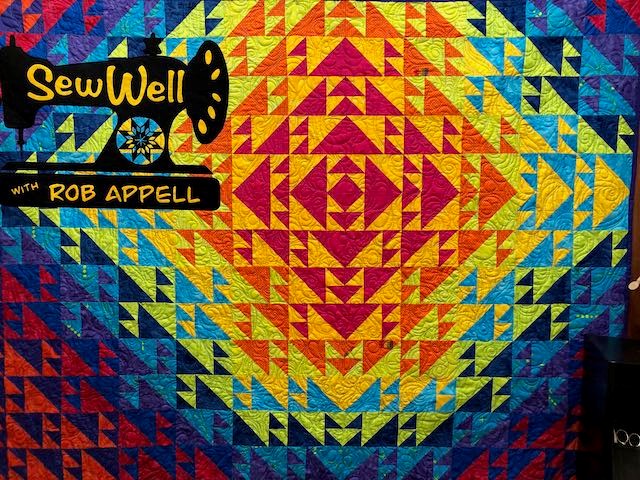
He recently created a new quilt, the “Synergy Remix,” designed by Kristie J. Smith in her pattern book, “Splice Magic,” that he loved! Always excited to try out new and different quilting techniques, like he encourages his viewers, Rob locked himself in the quilt shop, Stitchin’ Heaven, his latest collaboration where he’ll be hosting new quilting episodes, and went to work! In one night, he created a quilt and video, maligning the entire project and finishing it. Yet, this project places a smile on his face when he thinks about it.
While Rob has gone on to try other ventures, like his work in textile design with Free Spirit Fabrics, he vouches for his love of quilting. Sharing his love of fabric and free motion quilting, he focuses on his desire to quilt the top to push him through the construction process. Recently, he’s begun focusing on improving his precision in his patchwork! By creating little half-square triangles and trimming them up, he’s found joy in practicing his skills.
Always learning and growing, Rob has begun a new journey in his quilting career with Stitchin’ Heaven! As their new YouTube manager and Content presenter, he’ll be able to create a team of quilt lovers like himself who can share their passion for the craft while teaching others worldwide. Stepping back from handling all processes by himself, he’ll now have quilting friends who will help him create new and exciting projects for viewers like you. We’re excited to see the different techniques and quilting styles that will emerge from this new partnership!
“The thing I love most about the quilting industry is that there is so much for everyone.”
With the quilting community constantly growing as new members find their passion for the hobby, we asked Rob what advice he has for JUKI Quilters. “Get to know your machine, spend 7me learning the nuances, understand what the different feet do and when to use them. Then, remember – this is a hobby, not a race. Please slow down to enjoy the process.” When you enjoy the steps to what you’re creating and take a moment to appreciate each technique you’ve picked up, you’ll truly enjoy the finished project. As Rob mentions, so many people need something positive in their lives. Take the time to find your passion, teach and work with others in your quilting community, and enjoy the process.
We hope you enjoyed learning more about Rob with us, and we hope this inspires you to join him on an online video one day and check out quilting! A hobby for everyone, we hope everyone enjoys National Sewing and Quilting month with a fun new project!











 sewinwithjuki.com