5 Reasons to get the RICOH Ri 100, Direct to Garment Printer

Have you been in the market for a direct-to-garment (DTG) printer? Imagine opening a business where you can create pieces as simple as team t-shirts to make your brand? Then, check out the RICOH Ri 100, perfect for those starting their DTG business and wanting a quick, easy, and reliable start-up machine!

With the DTG business continuing to boom, we’ve noticed how fun and easy it can be to create products on our RICOH’s. From canvas tote bags to intricate wall tapestries, realizing the opportunity for limitless possibilities on what you can create and sell is a great point when choosing to go into DTG.

Compact and Portable 

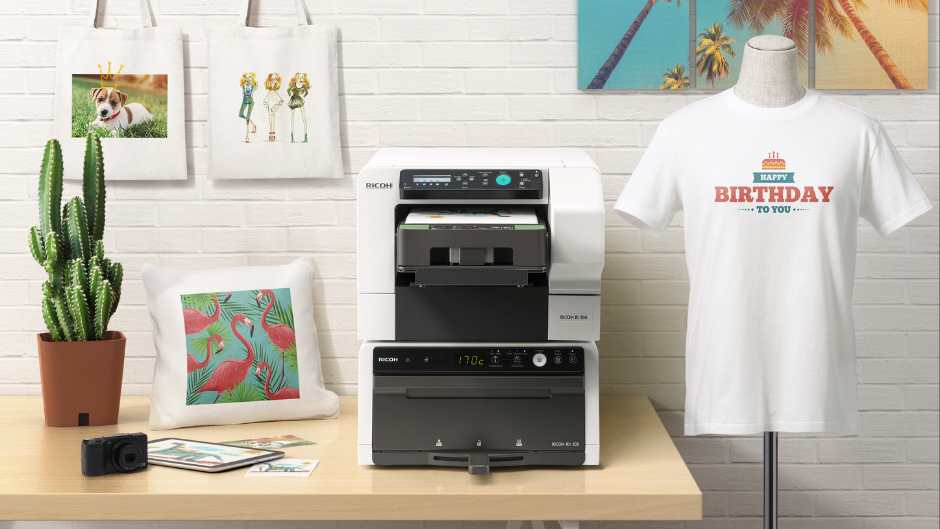
Starting your business for many means working directly from their homes. RICOH knows this, and that’s why their RICOH Ri 100 was created with small space in mind, making a compact and portable machine while able to handle the job. Find enjoyment in printing then and there, whether you’re taking your machine traveling with you to events or working from a small corner in your apartment. Built at 15.7″ x 27.5″, its small size will save you room for your supplies and products to fit.

High-Quality Images and Products

Using RICOH’s InkJet technology, it’s able to print pieces that are vibrant and colorful. Perfect for any design, whether it’s a picture you directly took or a drawing of it, the vibrancy and details will showcase every time. In addition, your garments will stay comfortable, and all designs are colorfast since they are printed directly onto the fabric.

Easy-to-Operate Software

Not everyone is tech-savvy, and that’s why the RICOH Ri 100 was created with the beginner user in mind. Perfect for those learning the DTG business, the RICOH Design Software lets you import and edit images before printing, with no specialized knowledge or skills required. So whether you’re working from your laptop or smartphone, your art and designs can be printed with ease.

Safe and Effortless Technology

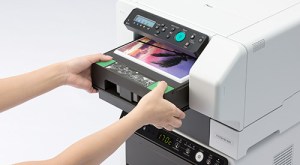
Find comfort in how easy it is to use the RICOH Ri 100. Reaching new heights of easy operability and designed with safety in mind, this machine offers you a fast and fun experience. The intuitive design allows all DTG users, from beginners to advanced users, to preheat, print, and use the Finisher option to fix the design safely. Periodic maintenance is carried out through a simple process, automatic and semiautomatic, and you’re provided resources and more from the RICOH and JUKI sites for customer support.

Low Entry Cost

One of the most important things to keep in mind when starting your business is budgeting and finding the suitable machine within your budget for your needs. As one of the lowest entry cost machines in the DTG industry, the RICOH Ri 100 is perfect for those who are stepping into the industry and don’t want to deep dive into a high investment machine. In addition, you can complete the whole printing process on this machine alone by featuring an all-in-one design with the option to purchase the finishing heater add-on.

Choosing the Right Machine for You

When choosing the suitable machine for you, remember to keep your budget, space, and the volume of products you can plan to create. The RICOH Ri 100 is perfect for those shops who want to bring DTG into their business and enjoy an avenue of products that are quick to make and easy to re-produce. With the ability to change designs from one t-shirt to the next, and the limitless options on what you can design, the RICOH Ri 100 is an excellent machine for a growing business.

Starting Your Direct-To-Garment Business with JUKI & RICOH

Opening a small business is a fun and exciting venture, whether as a hobby to gain extra income or hopes for a new career. There are many reasons to look into starting a direct-to-garment (DTG) business. Maybe you’re someone who has a head full of great ideas, has friends who are always looking for custom t-shirts for their company events, or perhaps you’re someone who loves to design. Regardless of why, today, we’re going to discuss how to start your DTG business from including markets to sell to, tools to start, and how to sell your products.

Who’s Your Niche?

Before jumping into a DTG business, it’s crucial to think about whom you’re going to sell to, as this will set the basis for what you create and where you sell. So first, create a customer profile based on the following criteria: age, gender, lifestyle, location, profession, and occasion. You can also ask yourself what problem is this product solving for this customer? Examples of different customer profiles are listed below.

The Hobbyist

Have you ever found yourself looking for a t-shirt that captures your love for quilting? Nowadays, you can find a t-shirt for almost every interest due to small business artists who focus on creating products for these specific customers. So whether it’s sewists, car enthusiasts, or even cat owners, there’s a t-shirt for that. You can enter this segment by looking at the competitors’ designs and identifying what you can offer that is different. For example, the pet industry is a huge industry dominated by big brands. The competition is currently creating t-shirts with generic pet faces on them. You can differentiate your brand and create a unique segment of personalized, one-off t-shirts with customers’ pet’s faces on them. By targeting the right niche, you can create appealing products that bring revenue. 

Charity and Corporate Events

If you’re someone who’s attended a local charity or corporate event, you’ve probably received a t-shirt with a design related to that event. So whether it’s charity sports events, Christmas parties, or retreats, these events are a perfect niche to enter since there is a high volume of events and product quantity. 

Fashion

If you’re someone who leans towards creating and personalizing clothing, look into your own branded looks. With the ability to print onto canvas totes, sweaters, t-shirts, and more using a direct-to-garment printer, you can create your own branded line using the designs and patterns you’ve designed. There are always people looking to express themselves in unique and fun ways.

What Do You Need To Start?

Once you have your business plan that includes a niche and product line, it’s time to start looking at equipment. These are some basics you’ll need to think about:

  • A DTG Printer like the RICOH Ri 100
  • A Finisher or Heat Press like the RICOH Rh 100
  • Replacement Ink Cartridges 
  • Software and Computer
  • Materials

DTG Printer & Finisher

DTG Printing is a groundbreaking technology that surfaced in the ’90s. Like your home printers, a DTG will directly print onto an array of products like t-shirts, canvas bags, fabrics, and more using inkjet technology. Over the years, the fashion industry has seen a rise in those who want to wear personalized or unique garments. As a result, DTG is a growing industry, which is why it’s an excellent option for someone looking to begin their own small business.

A DTG printer like JUKI’s RICOH Ri 100 is an all-in-one DTG printer that can print images onto light-colored cotton or polyester* garments using state-of-the-art DTG technology with the lowest initial investment. In addition, there are various bundles available that offer the printer and finisher together or individually for your budget. We recommend contacting a local JUKI Business Plus Dealer for recommendations and pricing on bundles. Whether you purchase just the printer or the combo of printer and finisher, the turnaround when printing and heat pressing a t-shirt is about 3 to 10 minutes, creating a fast, low-cost turnaround.

Software & Drivers

There are two software’s you need to know about when starting your DTG business. The software you’re going to use to make the products, and the software you’re going to use to design the products.

For example, the RICOH Ri 100 offers easy-to-operate design software that lets you import and edit images before printing, with no specialized knowledge or skills required. In addition, the software comes with built-in designs and fonts. With the ability to print photos, designs, and more, this is a great option that removes a high learning curve.

In addition to the software that comes included with the printer, other affordable design software is available. For example, Paint.net, Paintshop pro, InkScape, and Gimp, are free or lost cost software that allows you to create art for your projects without breaking the bank. For a step up, look into the Adobe programs Illustrator or Photoshop. While these work on a monthly subscription, they’re both commonly used programs with many free and easy to follow guides you can use when starting.

The Supplies

Your customers will want to get a bang for their buck, so consider this when deciding on fabrics and product choices. Today, affordable, lightweight, heavyweight, 100% cotton, 100% polyester, and blended fabrics and blank products can be found on wholesale sites. Some examples of popular wholesale brands are Hanes and Anvil. When it’s to purchase, buying in large quantities reduces the cost of materials.

In addition, you can expand your business (like the personalized pet t-shirt we mentioned earlier) by introducing other products like pillowcases, tote bags, infant onesies, towels, and more. By branching from the t-shirt business, you can enter new markets and increase revenue.

Where to Sell

Once you’ve finalized your merchandise and have your products ready to go, look into your options for selling. Many options include online shops, in-person events like conventions and farmer’s markets, and brick-and-mortar stores. 

First, let’s discuss online shops. From creating your website to signing up for handmade marketplaces, there are various options. Before you are ready to commit, some platforms allow you to do a limited trial. The trial will enable you to test and research if this is right for your product. If you are comfortable creating a personalized website with a custom URL and have an established audience, we recommend website building and hosting companies like Squarespace and Wix. If you are looking for an all-in-one solution with high traffic volume but sacrificing a bit of branding, we recommend marketplaces like Amazon Handmade and Etsy. Whether you go for your website or an established e-commerce platform, each option requires sellers to pay either for a custom URL, listings, transaction, or payment processing fees.

Are you someone that loves to interact with others? Then, another great option is in-person events! Research local events in your area where you can have a tent or a booth. Are you selling custom cat t-shirts? Attend a local pet convention. Events like your local weekend farmer market or a yearly convention are great places to start. The great thing about JUKI’s RICOH Ri 100 is how portable it is, meaning you can take it with you! The RICOH Ri 100 can fit into a space as small as 15.7″ wide x 27.5″ deep, making it one of the smallest DTG printers. In addition, the printer and its finisher can be stacked to maximize functionality without sacrificing space so that you can create custom pieces on site. 

**Some states or cities will require a business license, so keep this in mind when applying for your stand.

How to Sell

Once you’ve finalized who, what and where it’s time to start thinking about how you will market your products. One of the best ways to get your products and brand out there is by utilizing social media. The best thing about social media is that it is free! Some platforms do offer paid advertisement options for your posts. Below are some things to keep in mind:

  1. Look into creating multiple social media channels for your shop (Facebook, Instagram, Pinterest, Tiktok, and so on.)
  2. Think of your niche and what platforms they use for marketing on
  3. Define your marketing goals (build brand awareness, generate sales, or engage with customers)
  4. Post content daily when possible
  5. Interact with your followers

Social media is used by millions of people every day, making it a great tool to attract customers. Take advantage and put your brand out there!

Now that you know the basics of where to start, we hope you have a clearer vision of where you want your business to go. Direct to garment is a growing business where creativity and being different is a great thing! So what more do you want to know about the DTG business? Let us know down below!
JUKI Designer Ambassador: Adolfo Sanchez

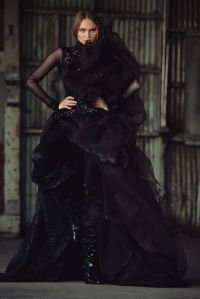
Introducing Adolfo Sanchez, designer, and owner of the Adolfo Sanchez brand. Based in Los Angeles and focused on creating luxury designs, he founded his brand in June 2015. His fashion and style take you on a journey to a world of freedom where women dare to be strong and different. Understanding how saturated the fashion world has become, he shows people that there are still unique options available and his creations are one of them. 

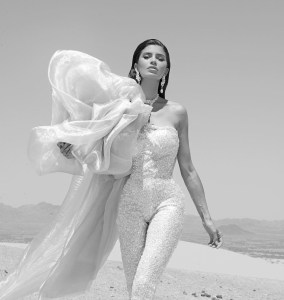
Adolfo’s career started in 2006, where he began to grow his business into a brand that offers custom, ready-to-wear, accessories, bridal, and couture. His gowns are different from those commonly found in the Los Angeles area, focusing on luxury wear. Focusing on the intricacy and hand-beaded designs that need unique craftsmanship when creating his pieces, his gowns are bold and unique, perfect for those wishing to be different.

“I would have never thought that I would have ended up in this industry, but it just feels so right that I know it was meant to be,”

Getting to his current position in the fashion industry by taking risks and learning new techniques, Adolfo is constantly pushing his brand to the next level. By staying true to his passions and fighting for his final vision when creating, he’s able to present pieces he’s proud of. Thankful to his team, including seamstresses, pattern makers, and factory workers, he wouldn’t be where he is today without the support he received along the way and his motivation to create awe-inspiring pieces.

“I’m inspired by everything – people, places, music, and there is so much more to do that I sometimes wonder if I have become obsessed with this industry.”

We are so excited to have Adolfo on board. Follow along with our social media as we continue to update you on Adolfo and our other ambassadors! Learn more about Adolfo and our Ambassador team here https://jukiquilting.com/ambassadors today.

JUKI Designer Ambassador: Kiki Kitty

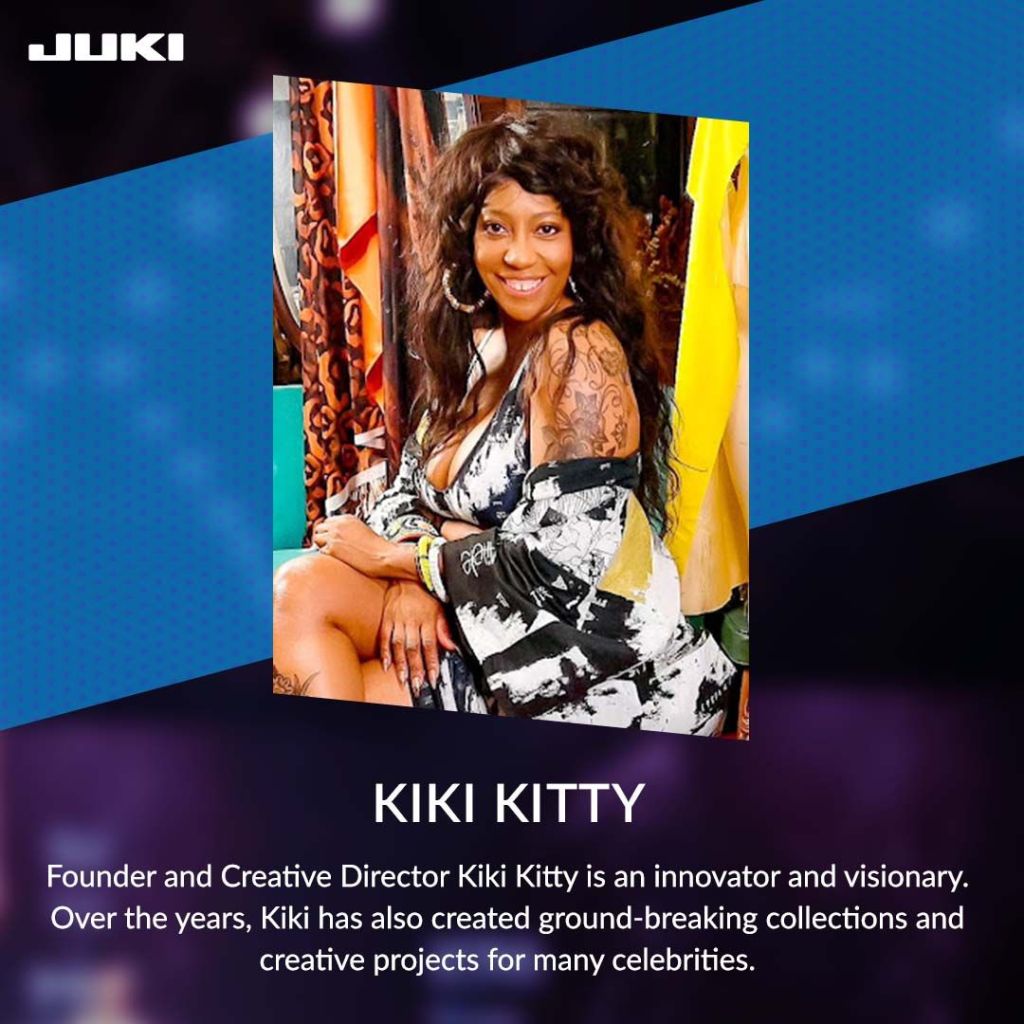
Introducing Kiki Kitty, owner, and designer of K. Milele, as one of our new JUKI Designer Ambassadors! A member of the fashion industry since the ’90s, where she started off with FUBU’s womenswear, Kiki Kitty is a force to be reckoned with.

One of five siblings, Kiki grew up in a home where she and her family would focus on creating everyday items to stay entertained. Creating projects like ragdolls, pillows, and slippers, she was inspired by her mother, who found art in everything. Taught by her mother, Kiki would create using natural pieces like pinecones and other found items to create projects like home décor whenever inspiration struck. Through these small projects that Kiki learned how to build her creative eye, assisting her for years to come when it was time for her to design fashion.

Finding sewing as another art medium, her first lesson was thanks to her mother. A fun activity for her and her siblings, Kiki would complete little projects to train herself on the machine and work her way up on project size and complexity. One of her favorite parts about sewing has been the freedom to explore new techniques and concepts. Through her excitement to learn, she sees each mistake as an opportunity to learn something new.

“I love when a mistake turns into the greatest thing about a garment because it forced me to have to look at it in a new way.”

Kiki’s love for the hobby has grown, leading her into the fashion industry in the ’90s as a designer for FUBU, a women’s streetwear fashion line. Motivated by her need to artistically express herself, she finds the process to be therapeutic. Seeing this as a way to express her thoughts was her first step in learning to express herself. “It took me a very long time to find my voice, to verbally express myself, and to stand up for myself. Expression through art was always my outlet. And even now that I’ve discovered my voice, creating remains to be my most powerful expression.”

While her time at FUBU led to her first brand K.A.Kitties, a venture she’s proud and fond of, her most tremendous success was only recently accomplished in her latest fashion collection K.Milele, “This is My Protest.” Using her JUKI machines, our MO-20000QVP, and HZL-NX7, she states she was finally able to create a collection that is 100% her self-expression. With the opportunity to explore prints, patterns, and textures, she hopes to create beautiful, one-of-a-kind pieces representing her and those she designs for.

Her newest collection has trends like gathering, a favorite of Kiki’s since the ’90s. Loving how the final product looks, she finds it’s a simple technique that elevates the simple styles into sexy numbers, something her line embodies. Loving anything that creates fabric manipulation is her favorite trend in sewing. A must-have tool she keeps on hand for these projects is her tweezers. Allowing her told the fabric in place and keeping her fingers away from the machine after one terrible accident in her time at Pratt University when she first began sewing on industrial machines, she finds this tool to be a finger saver.

From FUBU to her current collection, Kiki’s journey in sewing is far from over. We hope you enjoyed getting to know our ambassador today and that you keep up with her future projects! Kiki’s new collection can be found on her socials here, and we’re so excited to see her projects come to life! Kiki’s final note to you JUKI lovers is this, “When you’re trying it [sewing] out, don’t get frustrated about making mistakes. Often mistakes make way for the opportunity to be creative and discover that there’s more than one way to achieve a great outcome. Even if it’s not the idea, you started with. Be flexible. See the beauty in what’s in front of you.”

JUKI Designer Ambassador: Charles Lu

Introducing Charles Lu, Canadian fashion designer, “Next in Fashion” Alumni, and our new JUKI Designer Ambassador! Born in Ontario, Canada, Charles began sewing at a young age, inspired by his mother’s career. Developing a keen interest in sewing, he continued practicing, motivating him to move to London, UK, at the age of 18 to train at Istituto Marangoni, the London school of fashion and design. It was here that Charles further developed and mastered his technique in garment construction. As a result, Charles has designed and produced garments for global clientele, showcased his collection in London, and created his label. Follow along as we deep dive into Charles’s story and follow his journey to where he is today.

Charles’s journey in fashion began with his mother, his true inspiration. Charles’s mother assisted in her aunt’s clothing manufacturing company in pre-wear Vietnam and then for Levi’s and OshKosh when she first arrived in Canada as a refugee. Charles was strongly deterred from using her sewing machines as a child but was fascinated with her sewing room ever since he could remember. They often went shopping for fabric together in the bargain section, where Charles watched on mesmerized and begging for her to teach him her art. When this failed, due to Charles young age, he moved forward and began visiting local libraries in the hope of finding books on sewing to be learning. Starting with hand-stitched projects, the only sewing he could do, Charles found his creative outlet in life.

“Now, my mother and I have this special language and mutual passion for sewing. We love to sew together, and she is who I always want to impress first. She’s my biggest supporter, and her heart lives in my work.”

By the age of 10 or so, Charles was finally granted permission to work on his mother’s JUKI industrial machine. Two decades later, Charles still loves his mother’s JUKI, now his own. He adds, “it’s intuitive and makes sewing a true pleasure despite how frustrating the sewing process can be. I often use materials that are on the cusp of resistance to regular machines, so I find it comforting to have something I can fully rely on.” Claiming himself as a perfectionist, willing to correct each small detail he notices, he considers his JUKI an extension of himself. “My brand and JUKI share the same ethos of precision and quality, so being an ambassador is an honor and a fitting dream.”

In the present, Charles finds himself enjoying his journey in sewing, claiming his most tremendous success has yet to come. While he found success in the accumulation of a finished collection in the past, he realized this mindset wasn’t allowing him to enjoy the final product and present, as he was always thinking of the next project. His new outlook in his creative process has allowed him to enjoy each collection individually and mentally process his creations. With a desire to learn how every kind of garment is created and understand the construction and materials, Charles focuses on understanding each project’s technical aspect and concentrating on small details. As he states, “perhaps my greatest success is constantly expanding my arsenal of knowledge in my craft.”

His motivation to continue learning stems from his domination of past design failures, and a desire to create a story through his work. Each piece he’s made can be seen as a snapshot or extraction from a period in his life. In many ways, he claims his fashion and art are a memoir and a stamp to his life’s journey, allowing him to keep a visual representation of a diary alive. He finds his favorite projects are those driven by passion. Continuing his goal to constantly keep learning, he used this past year as a form of exploring new avenues in the fashion world he had shied from before. Facing these new projects with apprehension but excitement, he was able to produce over 30 individual pieces on his own for his collection, ranging from corsetry to puffer coats.

As Charles continues his pursuit in the art of fashion, he’s excited to see how the industry has grown recently. “The resurgence of home-sewing and growth of eager creators/designers. There is a beautiful return to craft thanks to part in the sharing of knowledge due it social media. A lot of luxury clothing has reached an entirely unattainable price point and conversely, fast fashion is oversaturated with issues from lack of sustainability, quality, and ethics. I respect anyone who tackles this sort of craft.”

Like many of you, his love for sewing shows itself at that moment when you can see a project and design finally coming together. He understands those moments when it feels like so many things can go wrong, and they do, but he also knows something is rewarding and comparable when the garment finally starts to take shape and come to life. His advice to new sewers is to remember those moments when mistakes are made, to permit yourself to do so. Creating these mistakes is only a step in uncovering secrets that sewers can only find through trial and error.

“It is through the failures that we learn, improve, and innovate.”

We hope you enjoyed getting to learn more about Charles Lu with us!

Follow along on his journey with us and learn more about our designers at (ambassador website) today!