Understanding your sewing machine’s settings can feel intimidating, especially when a simple project suddenly turns complicated due to skipped stitches, uneven seams, or fabric snags. Many sewists avoid touching their tension dials or presser foot controls because everything seems to work “well enough”—until it doesn’t. That moment of hesitation can turn creativity into confusion and leave projects unfinished or results inconsistent.
This blog is here to change that! By breaking down Speed & Stitch Selection, Tension & Presser Foot Pressure, and Stitch Length & Width, you’ll learn how each adjustment impacts your final stitch quality and fabric handling. With guidance and helpful features found on JUKI machines, you’ll build confidence in making purposeful adjustments that elevate every sewing project.

Speed & Stitch Selection
Sewing at full speed feels efficient, but slowing down can dramatically improve control when working on curves, corners, or precise topstitching. For delicate fabrics like chiffon or slippery satin, reducing speed prevents shifting and stretching, resulting in cleaner seams. On heavier materials like denim or canvas, a steady, controlled pace ensures the machine feeds evenly without straining the needle. Choosing the correct stitch for your project is equally important—stretch fabrics need flexibility, while structured garments rely on stronger, stable stitches.
JUKI machines make this process easier with dedicated speed control sliders and digital stitch panels that clearly display your selections. Instead of guessing, you can select stitches designed for stretch, finishing, quilting, or decorative work with accuracy. This intuitive setup helps you make informed choices quickly, allowing your machine to adapt to your sewing style and fabric needs with minimal guesswork.
In practice, this means slowing down your speed when topstitching a visible seam on a tote bag strap to keep the line clean and straight, then switching to a stretch stitch when working on leggings or knit cuffs. A quilter may choose a specific stitch designed to secure layers without puckering, while a garment maker might alternate between straight stitch and zigzag depending on seam location. With the quick-access adjustments available on JUKI models, these transitions become seamless, allowing you to maintain rhythm while customizing your workflow.
Tension & Presser Foot Pressure
Tension plays a key role in stitch formation. Too tight, and your fabric may gather or pucker. Too loose, and you’ll notice looping underneath your seam or uneven stitching. Learning to read these signs helps you confidently adjust tension instead of relying on default settings that might not suit every fabric. Taking a moment to test your tension on scrap fabric can prevent issues during your actual sewing process and give you control over how your stitches sit in the material.
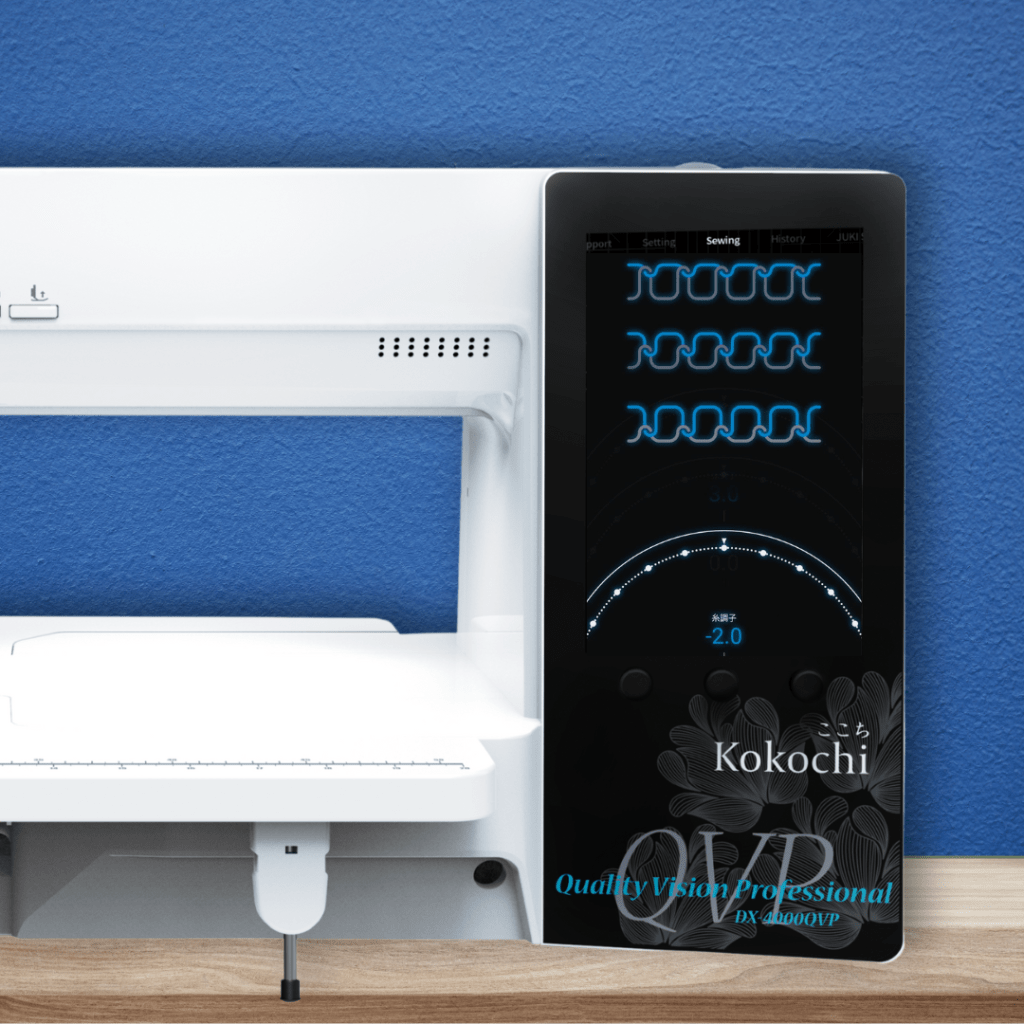
Presser foot pressure is another setting that often goes overlooked but makes a significant difference in fabric feeding. Light pressure is ideal for knits and delicate fabrics, allowing material to pass through smoothly without resistance. Heavier pressure keeps thick or multi-layer projects steady under the foot, preventing shifting. Our JUKI machines often include adjustable pressure dials or automatic settings that adapt to fabric thickness, helping you maintain consistent stitch quality with less manual adjustment.
Here are a couple of tips to keep in mind next time you create.
- Reducing presser foot pressure on a knit t-shirt hem allows the fabric to glide without stretching, while increasing tension slightly on denim seams helps keep topstitching crisp.
- When applying elastic to a waistband, you can loosen the tension to allow for stretch without breaking threads.
These quick adjustments not only improve stitch quality but also help your machine adapt to changing fabric behavior mid-project, especially when using JUKI’s smooth control dials or digital tension presets.
Stitch Length & Width

Stitch length impacts both durability and appearance. Shorter stitches are great for lightweight fabrics or fine garment finishing, while longer stitches suit thicker materials or basting that needs to be removed easily. When quilting, adjusting stitch length can change the texture and flow of your quilting lines, giving you creative control over the final look. Decorative stitching also benefits from tailored length choices, enhancing visibility and detail.
Stitch width becomes especially useful when working with zigzag or decorative patterns. Narrow widths are ideal for discreetly reinforcing edges, while wider settings add visual detail or allow seams to stretch in activewear. Our JUKI machines offer precise incremental adjustments, giving you the freedom to customize your stitching rather than settling for preset defaults. This precision helps you tailor your machine to every material and project type with confidence.
Here’s another set of tips to keep in mind next time you create.
- When hemming lightweight linen pants, a shorter stitch helps secure the fabric cleanly without fraying.
- When quilting straight-line designs, increasing stitch length to create long sweeping stitches gives a more modern, airy look.
- Sewing appliqué on a decorative pillow might require a wider zigzag stitch to secure edges smoothly, while piecing garments calls for a medium-length straight stitch to balance flexibility and strength.
JUKI’s fine-tuned adjustment knobs and on-screen width indicators ensure that every stitch placement matches your creative intention.
Exploring Settings Builds Skill and Creativity
Mastering machine settings doesn’t require perfection; it just takes curiosity and small intentional adjustments. By testing speed, tension, pressure, and stitch size on scrap fabric before beginning your project, you’ll start to understand how each setting influences your results. With practice, these adjustments will become second nature and help you solve sewing challenges before they appear.
JUKI machines are designed to support this learning process with easy-to-read panels, intuitive dials, and helpful automation that simplify adjustments. Whether you’re quilting, garment sewing, or working on home décor, your machine is built to work with you—not against you. Ready to put these settings into practice? Visit our Projects page here for guided tutorials and inspiration that encourage you to explore your machine’s full potential.
 sewinwithjuki.com